
肌肉生长抑制素对骨骼肌生长发育的调控
Regulation of Myostatin on the Growth and Development of Skeletal Muscle.
作者信息
Chen Ming-Ming, Zhao Yi-Ping, Zhao Yue, Deng Shou-Long, Yu Kun
机构信息
College of Animal Science and Technology, China Agricultural University, Beijing, China.
Tianjin Key Laboratory of Agricultural Animal Breeding and Healthy Husbandry, College of Animal Science and Veterinary Medicine, Tianjin Agricultural University, Tianjin, China.
出版信息
Front Cell Dev Biol. 2021 Dec 24;9:785712. doi: 10.3389/fcell.2021.785712. eCollection 2021.
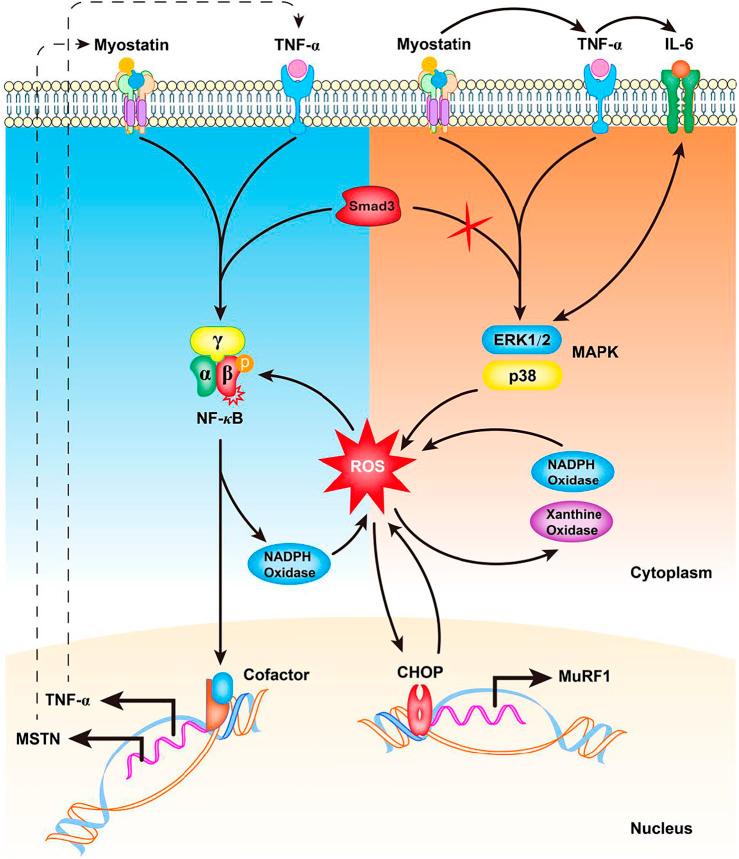
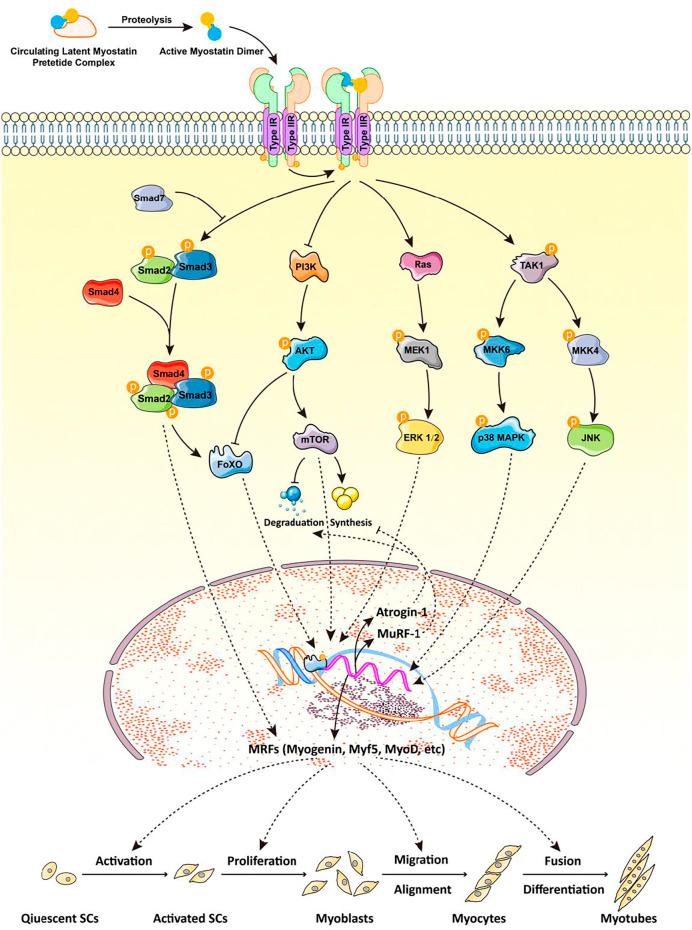
Myostatin (MSTN), a member of the transforming growth factor-β superfamily, can negatively regulate the growth and development of skeletal muscle by autocrine or paracrine signaling. Mutation of the myostatin gene under artificial or natural conditions can lead to a significant increase in muscle quality and produce a double-muscle phenotype. Here, we review the similarities and differences between myostatin and other members of the transforming growth factor-β superfamily and the mechanisms of myostatin self-regulation. In addition, we focus extensively on the regulation of myostatin functions involved in myogenic differentiation, myofiber type conversion, and skeletal muscle protein synthesis and degradation. Also, we summarize the induction of reactive oxygen species generation and oxidative stress by myostatin in skeletal muscle. This review of recent insights into the function of myostatin will provide reference information for future studies of myostatin-regulated skeletal muscle formation and may have relevance to agricultural fields of study.
肌肉生长抑制素(MSTN)是转化生长因子-β超家族的成员之一,可通过自分泌或旁分泌信号通路对骨骼肌的生长发育进行负调控。在人工或自然条件下,肌肉生长抑制素基因的突变可导致肌肉质量显著增加,并产生双肌表型。在此,我们综述了肌肉生长抑制素与转化生长因子-β超家族其他成员之间的异同,以及肌肉生长抑制素的自我调节机制。此外,我们广泛关注肌肉生长抑制素在成肌分化、肌纤维类型转换以及骨骼肌蛋白质合成与降解中所涉及的功能调控。同时,我们总结了肌肉生长抑制素在骨骼肌中诱导活性氧生成和氧化应激的情况。这篇对肌肉生长抑制素功能最新见解的综述将为未来肌肉生长抑制素调控骨骼肌形成的研究提供参考信息,并且可能与农业研究领域相关。
 Zotero 插件