
用于水泥砂浆的再生聚对苯二甲酸乙二醇酯砂
Recycled PET Sand for Cementitious Mortar.
作者信息
Campanhão Angélica Faria, Marvila Markssuel Teixeira, de Azevedo Afonso R G, da Silva Tulane Rodrigues, Fediuk Roman, Vatin Nikolai
机构信息
LAMAV-Advanced Materials Laboratory, State University of the Northern Rio de Janeiro, Av. Alberto Lamego, 2000, Campos dos Goytacazes 28013-602, Brazil.
CRP-Rio Paranaíba Campus, UFV-Federal University of Viçosa, Rodovia BR 230 KM 7, Rio Paranaiba 38810-000, Brazil.
出版信息
Materials (Basel). 2021 Dec 30;15(1):273. doi: 10.3390/ma15010273.
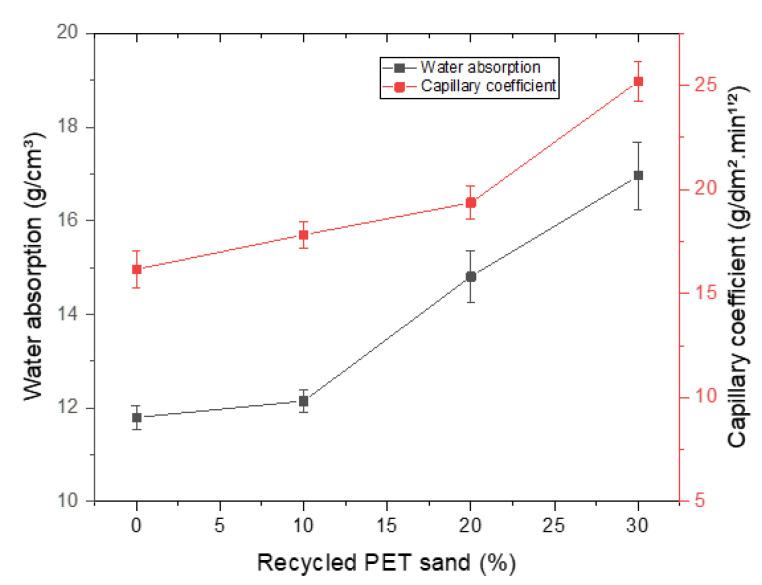
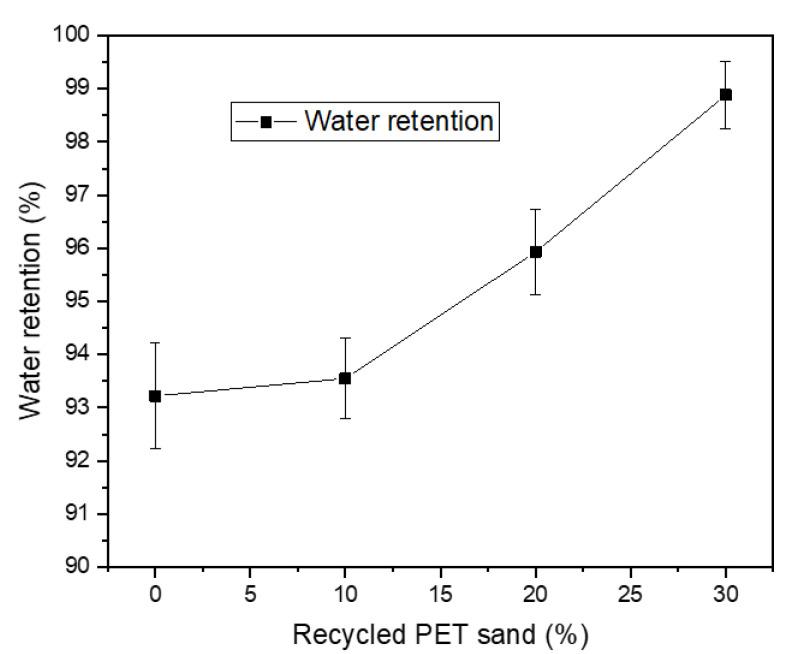
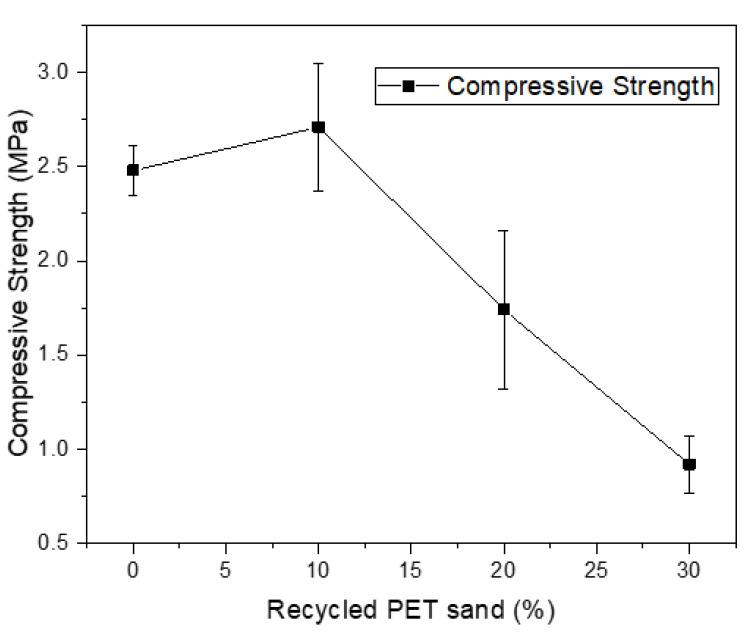
Cementitious materials cause a great impact on the environment due to the calcination of clinker and the extraction of non-renewable mineral resources. In this work, the replacement of quartz sand from the river by PET sand was evaluated at levels of 10%, 20%, and 30%. Tests were performed in the fresh state through consistency, air retention, density, and incorporated air and in the hardened state for compressive strength, flexural strength, density, capillarity, and water absorption. The results show that PET sand is viable in contents of up to 10%, improving the mechanical properties of the mortar and without compromising its workability and incorporated air properties. Above that level, the loss of properties is very excessive, mainly of workability and incorporated air. The incorporated air of the 30% composition, for example, reaches 24%, an excessive value that impacts the properties of the hardened state, making it impossible to use the material at levels greater than 20%. It is concluded that the use of recycled PET sand is a possibility that contributes to sustainable development, as it reduces the extraction of quartz sand from the river, a non-renewable mineral resource.
由于熟料煅烧和不可再生矿产资源的开采,胶凝材料对环境造成了巨大影响。在这项工作中,评估了用PET砂替代河砂的情况,替代水平分别为10%、20%和30%。在新拌状态下通过稠度、含气量、密度和引入空气量进行测试,在硬化状态下测试抗压强度、抗折强度、密度、毛细作用和吸水率。结果表明,PET砂在含量高达10%时是可行的,可改善砂浆的力学性能,且不影响其工作性和引入空气性能。高于该水平,性能损失非常严重,主要是工作性和引入空气性能。例如,30%组成的引入空气量达到24%,这一过高的值影响硬化状态的性能,使得材料在大于20%的水平下无法使用。得出的结论是,使用回收PET砂是一种有助于可持续发展的可能性,因为它减少了从河流中开采石英砂,而石英砂是一种不可再生矿产资源。




 Zotero 插件