
超加工食品消费与成年人死亡风险:207291 名参与者的系统评价和剂量反应荟萃分析。
Ultra-Processed Food Consumption and Adult Mortality Risk: A Systematic Review and Dose-Response Meta-Analysis of 207,291 Participants.
机构信息
Faculty of Nursing, HRH Princess Chulabhorn College of Medical Science, Chulabhorn Royal Academy, Bangkok 10210, Thailand.
Halal Research Center of IRI, FDA, Tehran 314715311, Iran.
出版信息
Nutrients. 2021 Dec 30;14(1):174. doi: 10.3390/nu14010174.
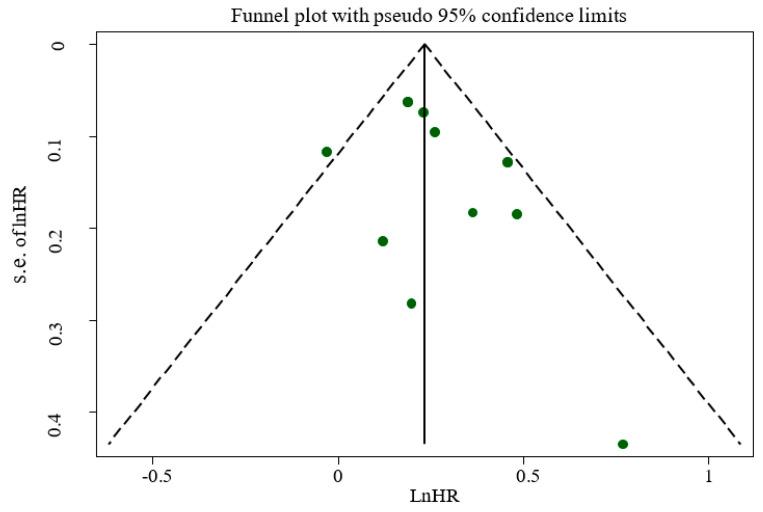
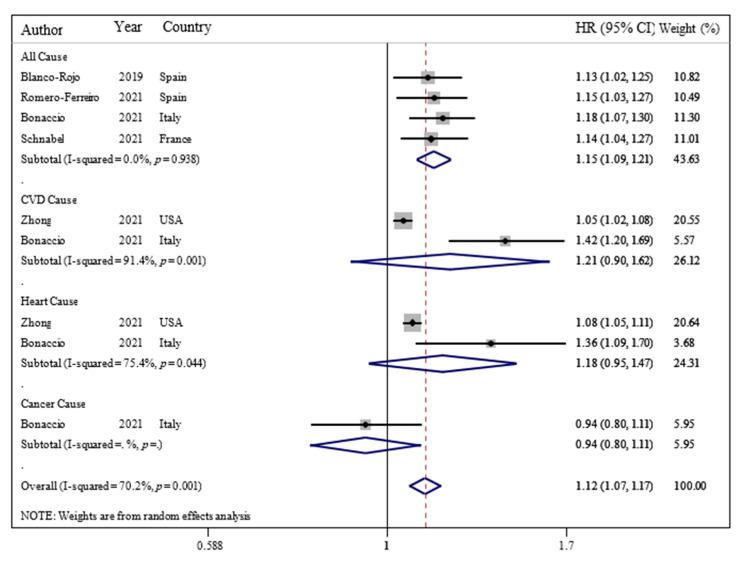
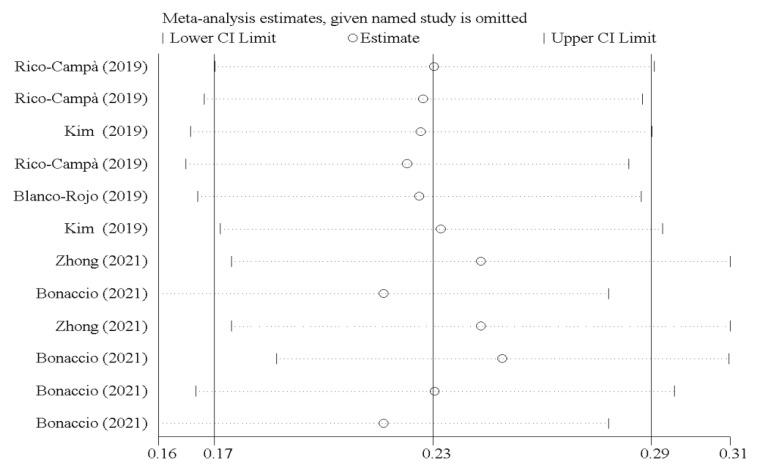
We performed a systematic review and dose-response meta-analysis of observational studies assessing the association between UPF consumption and adult mortality risk. A systematic search was conducted using ISI Web of Science, PubMed/MEDLINE, and Scopus electronic databases from inception to August 2021. Data were extracted from seven cohort studies (totaling 207,291 adults from four countries). Using a random-effects model, hazard ratios (HR) of pooled outcomes were estimated. Our results showed that UPF consumption was related to an enhanced risk of all-cause mortality (HR = 1.21; 95% CI: 1.13, 1.30; I = 21.9%; < 0.001), cardiovascular diseases (CVDs)-cause mortality (HR = 1.50; 95% CI: 1.37, 1.63; I = 0.0%; < 0.001), and heart-cause mortality (HR = 1.66; 95% CI: 1.50, 1.85; I = 0.0%; = 0.022), but not cancer-cause mortality. Furthermore, our findings revealed that each 10% increase in UPF consumption in daily calorie intake was associated with a 15% higher risk of all-cause mortality (OR = 1.15; 95% CI: 1.09, 1.21; I = 0.0%; < 0.001). The dose-response analysis revealed a positive linear association between UPF consumption and all-cause mortality ( = 0.879, = < 0.001), CVDs-cause mortality ( = 0.868, = < 0.001), and heart-cause mortality ( = 0.774, = < 0.001). It seems that higher consumption of UPF is significantly associated with an enhanced risk of adult mortality. Despite this, further experimental studies are necessary to draw a more definite conclusion.
我们进行了一项系统评价和剂量-反应荟萃分析,评估了 UPF 消费与成人死亡率风险之间的关系。系统检索了 ISI Web of Science、PubMed/MEDLINE 和 Scopus 电子数据库,从创建到 2021 年 8 月。从七个队列研究中提取数据(来自四个国家的 207291 名成年人)。使用随机效应模型,估计汇总结果的危害比(HR)。我们的结果表明,UPF 消费与全因死亡率增加相关(HR = 1.21;95%CI:1.13,1.30;I = 21.9%;<0.001)、心血管疾病(CVDs)死亡率(HR = 1.50;95%CI:1.37,1.63;I = 0%;<0.001)和心脏病死亡率(HR = 1.66;95%CI:1.50,1.85;I = 0%;= 0.022),但与癌症死亡率无关。此外,我们的研究结果表明,每日卡路里摄入量中 UPF 消费每增加 10%,全因死亡率的风险就会增加 15%(OR = 1.15;95%CI:1.09,1.21;I = 0%;<0.001)。剂量-反应分析显示 UPF 消费与全因死亡率之间存在正线性关联(= 0.879,= <0.001)、CVDs 死亡率(= 0.868,= <0.001)和心脏病死亡率(= 0.774,= <0.001)。似乎 UPF 的高消费与成人死亡率的增加显著相关。尽管如此,仍需要进一步的实验研究来得出更明确的结论。



 Zotero 插件