
以色列、日本和匈牙利疫苗接种意愿的心理因素。
Psychological factors underpinning vaccine willingness in Israel, Japan and Hungary.
机构信息
Warwick University, Psychology, Coventry, CV4 7AR, UK.
Ariel University, Social Work, Ariel, Israel.
出版信息
Sci Rep. 2022 Jan 10;12(1):439. doi: 10.1038/s41598-021-03986-2.
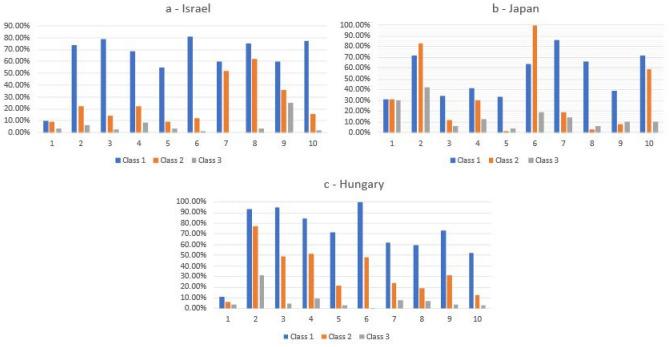
The spread of SARS-CoV-2 led to rapid vaccine development. However, there remains considerable vaccine hesitancy in some countries. We investigate vaccine willingness in three nations with very different vaccine histories: Israel, Japan and Hungary. Employing an ecological-systems approach we analyse associations between health status, individual cognitions, norms, trust in government, COVID-19 myths and willingness to be vaccinated, with data from three nationally representative samples (Israel, Jan. 2021, N = 1011; Japan, Feb. 2021, N = 997; Hungary, April 2021, N = 1130). Vaccine willingness was higher in Israel (74%) than Japan (51%) or Hungary (31%). In all three countries vaccine willingness was greatest amongst who would regret not being vaccinated and respondents who trusted their government. Multi-group latent class analysis identified three groups of COVID myths, with particular concern about alteration of DNA (Israel), allergies (Hungary) and infection from the vaccine (Japan). Intervention campaigns should address such cultural myths while emphasising both individual and social benefits of vaccination.
SARS-CoV-2 的传播促使疫苗迅速研发。然而,在一些国家,人们对接种疫苗仍存在较大的犹豫。我们在三个疫苗接种历史迥异的国家(以色列、日本和匈牙利)研究了疫苗接种意愿。我们采用生态系统方法,分析了健康状况、个人认知、规范、对政府的信任、与 COVID-19 相关的误解以及接种意愿之间的关联,数据来自三个全国代表性样本(以色列,2021 年 1 月,N=1011;日本,2021 年 2 月,N=997;匈牙利,2021 年 4 月,N=1130)。与日本(51%)或匈牙利(31%)相比,以色列(74%)的疫苗接种意愿更高。在所有三个国家,那些表示如果没有接种疫苗会感到后悔的人和信任政府的人,疫苗接种意愿最强。多组潜在类别分析确定了 COVID 相关误解的三个类别,其中特别关注 DNA 改变(以色列)、过敏(匈牙利)和疫苗接种感染(日本)的问题。干预宣传活动应解决这些文化误解,同时强调接种疫苗对个人和社会的好处。

 Zotero 插件