
基因选择性转录促进 TNF 抑制组织修复性巨噬细胞。
Gene-selective transcription promotes the inhibition of tissue reparative macrophages by TNF.
机构信息
Max Planck Institute of Biochemistry, Martinsried, Germany.
Department of Immunometabolism, Max Planck Institute for Immunobiology and Epigenetics, Freiburg, Germany.
出版信息
Life Sci Alliance. 2022 Jan 13;5(4). doi: 10.26508/lsa.202101315. Print 2022 Apr.
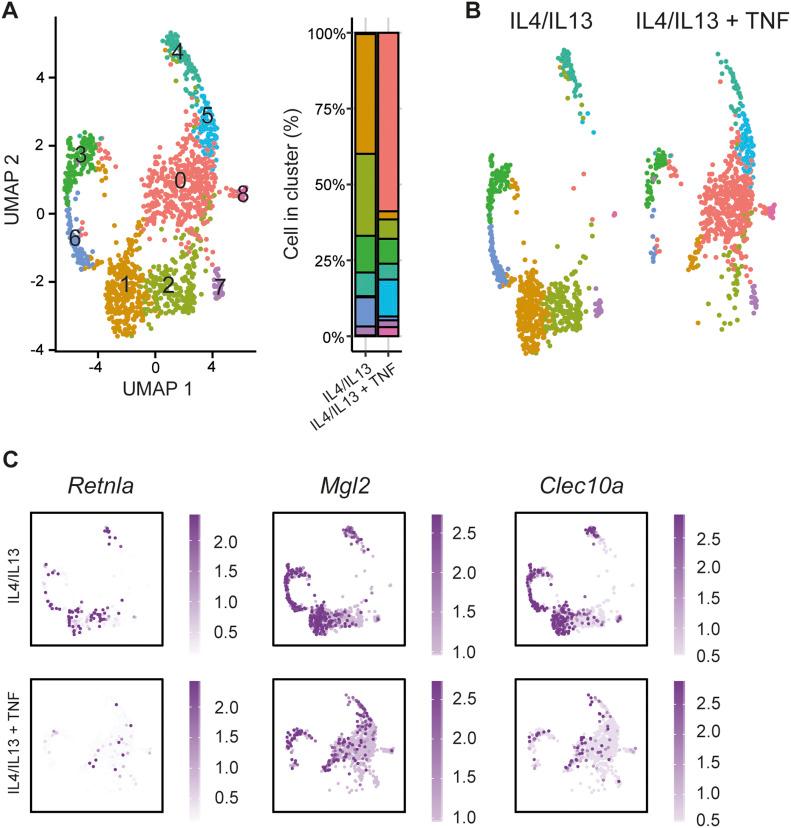
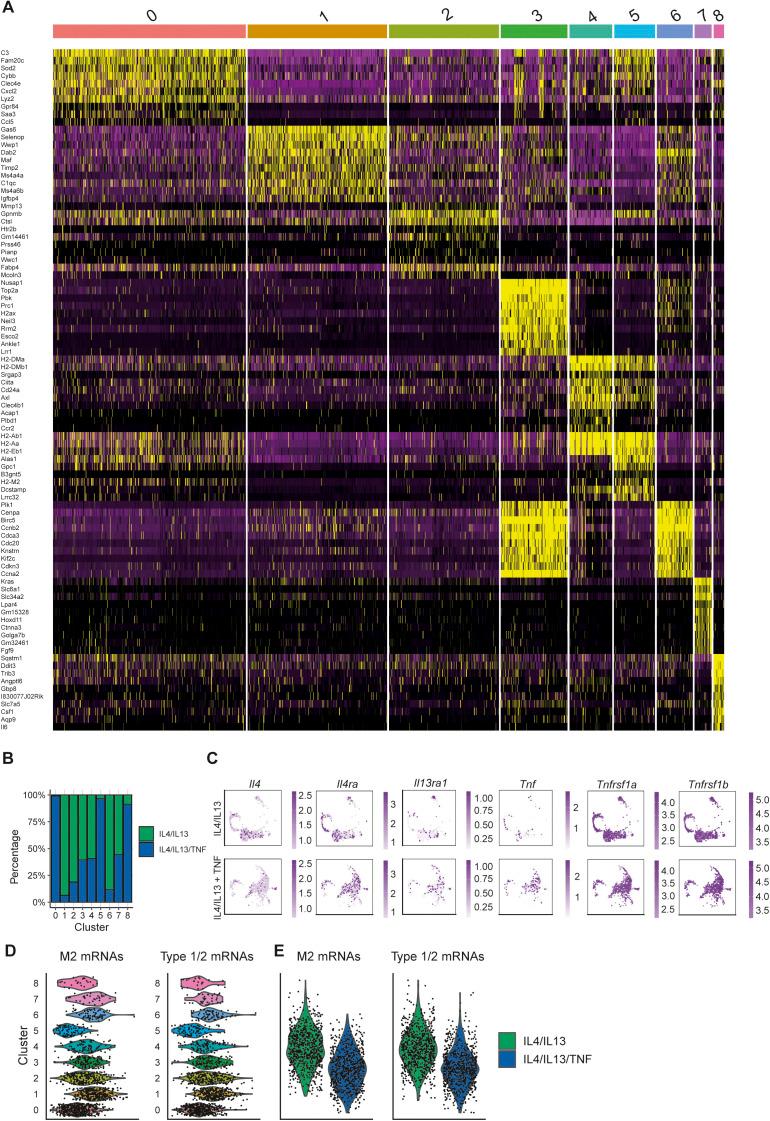
Anti-TNF therapies are a core anti-inflammatory approach for chronic diseases such as rheumatoid arthritis and Crohn's Disease. Previously, we and others found that TNF blocks the emergence and function of alternative-activated or M2 macrophages involved in wound healing and tissue-reparative functions. Conceivably, anti-TNF drugs could mediate their protective effects in part by an altered balance of macrophage activity. To understand the mechanistic basis of how TNF regulates tissue-reparative macrophages, we used RNAseq, scRNAseq, ATACseq, time-resolved phospho-proteomics, gene-specific approaches, metabolic analysis, and signaling pathway deconvolution. We found that TNF controls tissue-reparative macrophage gene expression in a highly gene-specific way, dependent on JNK signaling via the type 1 TNF receptor on specific populations of alternative-activated macrophages. We further determined that JNK signaling has a profound and broad effect on activated macrophage gene expression. Our findings suggest that TNF's anti-M2 effects evolved to specifically modulate components of tissue and reparative M2 macrophages and TNF is therefore a context-specific modulator of M2 macrophages rather than a pan-M2 inhibitor.
抗 TNF 疗法是治疗类风湿关节炎和克罗恩病等慢性疾病的核心抗炎方法。此前,我们和其他人发现 TNF 会阻止参与伤口愈合和组织修复功能的替代性激活或 M2 巨噬细胞的出现和功能。可以想象,抗 TNF 药物可以通过改变巨噬细胞活性的平衡来介导其保护作用。为了了解 TNF 调节组织修复性巨噬细胞的机制基础,我们使用了 RNAseq、scRNAseq、ATACseq、时分辨磷酸化蛋白质组学、基因特异性方法、代谢分析和信号通路反卷积。我们发现 TNF 以高度基因特异性的方式控制组织修复性巨噬细胞的基因表达,这依赖于 JNK 信号通过 1 型 TNF 受体在特定的替代性激活巨噬细胞群体上的信号。我们进一步确定 JNK 信号对激活的巨噬细胞基因表达有深远而广泛的影响。我们的研究结果表明,TNF 的抗 M2 作用是为了专门调节组织和修复性 M2 巨噬细胞的成分,因此 TNF 是 M2 巨噬细胞的一种特定条件调节剂,而不是泛 M2 抑制剂。




 Zotero 插件