
血脑屏障模型:转化医学中的工具
Models of the Blood-Brain Barrier: Tools in Translational Medicine.
作者信息
Williams-Medina Alberto, Deblock Michael, Janigro Damir
机构信息
Department of Physiology and Biophysics, Case Western Reserve University, Cleveland, OH, United States.
Flocel, Inc., Cleveland, OH, United States.
出版信息
Front Med Technol. 2021 Feb 15;2:623950. doi: 10.3389/fmedt.2020.623950. eCollection 2020.
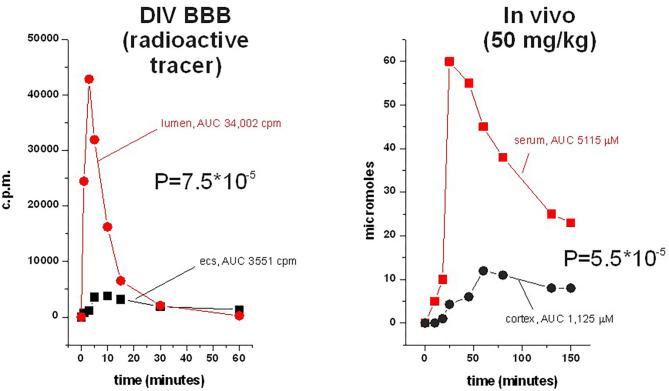
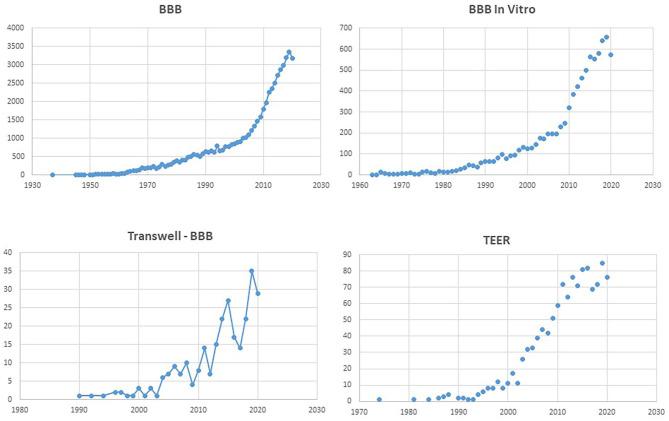
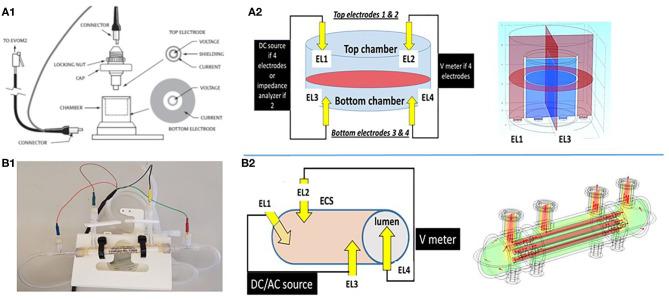
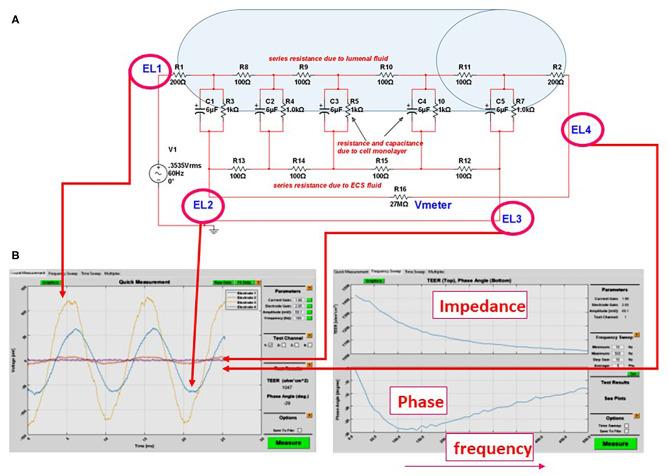
Medical progress has historically depended on scientific discoveries. Until recently, science was driven by technological advancements that, once translated to the clinic, fostered new treatments and interventions. More recently, technology-driven medical progress has often outpaced laboratory research. For example, intravascular devices, pacemakers for the heart and brain, spinal cord stimulators, and surgical robots are used routinely to treat a variety of diseases. The rapid expansion of science into ever more advanced molecular and genetic mechanisms of disease has often distanced laboratory-based research from day-to-day clinical realities that remain based on evidence and outcomes. A recognized reason for this hiatus is the lack of laboratory tools that recapitulate the clinical reality faced by physicians and surgeons. To overcome this, the NIH and FDA have in the recent past joined forces to support the development of a "human-on-a-chip" that will allow research scientists to perform experiments on a realistic replica when testing the effectiveness of novel experimental therapies. The development of a "human-on-a-chip" rests on the capacity to grow various organs-on-a-chip, connected with appropriate vascular supplies and nerves, and our ability to measure and perform experiments on these virtually invisible organs. One of the tissue structures to be scaled down on a chip is the human blood-brain barrier. This review gives a historical perspective on models of the BBB and summarizes the most recent 3D models that attempt to fill the gap between research modeling and patient care. We also present a summary of how these models of the BBB can be applied to study human brain diseases and their treatments. We have chosen NeuroAIDS, COVID-19, multiple sclerosis, and Alzheimer's disease as examples of model application to neurological disorders. Major insight pertaining to these illnesses as a consequence of more profound understanding of the BBB can reveal new avenues for the development of diagnostics, more efficient therapies, and definitive clarity of disease etiology and pathological progression.
从历史上看,医学进步依赖于科学发现。直到最近,科学一直由技术进步推动,这些技术进步一旦转化到临床,就促进了新的治疗方法和干预措施的产生。最近,技术驱动的医学进步往往超过了实验室研究。例如,血管内装置、心脏和大脑起搏器、脊髓刺激器以及手术机器人经常被用于治疗各种疾病。科学迅速扩展到越来越先进的疾病分子和遗传机制,这常常使基于实验室的研究与仍然基于证据和结果的日常临床现实脱节。造成这种脱节的一个公认原因是缺乏能够重现内科医生和外科医生所面临临床现实的实验室工具。为了克服这一问题,美国国立卫生研究院(NIH)和美国食品药品监督管理局(FDA)最近联合起来支持“芯片上的人体”的开发,这将使研究科学家在测试新型实验性疗法的有效性时能够在逼真的复制品上进行实验。“芯片上的人体”的开发依赖于在芯片上培养各种器官芯片的能力,这些器官芯片与适当的血管供应和神经相连,以及我们在这些几乎看不见的器官上进行测量和实验的能力。要在芯片上缩小规模的组织结构之一是人体血脑屏障。本综述给出了血脑屏障模型的历史视角,并总结了试图填补研究建模与患者护理之间差距的最新3D模型。我们还概述了这些血脑屏障模型如何应用于研究人类脑部疾病及其治疗方法。我们选择了神经艾滋病、新冠肺炎、多发性硬化症和阿尔茨海默病作为模型应用于神经疾病的例子。由于对血脑屏障有更深入的了解,与这些疾病相关的主要见解可以揭示诊断、更有效治疗方法的开发以及疾病病因和病理进展的确切清晰度的新途径。

 Zotero 插件