
先天性和适应性免疫细胞在溃疡性结肠炎炎症反应的发病机制及发展中的作用
The Role of Innate and Adaptive Immune Cells in the Pathogenesis and Development of the Inflammatory Response in Ulcerative Colitis.
作者信息
Kałużna Aleksandra, Olczyk Paweł, Komosińska-Vassev Katarzyna
机构信息
Department of Clinical Chemistry and Laboratory Diagnostics, Faculty of Pharmaceutical Sciences in Sosnowiec, Medical University of Silesia in Katowice, 41-200 Sosnowiec, Poland.
Department of Community Pharmacy, Faculty of Pharmaceutical Sciences in Sosnowiec, Medical University of Silesia in Katowice, 41-200 Sosnowiec, Poland.
出版信息
J Clin Med. 2022 Jan 13;11(2):400. doi: 10.3390/jcm11020400.
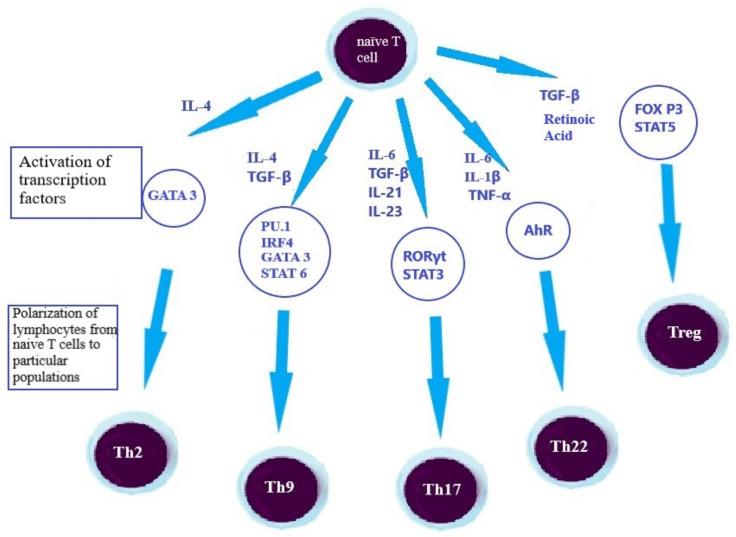
Ulcerative colitis (UC) is a chronic inflammatory disease with an underlying excessive immune response directed against resident microbiota and/or dietary antigens. Both innate and adaptive immune cells play a crucial role in the pathogenesis of UC. In the case of innate immune response cells, neutrophils, dendritic cells, macrophages have a crucial impact on the development of the disease, as well as innate lymphoid cells, which have received a particular attention in recent years. On the other hand, mechanisms of the adaptive immune response involve cells such as: cytotoxic lymphocytes, regulatory lymphocytes Treg, or helper lymphocytes Th-Th2, Th9, Th17, Th22, among which significant discoveries about Th9 and Th17 lymphocytes have been made in recent years. Due to the presence of antibodies directed against resident microbiota or one's own tissues, the influence of B lymphocytes on the development of UC is also highlighted. Additionally, the impact of cytokines on shaping the immune response as well as sustaining inflammation seems to be crucial. This review briefly describes the current state of knowledge about the involvement of the innate and adaptive immune systems in the pathogenesis of UC. The review is based on personal selection of literature that were retrieved by a selective search in PubMed using the terms "ulcerative colitis" and "pathogenesis of ulcerative colitis". It included systematic reviews, meta-analyses and clinical trials. Our knowledge of the involvement of the immune system in the pathophysiology of IBD has advanced rapidly over the last two decades, leading to the development of several immune-targeted treatments with a biological source, known as biologic agents.
溃疡性结肠炎(UC)是一种慢性炎症性疾病,其潜在病因是针对常驻微生物群和/或饮食抗原的过度免疫反应。先天性免疫细胞和适应性免疫细胞在UC的发病机制中都起着关键作用。就先天性免疫反应细胞而言,中性粒细胞、树突状细胞、巨噬细胞对疾病的发展具有关键影响,近年来受到特别关注的先天性淋巴细胞也是如此。另一方面,适应性免疫反应机制涉及多种细胞,如细胞毒性淋巴细胞、调节性淋巴细胞Treg或辅助性淋巴细胞Th-Th2、Th9、Th17、Th22,近年来关于Th9和Th17淋巴细胞有了重大发现。由于存在针对常驻微生物群或自身组织的抗体,B淋巴细胞对UC发展的影响也受到关注。此外,细胞因子对塑造免疫反应以及维持炎症的影响似乎至关重要。本综述简要描述了关于先天性和适应性免疫系统参与UC发病机制的当前知识状态。该综述基于个人对文献的筛选,这些文献是通过在PubMed中使用“溃疡性结肠炎”和“溃疡性结肠炎的发病机制”等术语进行选择性检索获得的。其中包括系统评价、荟萃分析和临床试验。在过去二十年中,我们对免疫系统参与炎症性肠病病理生理学的认识迅速发展,导致了几种具有生物来源的免疫靶向治疗方法的开发,即生物制剂。


 Zotero 插件