
星形胶质细胞多胺和GABA代谢在癫痫发生中的关键作用。
Critical Role of Astrocytic Polyamine and GABA Metabolism in Epileptogenesis.
作者信息
Kovács Zsolt, Skatchkov Serguei N, Veh Rüdiger W, Szabó Zsolt, Németh Krisztina, Szabó Pál T, Kardos Julianna, Héja László
机构信息
Department of Biology, ELTE Eötvös Loránd University, Savaria University Centre, Szombathely, Hungary.
Department of Physiology, Universidad Central Del Caribe, Bayamon, PR, United States.
出版信息
Front Cell Neurosci. 2022 Jan 6;15:787319. doi: 10.3389/fncel.2021.787319. eCollection 2021.
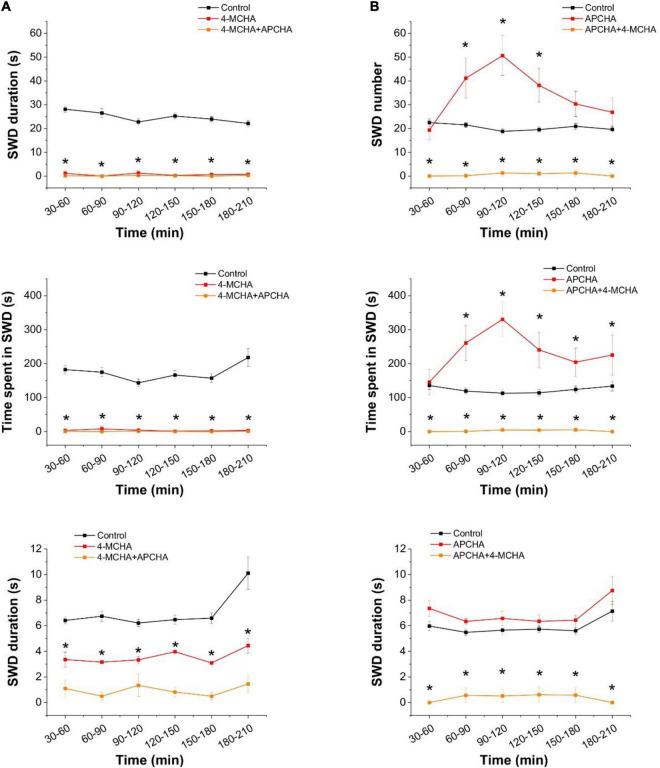
Accumulating evidence indicate that astrocytes are essential players of the excitatory and inhibitory signaling during normal and epileptiform activity uptake and release of gliotransmitters, ions, and other substances. Polyamines can be regarded as gliotransmitters since they are almost exclusively stored in astrocytes and can be released by various mechanisms. The polyamine putrescine (PUT) is utilized to synthesize GABA, which can also be released from astrocytes and provide tonic inhibition on neurons. The polyamine spermine (SPM), synthesized form PUT through spermidine (SPD), is known to unblock astrocytic Cx43 gap junction channels and therefore facilitate astrocytic synchronization. In addition, SPM released from astrocytes may also modulate neuronal NMDA, AMPA, and kainate receptors. As a consequence, astrocytic polyamines possess the capability to significantly modulate epileptiform activity. In this study, we investigated different steps in polyamine metabolism and coupled GABA release to assess their potential to control seizure generation and maintenance in two different epilepsy models: the low-[Mg] model of temporal lobe epilepsy and in the WAG/Rij rat model of absence epilepsy . We show that SPM is a gliotransmitter that is released from astrocytes and significantly contributes to network excitation. Importantly, we found that inhibition of SPD synthesis completely prevented seizure generation in WAG/Rij rats. We hypothesize that this antiepileptic effect is attributed to the subsequent enhancement of PUT to GABA conversion in astrocytes, leading to GABA release through GAT-2/3 transporters. This interpretation is supported by the observation that antiepileptic potential of the Food and Drug Administration (FDA)-approved drug levetiracetam can be diminished by specifically blocking astrocytic GAT-2/3 with SNAP-5114, suggesting that levetiracetam exerts its effect by increasing surface expression of GAT-2/3. Our findings conclusively suggest that the major pathway through which astrocytic polyamines contribute to epileptiform activity is the production of GABA. Modulation of astrocytic polyamine levels, therefore, may serve for a more effective antiepileptic drug development in the future.
越来越多的证据表明,星形胶质细胞在正常和癫痫样活动中是兴奋性和抑制性信号传导、神经胶质递质、离子及其他物质摄取和释放过程中的重要参与者。多胺可被视为神经胶质递质,因为它们几乎只储存在星形胶质细胞中,并可通过多种机制释放。多胺腐胺(PUT)用于合成γ-氨基丁酸(GABA),GABA也可从星形胶质细胞释放,并对神经元提供紧张性抑制。由PUT通过亚精胺(SPD)合成的多胺精胺(SPM),已知可打开星形胶质细胞的Cx43缝隙连接通道,从而促进星形胶质细胞同步化。此外,从星形胶质细胞释放的SPM也可能调节神经元的N-甲基-D-天冬氨酸(NMDA)、α-氨基-3-羟基-5-甲基-4-异恶唑丙酸(AMPA)和海人藻酸受体。因此,星形胶质细胞多胺具有显著调节癫痫样活动的能力。在本研究中,我们研究了多胺代谢的不同步骤以及与之相关的GABA释放,以评估它们在两种不同癫痫模型中控制癫痫发作产生和维持的潜力:颞叶癫痫的低镁模型和失神癫痫的WAG/Rij大鼠模型。我们发现,SPM是一种从星形胶质细胞释放的神经胶质递质,对网络兴奋有显著作用。重要的是,我们发现抑制SPD合成可完全阻止WAG/Rij大鼠癫痫发作的产生。我们推测这种抗癫痫作用归因于随后星形胶质细胞中PUT向GABA转化的增强,导致GABA通过GAT-2/3转运体释放。食品药品监督管理局(FDA)批准的药物左乙拉西坦的抗癫痫潜力可通过用SNAP-5114特异性阻断星形胶质细胞GAT-2/3来减弱,这一观察结果支持了上述解释,表明左乙拉西坦通过增加GAT-2/3的表面表达发挥作用。我们的研究结果明确表明,星形胶质细胞多胺促进癫痫样活动的主要途径是GABA的产生。因此,调节星形胶质细胞多胺水平可能为未来更有效的抗癫痫药物研发提供帮助。




 Zotero 插件