
评估免疫力下降对南非新冠疫情动态的潜在影响:一种新冠地方病模型
Assessing the potential impact of immunity waning on the dynamics of COVID-19 in South Africa: an endemic model of COVID-19.
作者信息
Rabiu Musa, Iyaniwura Sarafa A
机构信息
School of Mathematics, Statistics & Computer Science, University of KwaZulu-Natal, Durban, South Africa.
Department of Mathematics and Institute of Applied Mathematics, University of British Columbia, Vancouver, BC Canada.
出版信息
Nonlinear Dyn. 2022;109(1):203-223. doi: 10.1007/s11071-022-07225-9. Epub 2022 Jan 25.
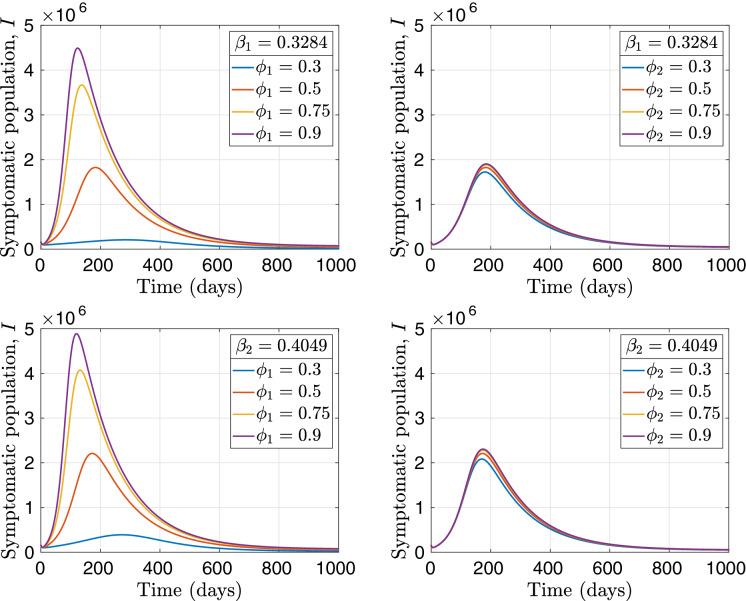
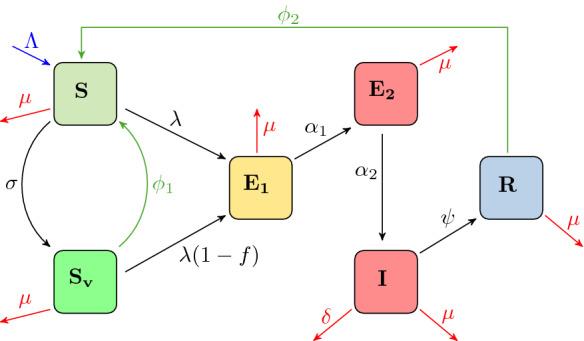
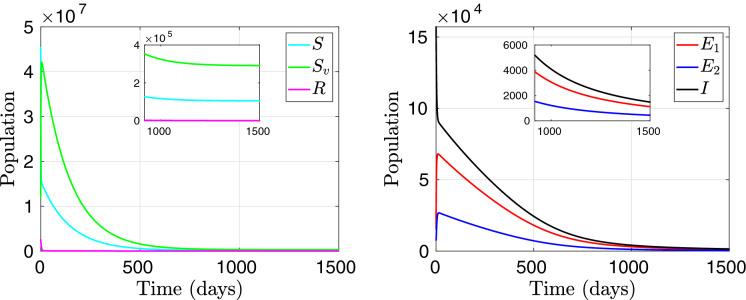
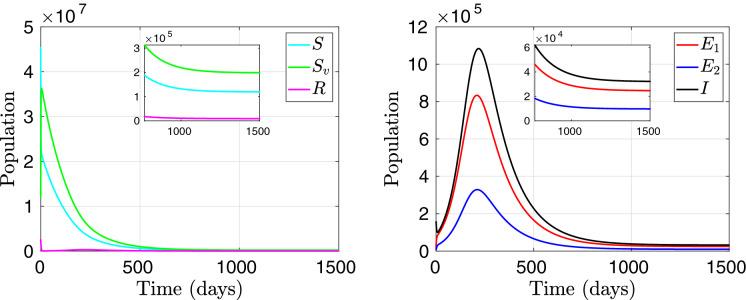
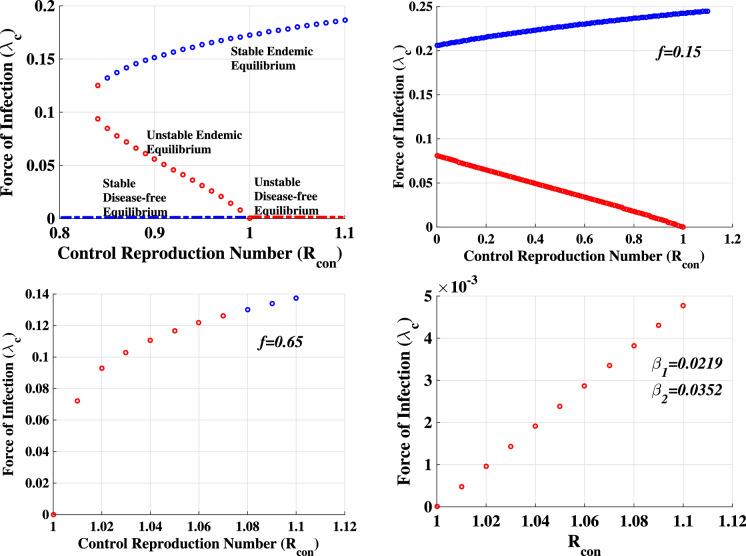
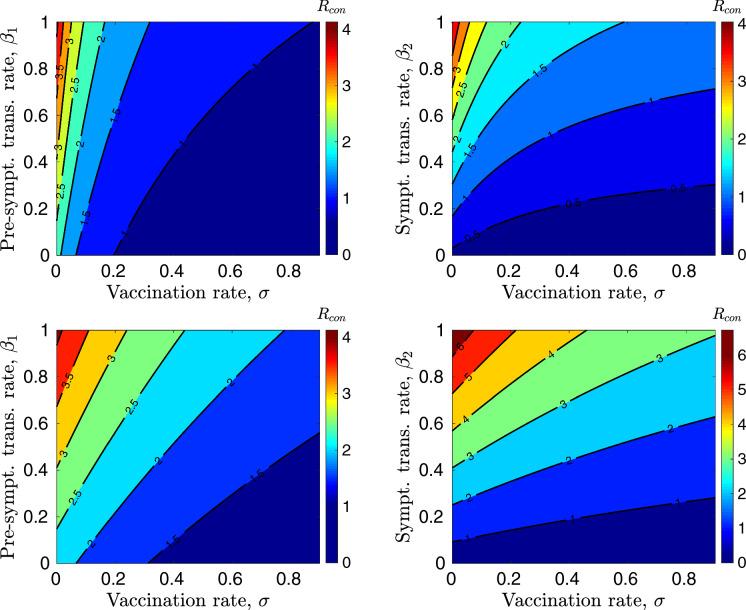
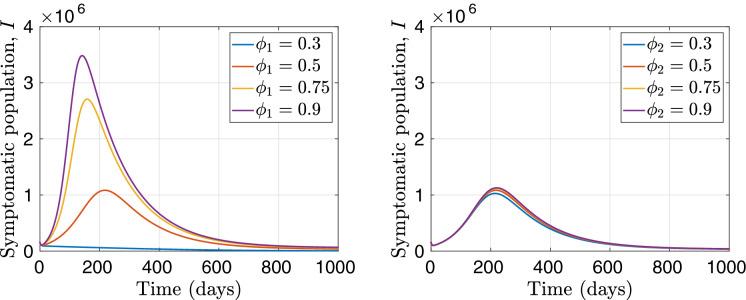
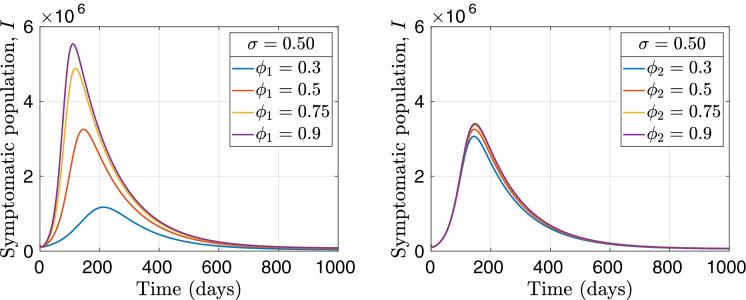
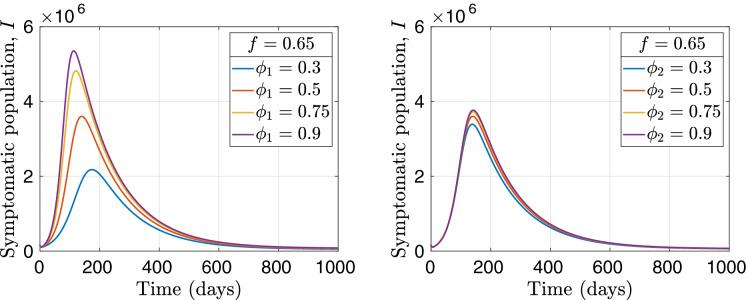
We developed an endemic model of COVID-19 to assess the impact of vaccination and immunity waning on the dynamics of the disease. Our model exhibits the phenomenon of backward bifurcation and bi-stability, where a stable disease-free equilibrium coexists with a stable endemic equilibrium. The epidemiological implication of this is that the control reproduction number being less than unity is no longer sufficient to guarantee disease eradication. We showed that this phenomenon could be eliminated by either increasing the vaccine efficacy or by reducing the disease transmission rate (adhering to non-pharmaceutical interventions). Furthermore, we numerically investigated the impacts of vaccination and waning of both vaccine-induced immunity and post-recovery immunity on the disease dynamics. Our simulation results show that the waning of vaccine-induced immunity has more effect on the disease dynamics relative to post-recovery immunity waning and suggests that more emphasis should be on reducing the waning of vaccine-induced immunity to eradicate COVID-19.
我们开发了一种新冠病毒的地方病模型,以评估疫苗接种和免疫力减弱对疾病动态的影响。我们的模型呈现出后向分岔和双稳态现象,即稳定的无病平衡点与稳定的地方病平衡点共存。其流行病学意义在于,控制再生数小于1不再足以保证疾病根除。我们表明,通过提高疫苗效力或降低疾病传播率(坚持非药物干预措施)可以消除这种现象。此外,我们通过数值研究了疫苗接种以及疫苗诱导免疫和康复后免疫的减弱对疾病动态的影响。我们的模拟结果表明,相对于康复后免疫的减弱,疫苗诱导免疫的减弱对疾病动态的影响更大,这表明为根除新冠病毒应更加强调减少疫苗诱导免疫的减弱。

 Zotero 插件