
用于应对 COVID-19 挑战的人类类器官和器官芯片。
Human Organoids and Organs-on-Chips for Addressing COVID-19 Challenges.
机构信息
Division of Biotechnology, Dalian Institute of Chemical Physics, Chinese Academy of Sciences, Dalian, 116023, China.
Beijing Institute For Stem Cell and Regeneration Medicine, Beijing, 100101, China.
出版信息
Adv Sci (Weinh). 2022 Apr;9(10):e2105187. doi: 10.1002/advs.202105187. Epub 2022 Feb 2.
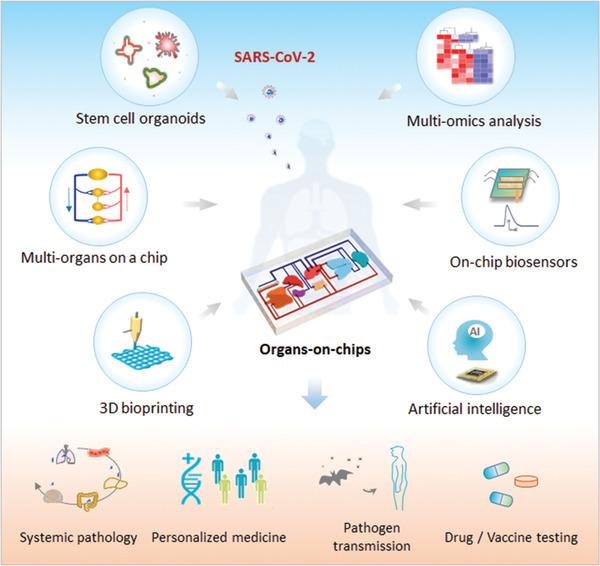
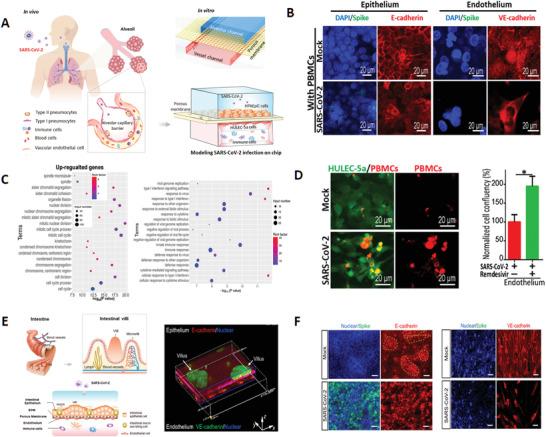
Coronavirus disease 2019 (COVID-19), caused by severe acute respiratory syndrome coronavirus 2 (SARS-CoV-2), poses an imminent threat to our lives. Although animal models and monolayer cell cultures are utilized for pathogenesis studies and the development of COVID-19 therapeutics, models that can more accurately reflect human-relevant responses to this novel virus are still lacking. Stem cell organoids and bioengineered organs-on-chips have emerged as two cutting-edge technologies used to construct biomimetic in vitro three-dimensional (3D) tissue or organ models. In this review, the key features of these two model systems that allow them to recapitulate organ physiology and function are introduced. The recent progress of these technologies for virology research is summarized and their utility in meeting the COVID-19 pandemic is highlighted. Future opportunities and challenges in the development of advanced human organ models and their potential to accelerate translational applications to provide vaccines and therapies for COVID-19 and other emerging epidemics are also discussed.
新型冠状病毒病(COVID-19)由严重急性呼吸综合征冠状病毒 2(SARS-CoV-2)引起,对我们的生命构成了迫在眉睫的威胁。尽管动物模型和单层细胞培养用于发病机制研究和 COVID-19 治疗药物的开发,但仍缺乏能够更准确反映人类对这种新型病毒反应的模型。干细胞类器官和生物工程器官芯片已成为构建仿生体外三维(3D)组织或器官模型的两种前沿技术。在这篇综述中,介绍了这两种模型系统的关键特征,使其能够重现器官的生理和功能。总结了这些技术在病毒学研究中的最新进展,并强调了它们在应对 COVID-19 大流行中的应用价值。还讨论了开发先进的人类器官模型的未来机遇和挑战,以及它们在提供 COVID-19 和其他新兴传染病疫苗和治疗方法方面的转化应用潜力。


 Zotero 插件