
尼日利亚的 COVID-19 和拉沙热:致命联盟?
COVID-19 and Lassa fever in Nigeria: A deadly alliance?
机构信息
Department of Applied Mathematics, Hong Kong Polytechnic University, Hong Kong, China; Department of Mathematics, Kano University of Science and Technology, Wudil, Nigeria.
JC School of Public Health and Primary Care, Chinese University of Hong Kong, Hong Kong, China; Shenzhen Research Institute of Chinese University of Hong Kong, Shenzhen, China.
出版信息
Int J Infect Dis. 2022 Apr;117:45-47. doi: 10.1016/j.ijid.2022.01.058. Epub 2022 Jan 30.
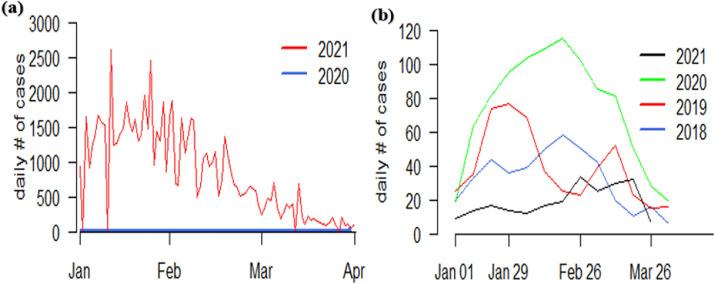
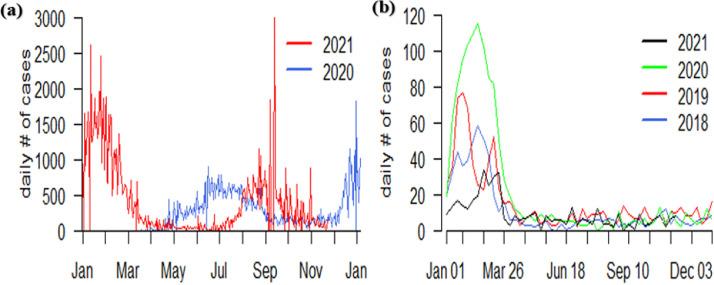
As the COVID-19 pandemic poses serious threats to global public health, Nigeria faces a potential public health crisis owing to COVID-19 and other infectious diseases, such as Lassa fever (LF) and malaria. In this study, we discuss the possible determinants behind the decreased number of LF cases in Nigeria, which was likely due to the synergistic impact of the COVID-19 pandemic. During the COVID-19 pandemic, the epidemic curve of LF seems to have deviated from the general seasonal scale seen in past years, which could be due to underreporting of cases. In addition, partial compliance with nonpharmaceutical interventions, limited resources, or human behavior could be contributing factors. Thus, we suggest that better differentiation in terms of human and resource allocation between COVID-19 and LF could help curtail the transmission effectively.
随着 COVID-19 大流行对全球公共卫生构成严重威胁,尼日利亚正面临着 COVID-19 和其他传染病(如拉沙热[LF]和疟疾)带来的潜在公共卫生危机。在本研究中,我们讨论了尼日利亚 LF 病例数量减少的可能决定因素,这可能是由于 COVID-19 大流行的协同影响。在 COVID-19 大流行期间,LF 的疫情曲线似乎偏离了过去几年的一般季节性规模,这可能是由于病例报告不足所致。此外,非药物干预措施的部分遵守、资源有限或人类行为可能是促成因素。因此,我们建议在 COVID-19 和 LF 之间更好地分配人力和资源,这有助于有效遏制传播。
 Zotero 插件