
mRNA测序和miRNA测序的综合分析揭示了十足目虹彩病毒1感染下肠道免疫反应的分子机制。
Integrated Analysis of mRNA-Seq and MiRNA-Seq Reveals the Molecular Mechanism of the Intestinal Immune Response in Under Decapod Iridescent Virus 1 Infection.
作者信息
He Zihao, Zhong Yunqi, Hou Danqing, Hu Xianye, Fu Zhibin, Liu Luyao, Zhang Shuang, Sun Chengbo
机构信息
College of Fisheries, Guangdong Ocean University, Zhanjiang, China.
Aquatic Animals Precision Nutrition and High Efficiency Feed Engineering Research Center of Guangdong Province, Zhanjiang, China.
出版信息
Front Immunol. 2022 Jan 18;12:807093. doi: 10.3389/fimmu.2021.807093. eCollection 2021.
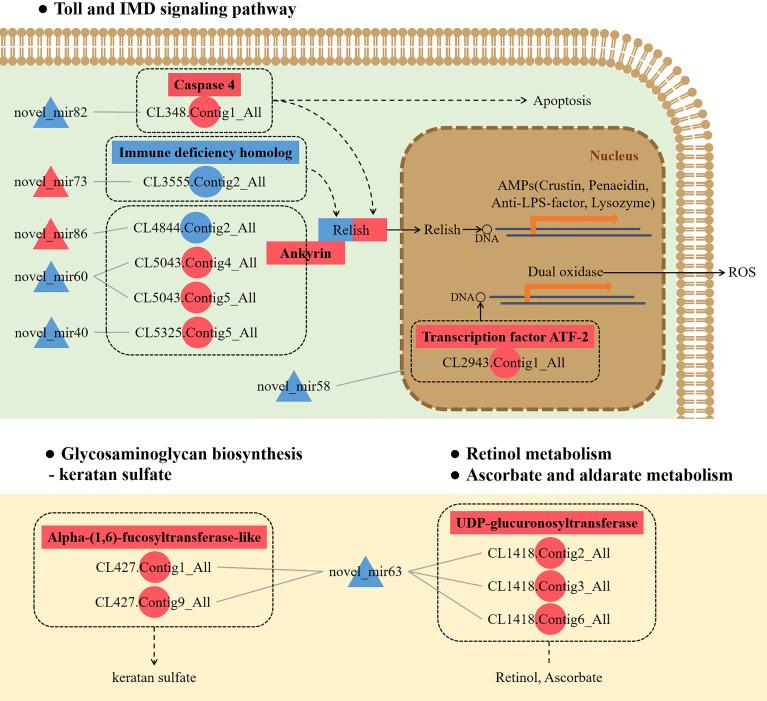
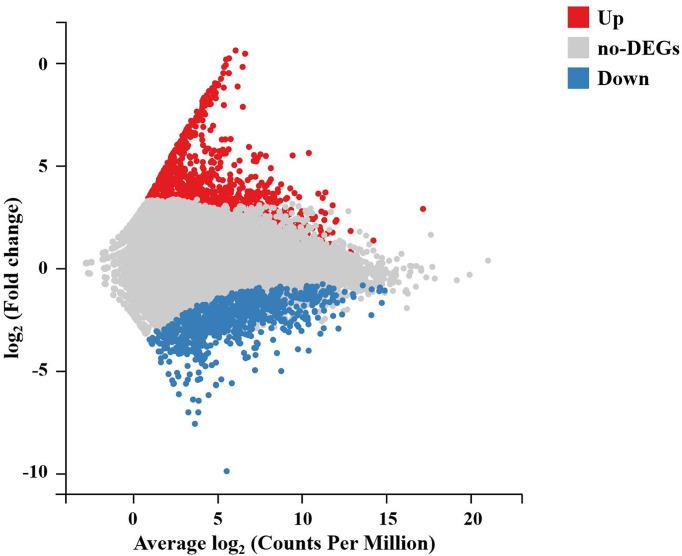
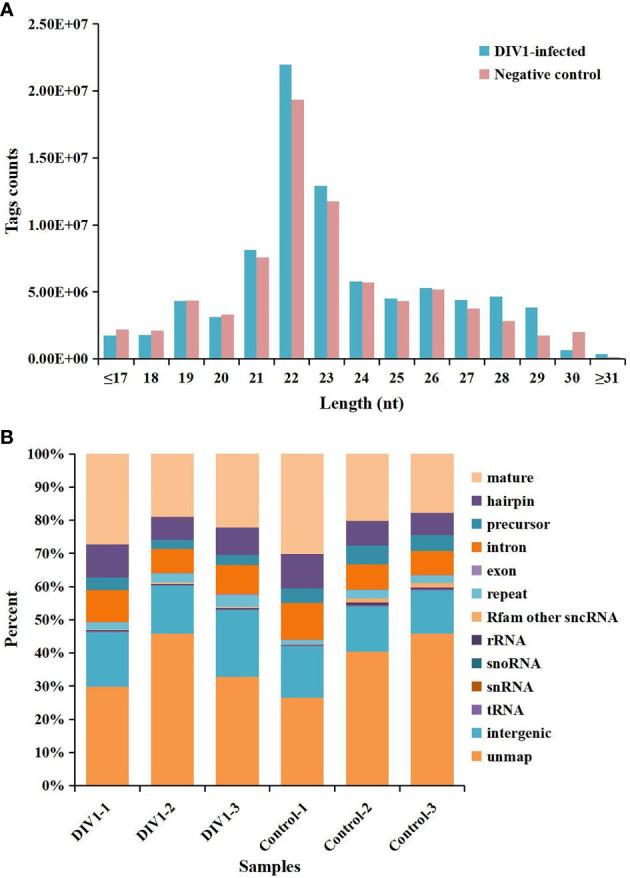
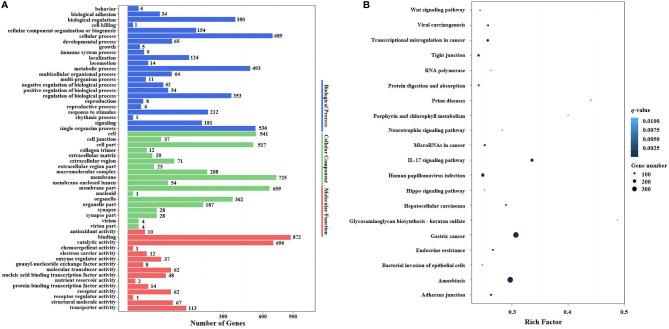
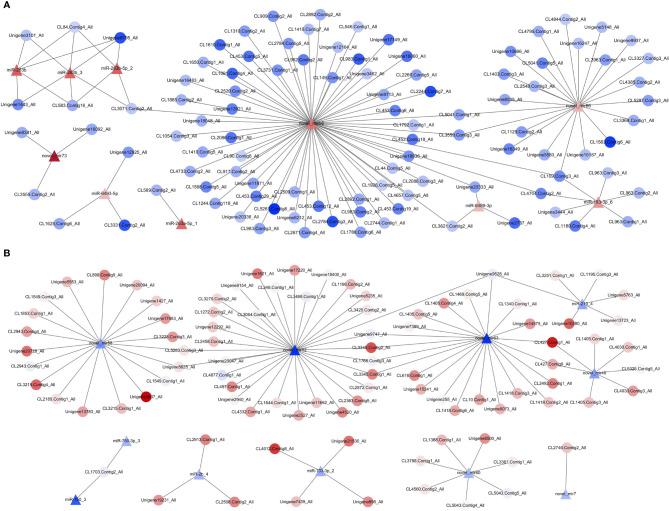
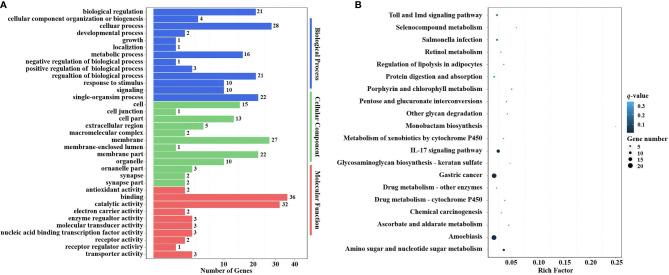
The intestine is not only an important digestive organ but also an important immune organ for shrimp; it plays a key role in maintaining homeostasis. Decapod iridescent virus 1 (DIV1) is a new type of shrimp-lethal virus that has received extensive attention in recent years. To date, most studies of the shrimp intestinal immune response under viral infections have relied on single omics analyses; there is a lack of systematic multi-omics research. In the current study, intestinal mRNA-seq and microRNA (miRNA)-seq analyses of under DIV1 infection were performed. A total of 1,976 differentially expressed genes (DEGs) and 32 differentially expressed miRNAs (DEMs) were identified. Among them, 21 DEMs were negatively correlated with 194 DEGs from a total of 223 correlations. Functional annotation analysis revealed that can regulate glycosaminoglycan biosynthesis (chondroitin sulfate, dermatan sulfate, and keratan sulfate), vitamin metabolism (retinol metabolism and ascorbate and aldarate metabolism), immune pathway activation (Toll and IMD signaling pathways, Wnt signaling pathway, IL-17 signaling pathway, and Hippo signaling pathway), immunity enzyme activity promotion (triose-phosphate isomerase), antimicrobial peptide (AMP) expression, reactive oxygen species (ROS) production, and cell apoptosis through miRNAs to participate in the host's antiviral immune response, while DIV1 can influence Warburg effect-related pathways (pyruvate metabolism, glycolysis/gluconeogenesis, and citrate cycle), glycosphingolipid biosynthesis-related pathways (glycosphingolipid biosynthesis-globo and isoglobo series and glycosphingolipid biosynthesis-lacto and neolacto series), and the tight junction and adhesion junction of the intestinal mucosal epithelium through the host's miRNAs and mRNA to promote its own invasion and replication. These results indicate that intestinal miRNAs play important roles in the shrimp immune response against DIV1 infection. This study provides a basis for further study of the shrimp intestinal antiviral immune response and for the formulation of effective new strategies for the prevention and treatment of DIV1 infection.
肠道不仅是虾类重要的消化器官,也是重要的免疫器官;它在维持体内平衡方面发挥着关键作用。十足目虹彩病毒1(DIV1)是近年来受到广泛关注的一种新型虾致死病毒。迄今为止,大多数关于病毒感染下虾肠道免疫反应的研究都依赖于单一组学分析;缺乏系统性的多组学研究。在本研究中,对DIV1感染下的肠道进行了mRNA测序和微小RNA(miRNA)测序分析。共鉴定出1976个差异表达基因(DEG)和32个差异表达miRNA(DEM)。其中,在总共223个相关性中,有21个DEM与194个DEG呈负相关。功能注释分析表明,miRNA可通过调节糖胺聚糖生物合成(硫酸软骨素、硫酸皮肤素和硫酸角质素)、维生素代谢(视黄醇代谢以及抗坏血酸和醛糖酸代谢)、免疫途径激活(Toll和IMD信号通路、Wnt信号通路、IL-17信号通路和Hippo信号通路)、免疫酶活性促进(磷酸丙糖异构酶)、抗菌肽(AMP)表达、活性氧(ROS)产生以及细胞凋亡来参与宿主的抗病毒免疫反应,而DIV1可通过宿主的miRNA和mRNA影响与瓦伯格效应相关的途径(丙酮酸代谢、糖酵解/糖异生和柠檬酸循环)、糖鞘脂生物合成相关途径(糖鞘脂生物合成 - 球系列和异球系列以及糖鞘脂生物合成 - 乳糖和新乳糖系列)以及肠道黏膜上皮的紧密连接和黏附连接,以促进自身的侵入和复制。这些结果表明肠道miRNA在虾类针对DIV1感染的免疫反应中发挥着重要作用。本研究为进一步研究虾肠道抗病毒免疫反应以及制定预防和治疗DIV1感染的有效新策略提供了依据。


 Zotero 插件