
机器学习在风湿免疫疾病中的应用。
Application of Machine Learning in Rheumatic Immune Diseases.
机构信息
Department of Rheumatology, Tianjin First Central Hospital, Tianjin 300192, China.
出版信息
J Healthc Eng. 2022 Jan 25;2022:9273641. doi: 10.1155/2022/9273641. eCollection 2022.
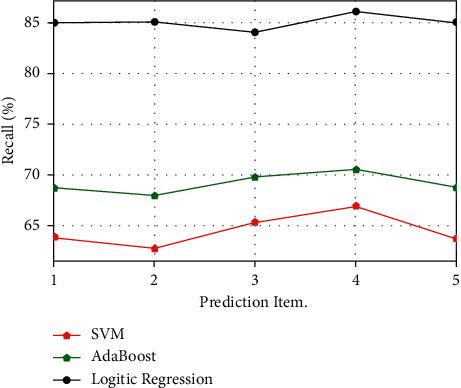
People are paying greater attention to their personal health as society develops and progresses, and rheumatic immunological disorders have become a serious concern that affects human health. As a result, research on a stable, trustworthy, and effective auxiliary diagnostic method for rheumatic immune disorders is critical. Machine learning overcomes the inefficiencies and volatility of human data processing, ushering in a revolution in artificial intelligence research. With the use of big data, machine learning-based application research on rheumatic immunological disorders has already demonstrated detection abilities that are on par with or better than those of medical professionals. Artificial intelligence systems are now being applied in the field of rheumatic immune disorders, with an emphasis on the identification of patient joint images. This article focuses on the use of machine learning algorithms in the diagnosis of rheumatic illnesses, as well as the practical implications of disease-assisted diagnosis systems and intelligent medical diagnosis. This article focuses on three common machine learning algorithms for research and debate: logistic regression, support vector machines, and adaptive boosting techniques. The three algorithms are used to build diagnostic models based on rheumatic illness data, and the performance of each model is assessed. According to a thorough analysis of the assessment data, the diagnostic model based on the limit gradient boosting method has the best resilience. This article presents machine learning's use and advancement in rheumatic immunological disorders, as well as new ideas for investigating more appropriate and efficient diagnostic and treatment techniques.
随着社会的发展和进步,人们越来越关注个人健康,风湿免疫性疾病已成为影响人类健康的严重问题。因此,研究稳定、可靠、有效的风湿免疫性疾病辅助诊断方法至关重要。机器学习克服了人类数据处理的低效性和不稳定性,引领了人工智能研究的革命。通过使用大数据,基于机器学习的风湿免疫性疾病应用研究已经展示出与医学专业人员相当或更好的检测能力。人工智能系统现在已经应用于风湿免疫性疾病领域,重点是识别患者的关节图像。本文重点介绍了机器学习算法在风湿性疾病诊断中的应用,以及疾病辅助诊断系统和智能医学诊断的实际意义。本文重点研究了三种常见的机器学习算法:逻辑回归、支持向量机和自适应提升技术。这三种算法用于根据风湿性疾病数据构建诊断模型,并评估每个模型的性能。通过对评估数据的深入分析,基于极限梯度提升方法的诊断模型具有最佳的弹性。本文介绍了机器学习在风湿免疫性疾病中的应用和进展,以及探索更合适和有效的诊断和治疗技术的新思路。


 Zotero 插件