
臂旁核的分子本体论。
Molecular ontology of the parabrachial nucleus.
机构信息
Department of Neurology, University of Iowa, Iowa City, Iowa, USA.
Department of Anatomy and Neurobiology, Washington University School of Medicine, Saint Louis, Missouri, USA.
出版信息
J Comp Neurol. 2022 Jul;530(10):1658-1699. doi: 10.1002/cne.25307. Epub 2022 Feb 21.
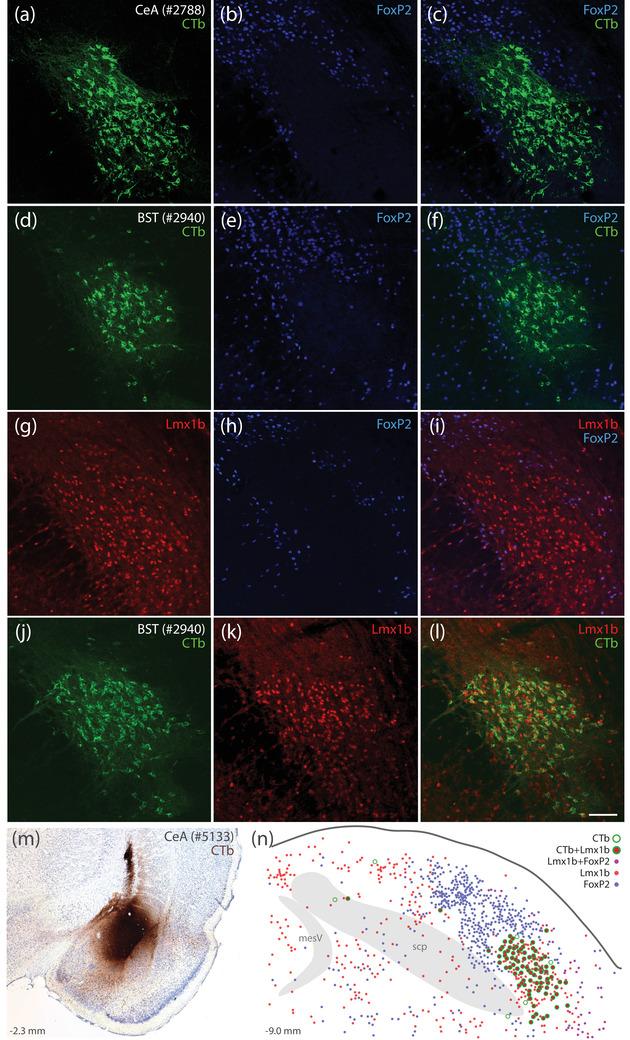
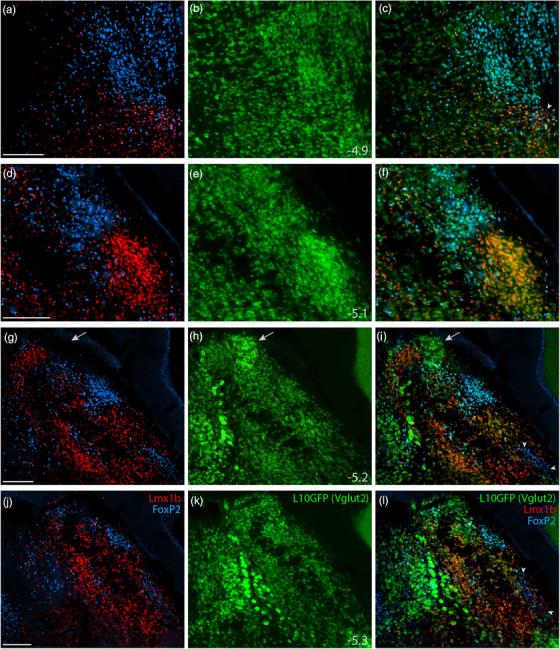
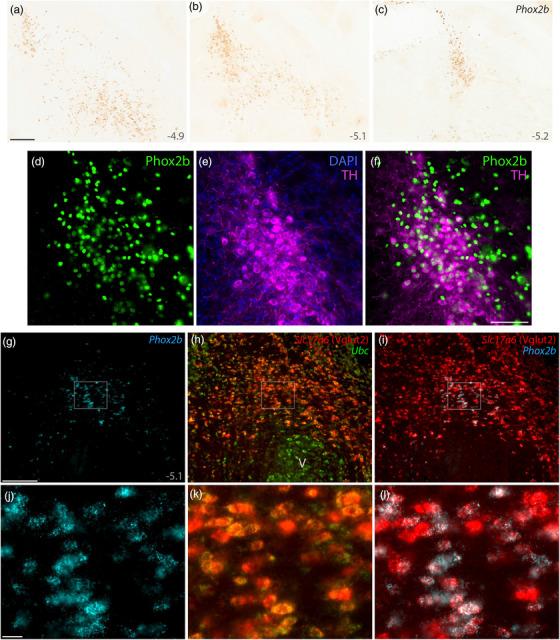
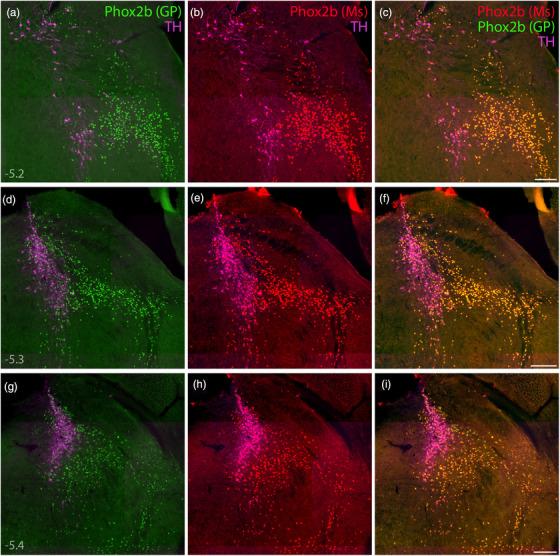
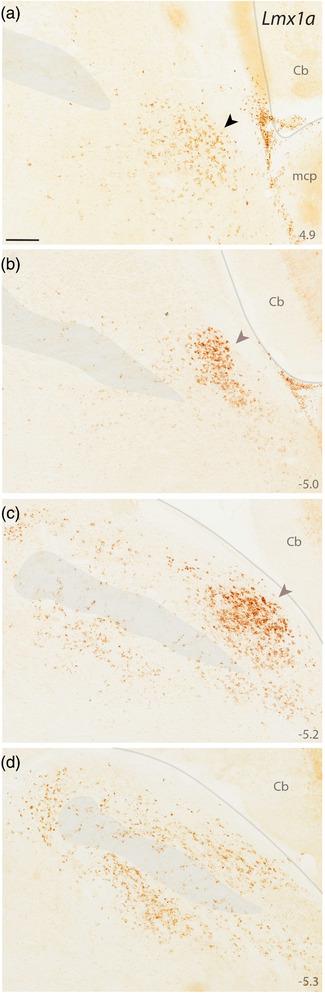
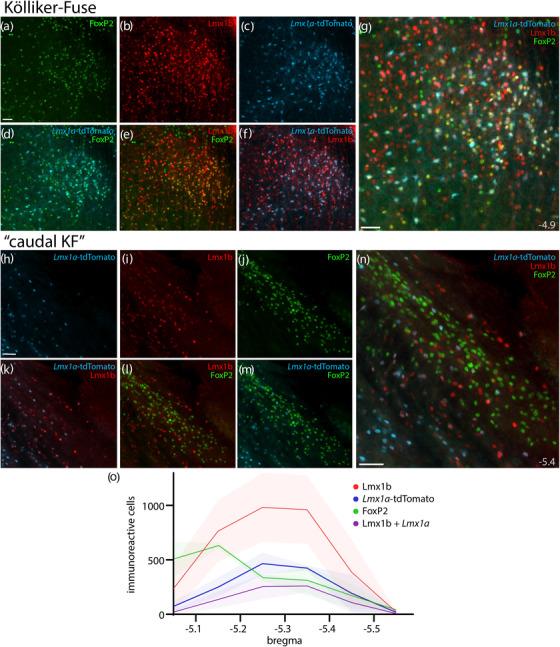
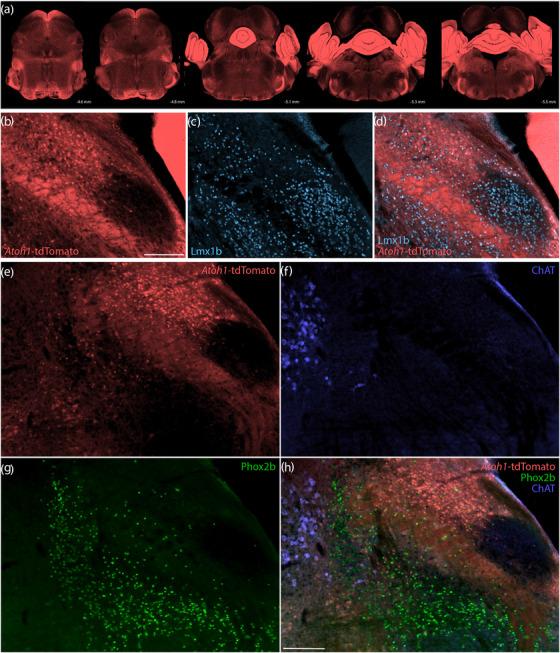
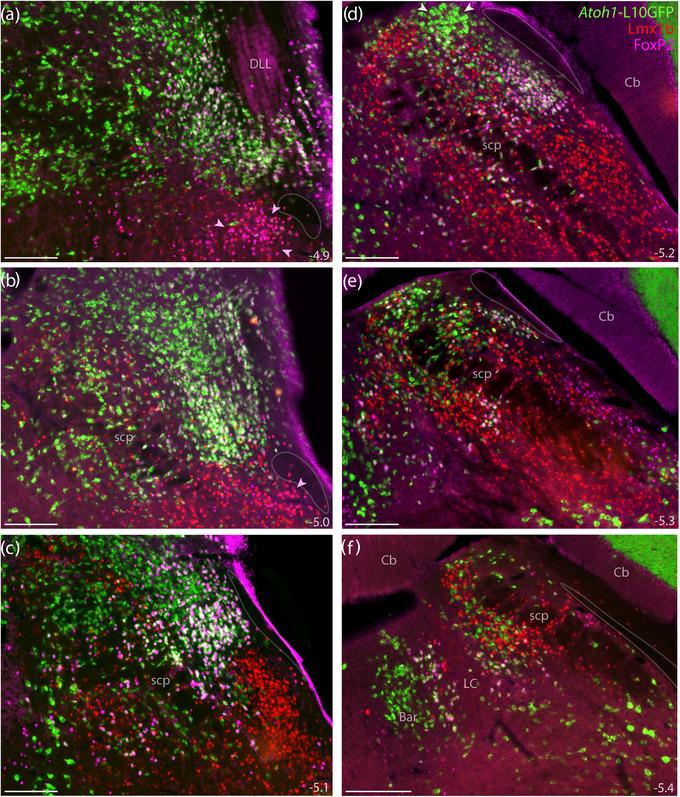
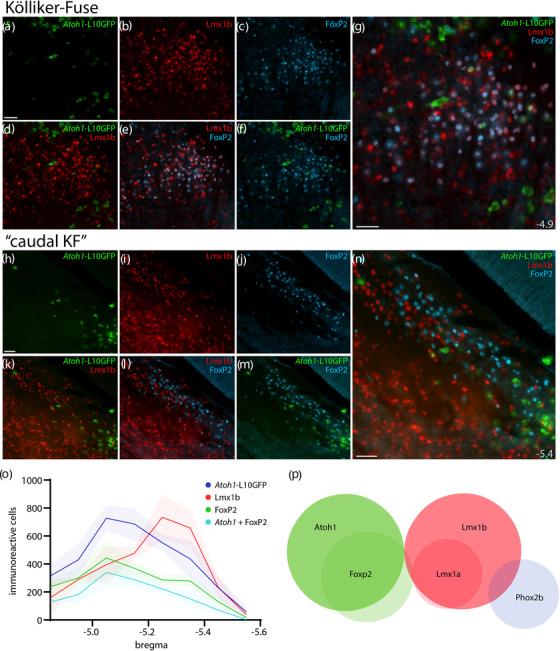
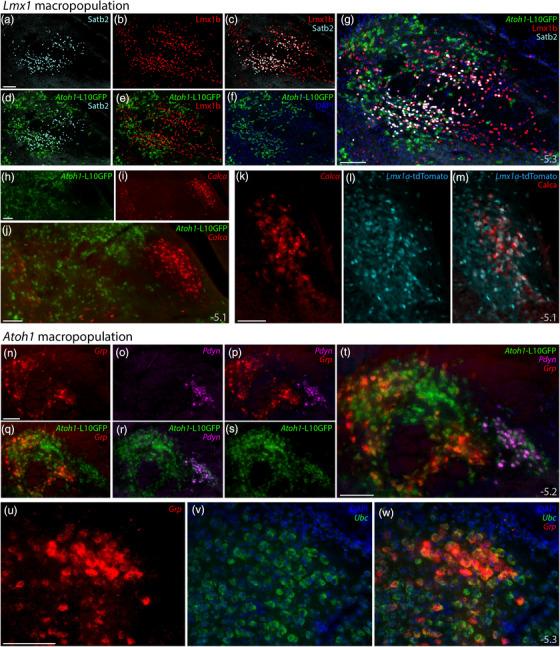
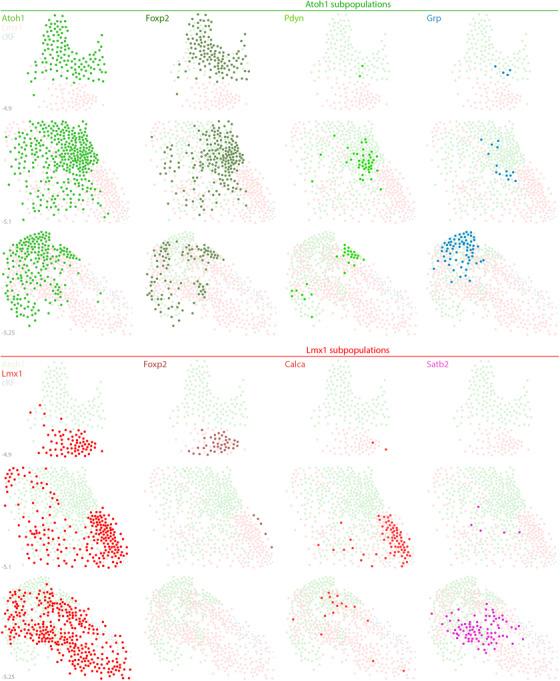
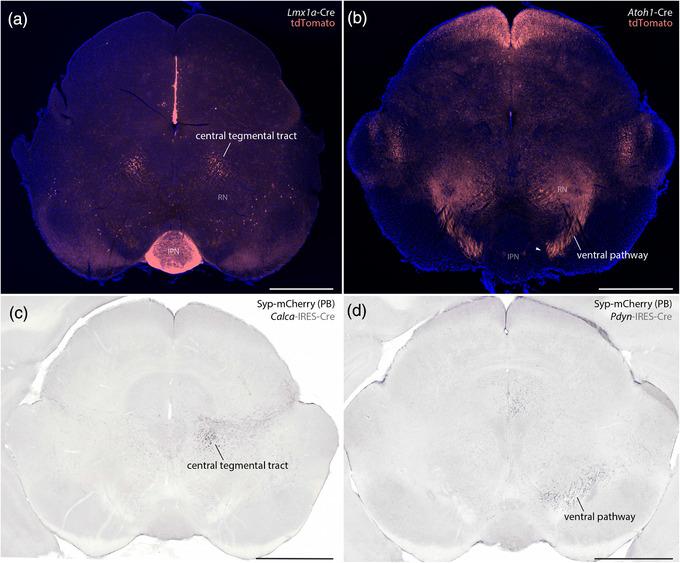
Diverse neurons in the parabrachial nucleus (PB) communicate with widespread brain regions. Despite evidence linking them to a variety of homeostatic functions, it remains difficult to determine which PB neurons influence which functions because their subpopulations intermingle extensively. An improved framework for identifying these intermingled subpopulations would help advance our understanding of neural circuit functions linked to this region. Here, we present the foundation of a developmental-genetic ontology that classifies PB neurons based on their intrinsic, molecular features. By combining transcription factor labeling with Cre fate-mapping, we find that the PB is a blend of two, developmentally distinct macropopulations of glutamatergic neurons. Neurons in the first macropopulation express Lmx1b (and, to a lesser extent, Lmx1a) and are mutually exclusive with those in a second macropopulation, which derive from precursors expressing Atoh1. This second, Atoh1-derived macropopulation includes many Foxp2-expressing neurons, but Foxp2 also identifies a subset of Lmx1b-expressing neurons in the Kölliker-Fuse nucleus (KF) and a population of GABAergic neurons ventrolateral to the PB ("caudal KF"). Immediately ventral to the PB, Phox2b-expressing glutamatergic neurons (some coexpressing Lmx1b) occupy the KF, supratrigeminal nucleus, and reticular formation. We show that this molecular framework organizes subsidiary patterns of adult gene expression (including Satb2, Calca, Grp, and Pdyn) and predicts output projections to the amygdala (Lmx1b), hypothalamus (Atoh1), and hindbrain (Phox2b/Lmx1b). Using this molecular ontology to organize, interpret, and communicate PB-related information could accelerate the translation of experimental findings from animal models to human patients.
臂旁核 (PB) 中的多种神经元与广泛的脑区进行通讯。尽管有证据表明它们与各种体内平衡功能有关,但由于其亚群广泛混合,仍然很难确定哪些 PB 神经元影响哪些功能。一个改进的识别这些混合亚群的框架将有助于推进我们对与该区域相关的神经回路功能的理解。在这里,我们提出了一个发育遗传本体的基础,该本体根据其内在的、分子特征对 PB 神经元进行分类。通过结合转录因子标记和 Cre 命运映射,我们发现 PB 是两种发育上不同的谷氨酸能神经元宏群的混合体。第一宏群中的神经元表达 Lmx1b(并且在较小程度上表达 Lmx1a),并且与第二宏群中的神经元相互排斥,第二宏群源自表达 Atoh1 的前体。第二个 Atoh1 衍生的宏群包括许多 Foxp2 表达神经元,但 Foxp2 也鉴定了 Kölliker-Fuse 核 (KF) 中 Lmx1b 表达神经元的一个亚群和 PB 腹侧的 GABA 能神经元群(“尾侧 KF”)。在 PB 正下方,Phox2b 表达的谷氨酸能神经元(一些共表达 Lmx1b)占据 KF、三叉上核和网状结构。我们表明,这种分子框架组织了成年基因表达的附属模式(包括 Satb2、Calca、Grp 和 Pdyn),并预测了向杏仁核(Lmx1b)、下丘脑(Atoh1)和后脑(Phox2b/Lmx1b)的输出投射。使用这种分子本体论来组织、解释和交流与 PB 相关的信息,可以加速从动物模型到人类患者的实验发现的转化。









 Zotero 插件