
筛选金黄色葡萄球菌中的高度转导基因揭示了侧向和专门转导。
Screening for Highly Transduced Genes in Staphylococcus aureus Revealed Both Lateral and Specialized Transduction.
机构信息
Department of Veterinary and Animal Sciences, University of Copenhagengrid.5254.6, Copenhagen, Denmark.
Department of Biology, University of Copenhagengrid.5254.6, Copenhagen, Denmark.
出版信息
Microbiol Spectr. 2022 Feb 23;10(1):e0242321. doi: 10.1128/spectrum.02423-21. Epub 2022 Feb 9.
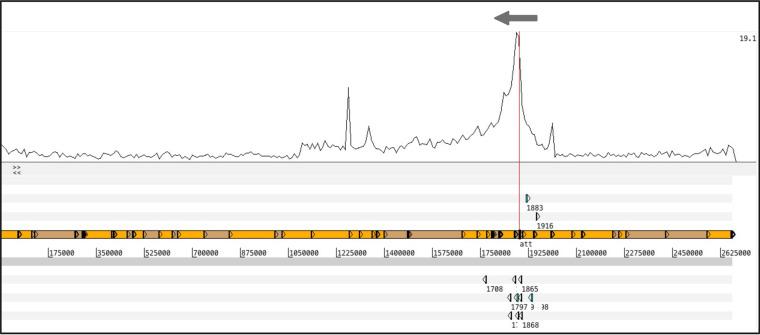
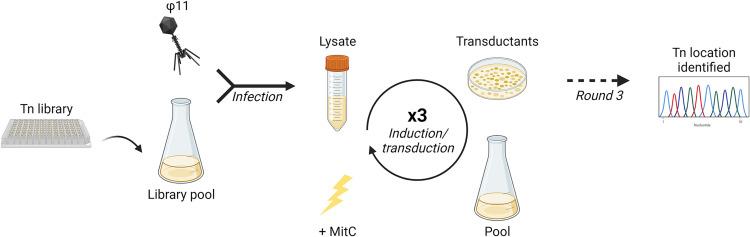
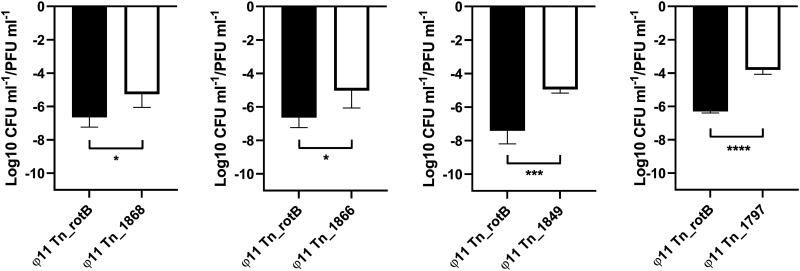
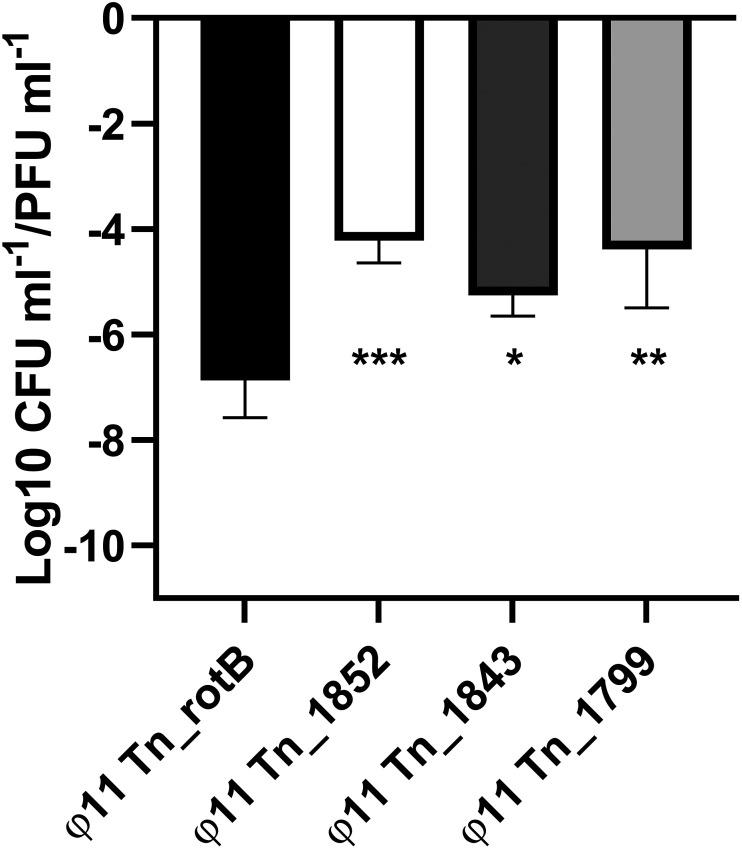
Bacteriophage-mediated transduction of bacterial DNA is a major route of horizontal gene transfer in the human pathogen, Staphylococcus aureus. Transduction involves the packaging of bacterial DNA by viruses and enables the transmission of virulence and resistance genes between cells. To learn more about transduction in S. aureus, we searched a transposon mutant library for genes and mutations that enhanced transfer mediated by the temperate phage, ϕ11. Using a novel screening strategy, we performed multiple rounds of transduction of transposon mutant pools selecting for an antibiotic resistance marker within the transposon element. When determining the locations of transferred mutations, we found that the screen had selected for just 1 or 2 transposon mutant(s) within each pool of 96 mutants. Subsequent analysis showed that the position of the transposon, rather than the inactivation of bacterial genes, was responsible for the phenotype. Interestingly, from multiple rounds, we identified a pattern of transduction that encompassed mobile genetic elements as well as chromosomal regions both upstream and downstream of the phage integration site. The latter was confirmed by DNA sequencing of purified phage lysates. Importantly, transduction frequencies were lower for phage lysates obtained by phage infection rather than induction. Our results confirmed previous reports of lateral transduction of bacterial DNA downstream of the integrated phage but also indicated a novel form of specialized transduction of DNA upstream of the phage. These findings illustrated the complexity of transduction processes and increased our understanding of the mechanisms by which phages transfer bacterial DNA. Horizontal transfer of DNA between bacterial cells contributes to the spread of virulence and antibiotic resistance genes in human pathogens. For Staphylococcus aureus, bacterial viruses play a major role in facilitating the horizontal transfer. These viruses, termed bacteriophages, can transfer bacterial DNA between cells by a process known as transduction, which despite its importance is only poorly characterized. Here, we employed a transposon mutant library to investigate transduction in S. aureus. We showed that the genomic location of bacterial DNA relative to where bacteriophages integrated into that bacterial genome affected how frequently that DNA was transduced. Based on serial transduction of transposon mutant pools and direct sequencing of bacterial DNA in bacteriophage particles, we demonstrated both lateral and specialized transduction. The use of mutant libraries to investigate the genomic patterns of bacterial DNA transferred between cells could help us understand how horizontal transfer influences virulence and resistance development.
噬菌体介导的细菌 DNA 转导是人类病原体金黄色葡萄球菌水平基因转移的主要途径。转导涉及病毒对细菌 DNA 的包装,使毒力和耐药基因在细胞间传播。为了更多地了解金黄色葡萄球菌中的转导,我们在转座子突变体文库中搜索了增强温和噬菌体ϕ11 介导的转移的基因和突变。我们使用一种新的筛选策略,在转座子元件内选择抗生素抗性标记物的情况下,对转座子突变体池进行多次转导。在确定转移突变的位置时,我们发现筛选在每个 96 个突变体的突变体池中只选择了 1 或 2 个转座子突变体。随后的分析表明,转座子的位置而不是细菌基因的失活是表型的原因。有趣的是,经过多轮筛选,我们发现了一种转导模式,包括移动遗传元件以及噬菌体整合位点上下游的染色体区域。后者通过纯化噬菌体裂解物的 DNA 测序得到证实。重要的是,通过噬菌体感染而不是诱导获得的噬菌体裂解物的转导频率较低。我们的结果证实了先前关于整合噬菌体下游细菌 DNA 侧向转导的报道,但也表明了噬菌体上游 DNA 的一种新形式的专门转导。这些发现说明了转导过程的复杂性,并增加了我们对噬菌体转移细菌 DNA 的机制的理解。细菌细胞之间的 DNA 水平转移有助于人类病原体中毒力和抗生素耐药基因的传播。对于金黄色葡萄球菌,细菌病毒在促进水平转移方面起着主要作用。这些病毒称为噬菌体,可以通过转导过程将细菌 DNA 在细胞之间转移,尽管该过程很重要,但对其知之甚少。在这里,我们使用转座子突变体文库来研究金黄色葡萄球菌中的转导。我们表明,细菌 DNA 相对于噬菌体整合到该细菌基因组中的位置与该 DNA 被转导的频率有关。基于转座子突变体池的连续转导和噬菌体颗粒中细菌 DNA 的直接测序,我们证明了侧向和专门转导。使用突变体文库来研究细胞间转移的细菌 DNA 的基因组模式可以帮助我们了解水平转移如何影响毒力和耐药性的发展。



 Zotero 插件