
一种基于瞬时受体电位(TRP)家族的头颈部鳞状细胞癌预后预测标志物
A TRP Family Based Signature for Prognosis Prediction in Head and Neck Squamous Cell Carcinoma.
作者信息
Pan Fangfang, Wang Kai, Zheng Mengmeng, Ren Yuan, Hao Wenjuan, Yan Jiangyu
机构信息
Department of Otorhinolaryngology Head and Neck Surgery, Hwa Mei Hospital, University of Chinese Academy of Sciences, Ningbo 315010, China.
出版信息
J Oncol. 2022 Jan 31;2022:8757656. doi: 10.1155/2022/8757656. eCollection 2022.
PURPOSE
Head and neck squamous cell carcinoma (HNSCC) is a classical type of head and neck cancers, with heterogeneous clinical outcome. This project is set out to create a robust risk signature based on TRP family genes (TFGs) for prognosis evaluation in HNSCC.
METHODS
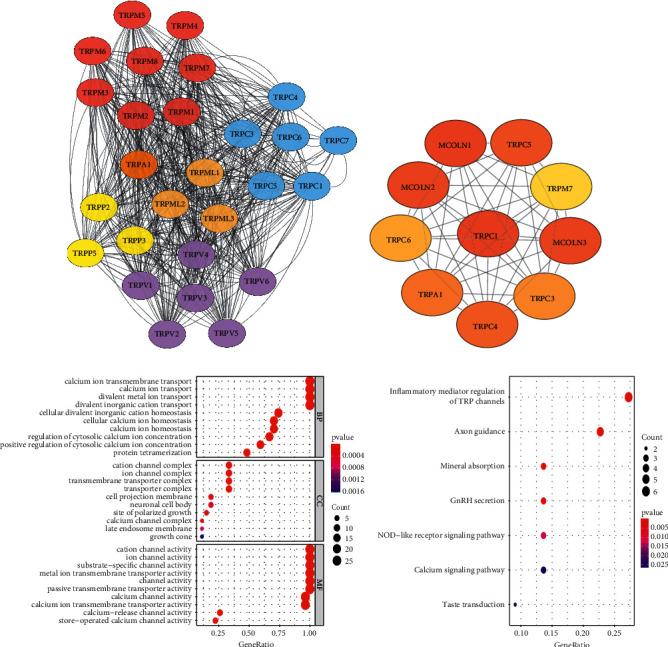
Based on the HNSCC sample data from the TCGA website, we integrated expression profile of TFGs for 490 HNSCC cases. We explore the interactions among TFGs using STRING tool. The TFGs-based signature (TFBS) was created by Cox relative analyses. In addition, we conducted GSEA to identify the underlying signaling pathways of the specific TFGs in HNSCC. The immune landscape of HNSCC patients was analyzed by CIBERSORT and ssGSEA algorithms.
RESULTS
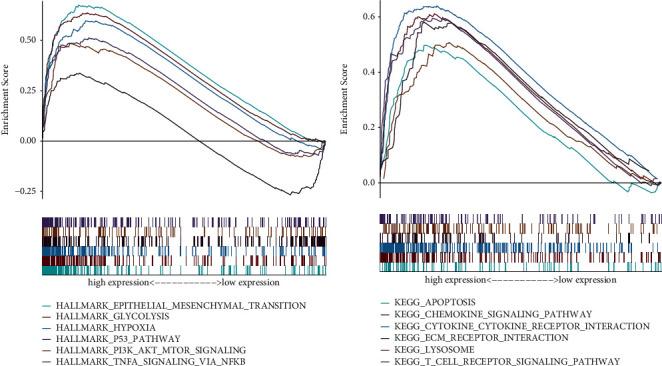
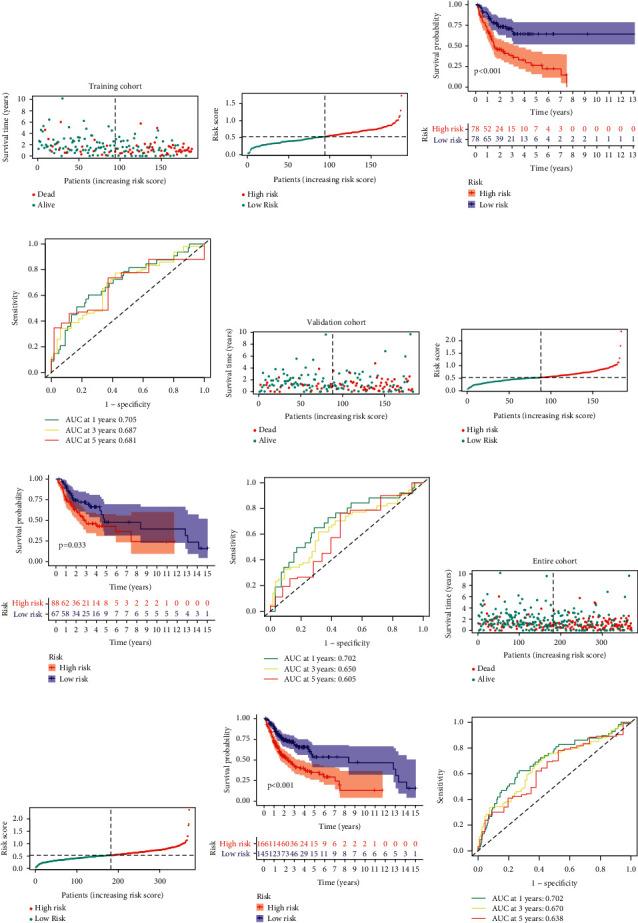
A total of 6 TFGs (TRPC1, TRPC3, TRPC6, TRPV2, TRPV4, and TRPM8) closely associated with prognosis of HNSCC cases were screened to create TFBS. TFBS predicted that the TFBS-high group presented dismal patient outcome. Cox regression revealed the favorable independent value of TFBS. ROC analysis showed the robust power of TFBS for prognosis forecasting. GSEA determined several crucial pathways related with HNSCC, which are the p53 pathway, TNF-alpha signaling via NFKB, and hypoxia. Moreover, immune-related analysis showed that patients in the TFBS-high group were more likely in immunosuppressive status.
CONCLUSION
Our proposed TFBS could serve as a favorable indicator to forecast the survival outcome of HNSCC cases and offer prominent therapy guidance.
目的
头颈部鳞状细胞癌(HNSCC)是头颈部癌症的一种典型类型,临床结局具有异质性。本项目旨在基于瞬时受体电位(TRP)家族基因(TFGs)创建一个强大的风险特征,用于HNSCC的预后评估。
方法
基于TCGA网站的HNSCC样本数据,我们整合了490例HNSCC病例的TFGs表达谱。我们使用STRING工具探索TFGs之间的相互作用。通过Cox相关性分析创建基于TFGs的特征(TFBS)。此外,我们进行基因集富集分析(GSEA)以确定HNSCC中特定TFGs的潜在信号通路。通过CIBERSORT和单样本基因集富集分析(ssGSEA)算法分析HNSCC患者的免疫格局。
结果
共筛选出6个与HNSCC病例预后密切相关的TFGs(TRPC1、TRPC3、TRPC6、TRPV2、TRPV4和TRPM8)以创建TFBS。TFBS预测TFBS高分组患者预后不佳。Cox回归显示TFBS具有良好的独立预后价值。ROC分析表明TFBS对预后预测具有强大的能力。GSEA确定了几个与HNSCC相关的关键通路,即p53通路、通过核因子κB的肿瘤坏死因子-α信号通路和缺氧。此外,免疫相关分析表明,TFBS高分组患者更可能处于免疫抑制状态。
结论
我们提出的TFBS可作为预测HNSCC病例生存结局的良好指标,并提供重要的治疗指导。


 Zotero 插件