
已形成的肺纤维化的脂肪酸硝基烯烃逆转作用
Fatty acid nitroalkene reversal of established lung fibrosis.
作者信息
Koudelka Adolf, Cechova Veronika, Rojas Mauricio, Mitash Nilay, Bondonese Anna, St Croix Claudette, Ross Mark A, Freeman Bruce A
机构信息
Department of Pharmacology and Chemical Biology, University of Pittsburgh, School of Medicine, E1340 BST, 200 Lothrop Street, Pittsburgh, PA, 15261, USA.
Department of Pharmacology and Chemical Biology, University of Pittsburgh, School of Medicine, E1340 BST, 200 Lothrop Street, Pittsburgh, PA, 15261, USA.
出版信息
Redox Biol. 2022 Apr;50:102226. doi: 10.1016/j.redox.2021.102226. Epub 2021 Dec 29.
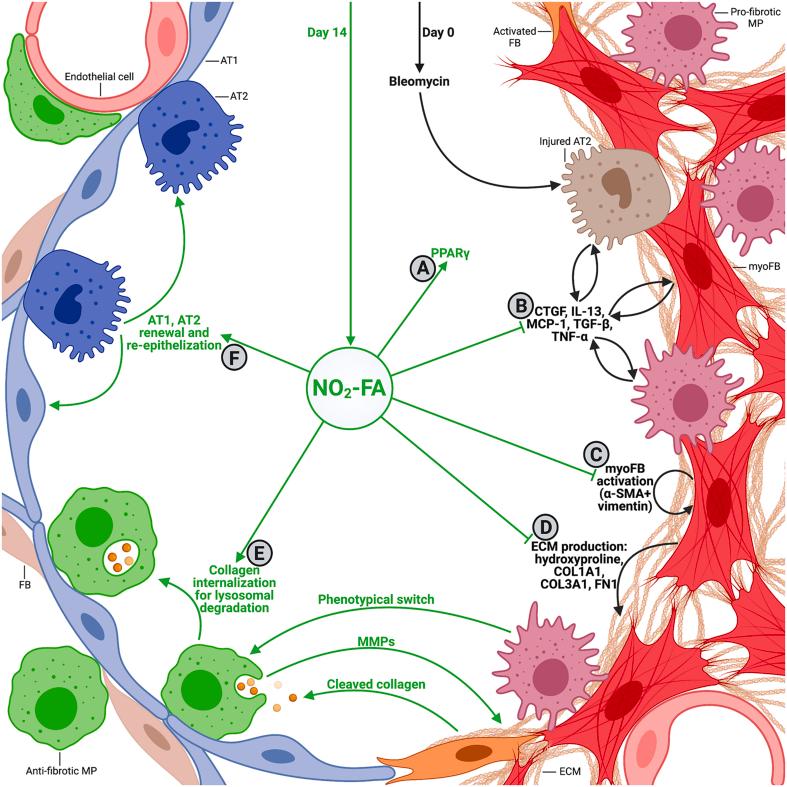
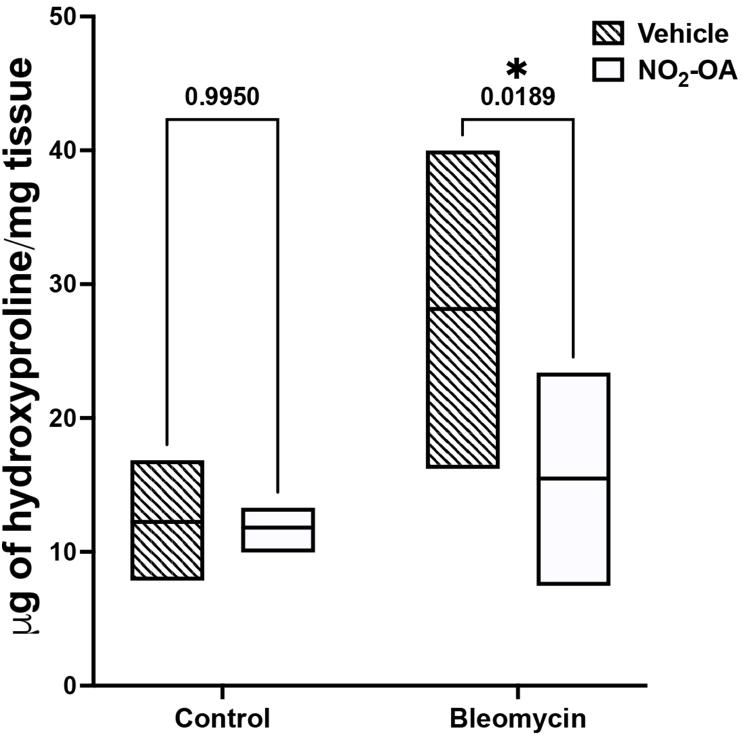
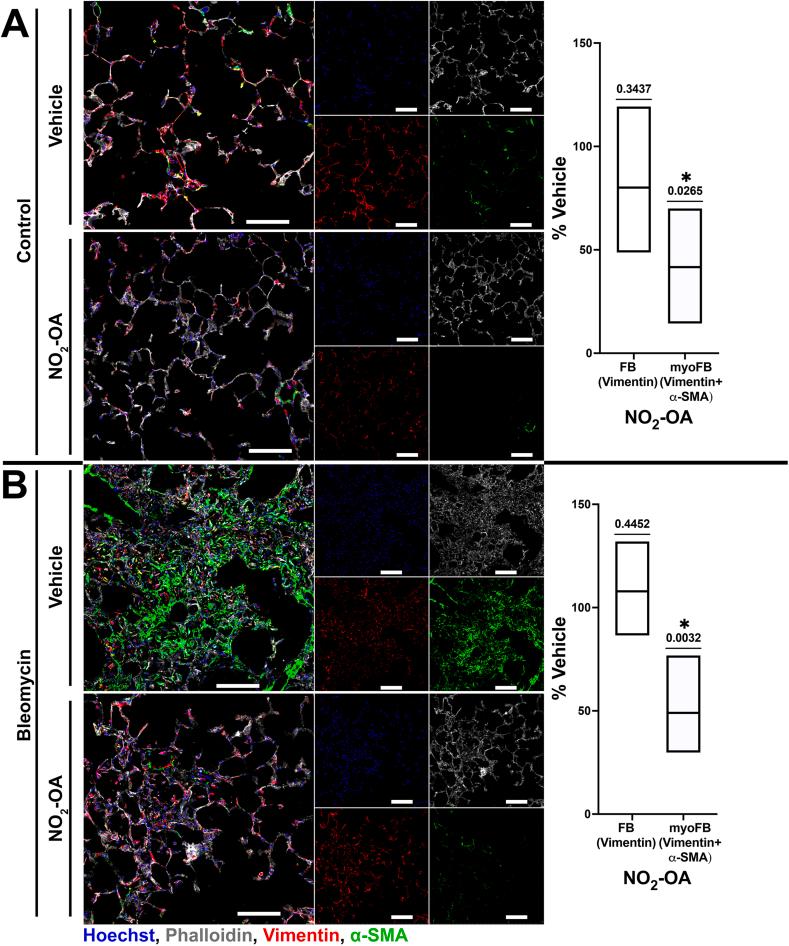
Tissue fibrosis occurs in response to dysregulated metabolism, pro-inflammatory signaling and tissue repair reactions. For example, lungs exposed to environmental toxins, cancer therapies, chronic inflammation and other stimuli manifest a phenotypic shift to activated myofibroblasts and progressive and often irreversible lung tissue scarring. There are no therapies that stop or reverse fibrosis. The 2 FDA-approved anti-fibrotic drugs at best only slow the progression of fibrosis in humans. The present study was designed to test whether a small molecule electrophilic nitroalkene, nitro-oleic acid (NO-OA), could reverse established pulmonary fibrosis induced by the intratracheal administration of bleomycin in C57BL/6 mice. After 14 d of bleomycin-induced fibrosis development in vivo, lungs were removed, sectioned and precision-cut lung slices (PCLS) from control and bleomycin-treated mice were cultured ex vivo for 4 d with either vehicle or NO-OA (5 μM). Biochemical and morphological analyses showed that over a 4 d time frame, NO-OA significantly inhibited pro-inflammatory mediator and growth factor expression and reversed key indices of fibrosis (hydroxyproline, collagen 1A1 and 3A1, fibronectin-1). Quantitative image analysis of PCLS immunohistology reinforced these observations, revealing that NO-OA suppressed additional hallmarks of the fibrotic response, including alveolar epithelial cell loss, myofibroblast differentiation and proliferation, collagen and α-smooth muscle actin expression. NO-OA also accelerated collagen degradation by resident macrophages. These effects occurred in the absence of the recognized NO-OA modulation of circulating and migrating immune cell activation. Thus, small molecule nitroalkenes may be useful agents for reversing pathogenic fibrosis of lung and other organs.
组织纤维化是对代谢失调、促炎信号和组织修复反应的一种应答。例如,暴露于环境毒素、癌症治疗、慢性炎症和其他刺激因素下的肺部会表现出向活化肌成纤维细胞的表型转变,以及进行性且通常不可逆的肺组织瘢痕形成。目前尚无能够阻止或逆转纤维化的疗法。美国食品药品监督管理局(FDA)批准的两种抗纤维化药物充其量只能减缓人类纤维化的进展。本研究旨在测试一种小分子亲电硝基烯烃——硝基油酸(NO-OA)是否能够逆转C57BL/6小鼠经气管内给予博来霉素诱导的已形成的肺纤维化。在体内博来霉素诱导纤维化发展14天后,取出肺脏,切片,并将来自对照小鼠和博来霉素处理小鼠的精密肺切片(PCLS)在体外分别用溶剂或NO-OA(5μM)培养4天。生化和形态学分析表明,在4天的时间范围内,NO-OA显著抑制促炎介质和生长因子的表达,并逆转纤维化的关键指标(羟脯氨酸、胶原蛋白1A1和3A1、纤连蛋白-1)。PCLS免疫组织化学的定量图像分析强化了这些观察结果,显示NO-OA抑制了纤维化反应的其他特征,包括肺泡上皮细胞丢失、肌成纤维细胞分化和增殖、胶原蛋白和α平滑肌肌动蛋白表达。NO-OA还加速了驻留巨噬细胞对胶原蛋白的降解。这些作用在未识别到NO-OA对循环和迁移免疫细胞激活的调节作用的情况下发生。因此,小分子硝基烯烃可能是逆转肺和其他器官致病性纤维化的有用药物。






 Zotero 插件