
介孔二氧化硅纳米载体在医学领域的应用及生物相容性
Applications and Biocompatibility of Mesoporous Silica Nanocarriers in the Field of Medicine.
作者信息
Zhang Chengcheng, Xie Hongyi, Zhang Zhengyan, Wen Bingjian, Cao Hua, Bai Yan, Che Qishi, Guo Jiao, Su Zhengquan
机构信息
Guangdong Engineering Research Center of Natural Products and New Drugs, Guangdong Provincial University Engineering Technology Research Center of Natural Products and Drugs, Guangdong Pharmaceutical University, Guangzhou, China.
Guangdong Metabolic Diseases Research Centre of Integrated Chinese and Western Medicine, Guangdong Pharmaceutical University, Guangzhou, China.
出版信息
Front Pharmacol. 2022 Jan 28;13:829796. doi: 10.3389/fphar.2022.829796. eCollection 2022.
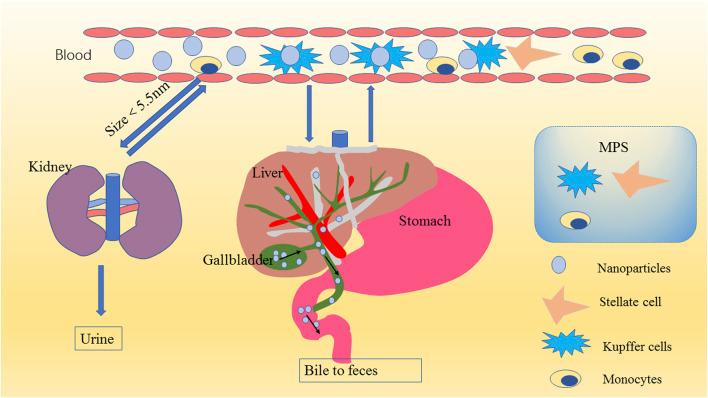
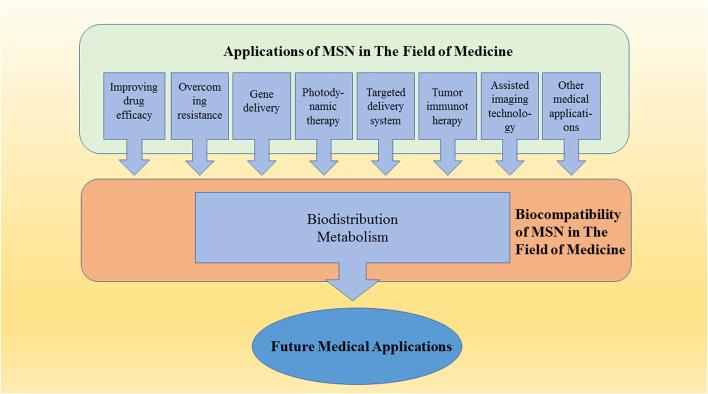
Mesoporous silica nanocarrier (MSN) preparations have a wide range of medical applications. Studying the biocompatibility of MSN is an important part of clinical transformation. Scientists have developed different types of mesoporous silica nanocarriers (MSNs) for different applications to realize the great potential of MSNs in the field of biomedicine, especially in tumor treatment. MSNs have achieved good results in diagnostic bioimaging, tissue engineering, cancer treatment, vaccine development, biomaterial application and diagnostics. MSNs can improve the therapeutic efficiency of drugs, introduce new drug delivery strategies, and provide advantages that traditional drugs lack. It is necessary not only to innovate MSNs but also to comprehensively understand their biological distribution. In this review, we summarize the various medical uses of MSN preparations and explore the factors that affect their distribution and biocompatibility in the body based on metabolism. Designing more reasonable therapeutic nanomedicine is an important task for the further development of the potential clinical applications of MSNs.
介孔二氧化硅纳米载体(MSN)制剂具有广泛的医学应用。研究MSN的生物相容性是临床转化的重要组成部分。科学家们针对不同应用开发了不同类型的介孔二氧化硅纳米载体(MSN),以实现MSN在生物医学领域,特别是肿瘤治疗领域的巨大潜力。MSN在诊断生物成像、组织工程、癌症治疗、疫苗开发、生物材料应用和诊断方面都取得了良好的效果。MSN可以提高药物的治疗效率,引入新的药物递送策略,并提供传统药物所缺乏的优势。不仅有必要对MSN进行创新,还需要全面了解它们的生物分布。在这篇综述中,我们总结了MSN制剂的各种医学用途,并基于代谢探讨了影响它们在体内分布和生物相容性的因素。设计更合理的治疗性纳米药物是进一步开发MSN潜在临床应用的重要任务。


 Zotero 插件