
通过雾化吸入途径接种 rF1-V10 融合蛋白吸入制剂免疫 BALB/c 小鼠模型诱导产生的 完全保护作用。
Complete Protection Against in BALB/c Mouse Model Elicited by Immunization With Inhalable Formulations of rF1-V10 Fusion Protein Aerosolized Intratracheal Inoculation.
机构信息
State Key Laboratory of Pathogen and Biosecurity, Beijing Institute of Microbiology and Epidemiology, Beijing, China.
出版信息
Front Immunol. 2022 Jan 26;13:793382. doi: 10.3389/fimmu.2022.793382. eCollection 2022.
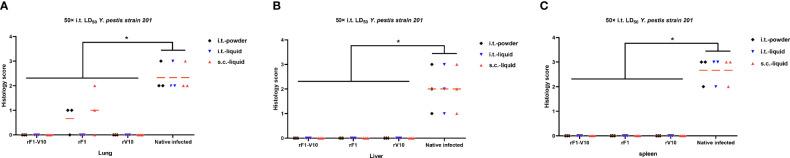
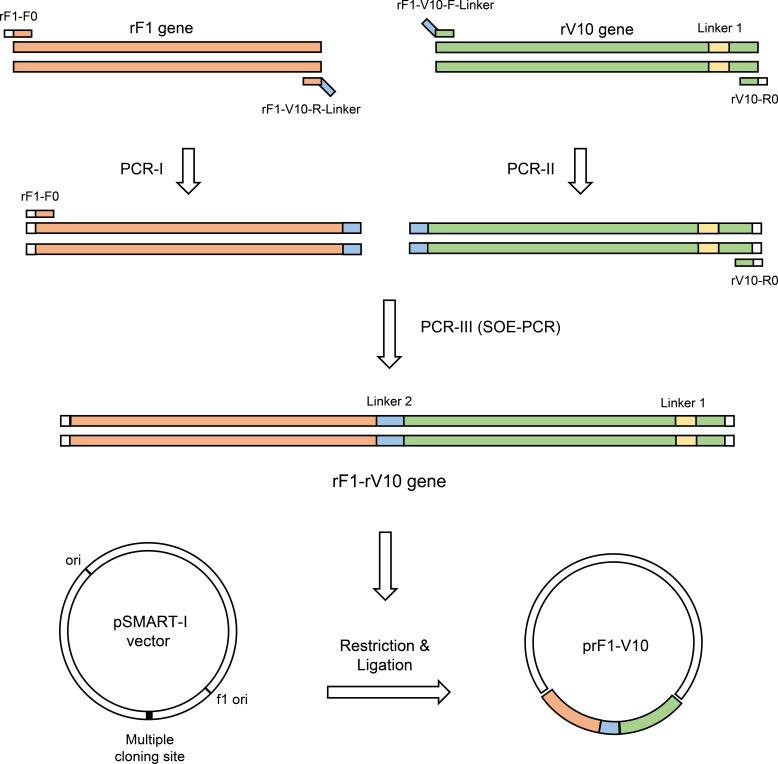
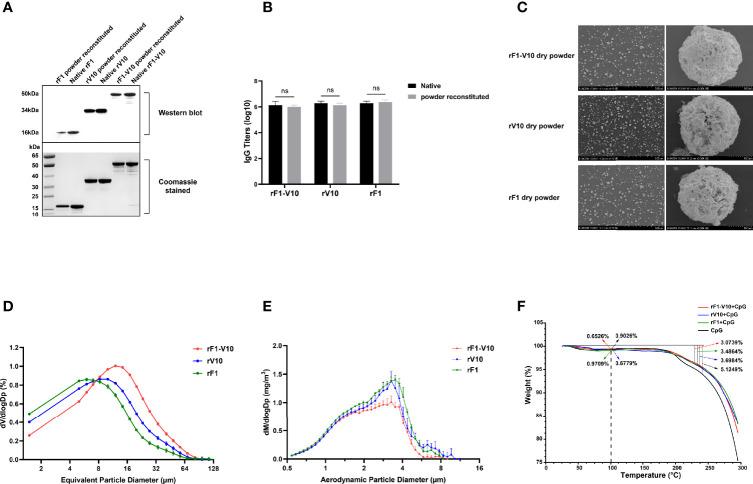
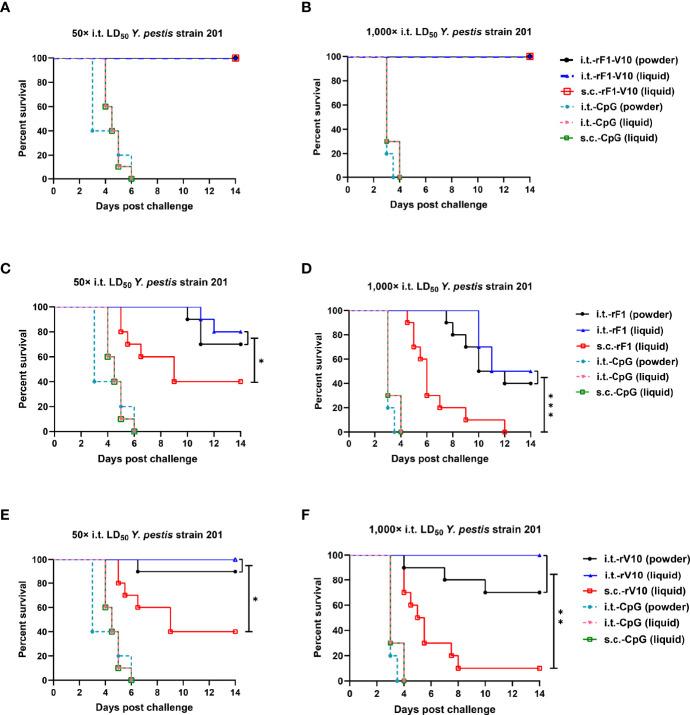
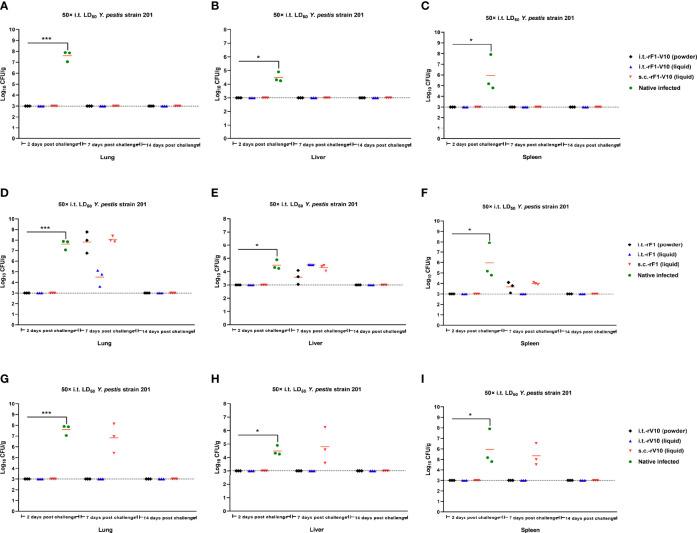
Pneumonic plague, caused by , is an infectious disease with high mortality rates unless treated early with antibiotics. Currently, no FDA-approved vaccine against plague is available for human use. The capsular antigen F1, the low-calcium-response V antigen (LcrV), and the recombinant fusion protein (rF1-LcrV) of are leading subunit vaccine candidates under intense investigation; however, the inability of recombinant antigens to provide complete protection against pneumonic plague in animal models remains a significant concern. In this study, we compared immunoprotection against pneumonic plague provided by rF1, rV10 (a truncation of LcrV), and rF1-V10, and vaccinations delivered aerosolized intratracheal (i.t.) inoculation or subcutaneous (s.c.) injection. We further considered three vaccine formulations: conventional liquid, dry powder produced by spray freeze drying, or dry powder reconstituted in PBS. The main findings are: (i) rF1-V10 immunization with any formulation i.t. or s.c. routes conferred 100% protection against i.t. infection; (ii) rF1 or rV10 immunization using i.t. delivery provided significantly stronger protection than rF1 or rV10 immunization s.c. delivery; and (iii) powder formulations of subunit vaccines induced immune responses and provided protection equivalent to those elicited by unprocessed liquid formulations of vaccines. Our data indicate that immunization with a powder formulation of rF1-V10 vaccines an i.t. route may be a promising vaccination strategy for providing protective immunity against pneumonic plague.
肺鼠疫由引起,是一种具有高死亡率的传染病,除非早期用抗生素治疗。目前,尚无获得 FDA 批准可用于人类的抗鼠疫疫苗。荚膜抗原 F1、低钙反应 V 抗原(LcrV)和的重组融合蛋白(rF1-LcrV)是目前正在深入研究的主要亚单位疫苗候选物;然而,重组抗原在动物模型中无法提供针对肺鼠疫的完全保护仍然是一个重大关注点。在这项研究中,我们比较了 rF1、rV10(LcrV 的截断)和 rF1-V10 针对肺鼠疫的免疫保护作用,并通过气溶胶气管内(i.t.)接种或皮下(s.c.)注射进行疫苗接种。我们进一步考虑了三种疫苗配方:常规液体、喷雾冷冻干燥制成的干粉或在 PBS 中重新配制的干粉。主要发现如下:(i)rF1-V10 免疫接种任何配方的 i.t.或 s.c.途径均可 100%预防 i.t.感染;(ii)使用 i.t.递送的 rF1 或 rV10 免疫接种比 rF1 或 rV10 免疫接种 s.c.递送提供更强的保护;(iii)亚单位疫苗的粉末配方可诱导免疫反应并提供与未加工的疫苗液体配方相当的保护作用。我们的数据表明,用 rF1-V10 疫苗的粉末配方通过 i.t.途径进行免疫接种可能是提供针对肺鼠疫的保护性免疫的一种有前途的疫苗接种策略。


 Zotero 插件