
X 染色体失活中的选择机制。
Mechanisms of Choice in X-Chromosome Inactivation.
机构信息
Wellcome Trust/Cancer Research UK Gurdon Institute, University of Cambridge, Tennis Court Road, Cambridge CB2 1QN, UK.
Department of Genetics, University of Cambridge, Downing Street, Cambridge CB2 3EH, UK.
出版信息
Cells. 2022 Feb 3;11(3):535. doi: 10.3390/cells11030535.
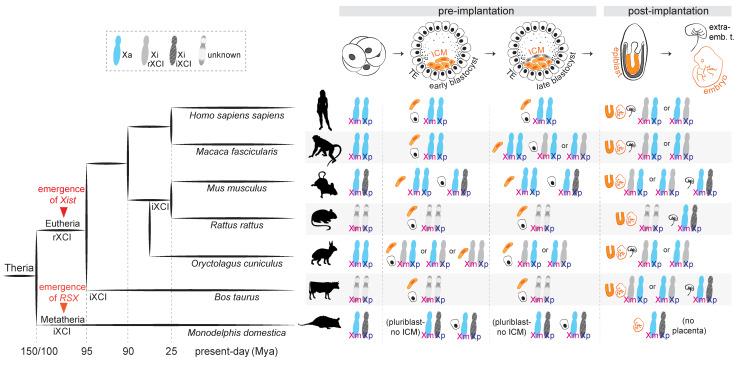
Early in development, placental and marsupial mammals harbouring at least two X chromosomes per nucleus are faced with a choice that affects the rest of their lives: which of those X chromosomes to transcriptionally inactivate. This choice underlies phenotypical diversity in the composition of tissues and organs and in their response to the environment, and can determine whether an individual will be healthy or affected by an X-linked disease. Here, we review our current understanding of the process of choice during X-chromosome inactivation and its implications, focusing on the strategies evolved by different mammalian lineages and on the known and unknown molecular mechanisms and players involved.
在早期发育过程中,每个核中至少含有两条 X 染色体的胎盘哺乳动物和有袋类哺乳动物面临着一个影响其余生的选择:哪条 X 染色体进行转录失活。这种选择是组织和器官组成以及对环境反应的表型多样性的基础,并且可以决定个体是否健康或是否受到 X 连锁疾病的影响。在这里,我们回顾了我们目前对 X 染色体失活过程及其影响的理解,重点介绍了不同哺乳动物谱系所采用的策略,以及所涉及的已知和未知的分子机制和参与者。


 Zotero 插件