
经皮冠状动脉介入治疗后的血压与死亡率:一项基于人群的队列研究。
Blood pressure and mortality after percutaneous coronary intervention: a population-based cohort study.
作者信息
Lee Chung-Woo, Lee Joo Kyung, Choi Yeon Joo, Kim Hyunjin, Han Kyungdo, Jung Jin-Hyung, Kim Do Hoon, Park Joo-Hyun
机构信息
Department of Family Medicine, Korea University Ansan Hospital, College of Medicine, Korea University, 123, Jeokgeum-ro, Danwon-gu, Ansan-si, Gyeonggi-do, 15355, South Korea.
Department of Internal Medicine, Korea University Guro Hospital, Korea University College of Medicine, Seoul, Republic of Korea.
出版信息
Sci Rep. 2022 Feb 17;12(1):2768. doi: 10.1038/s41598-022-06627-4.
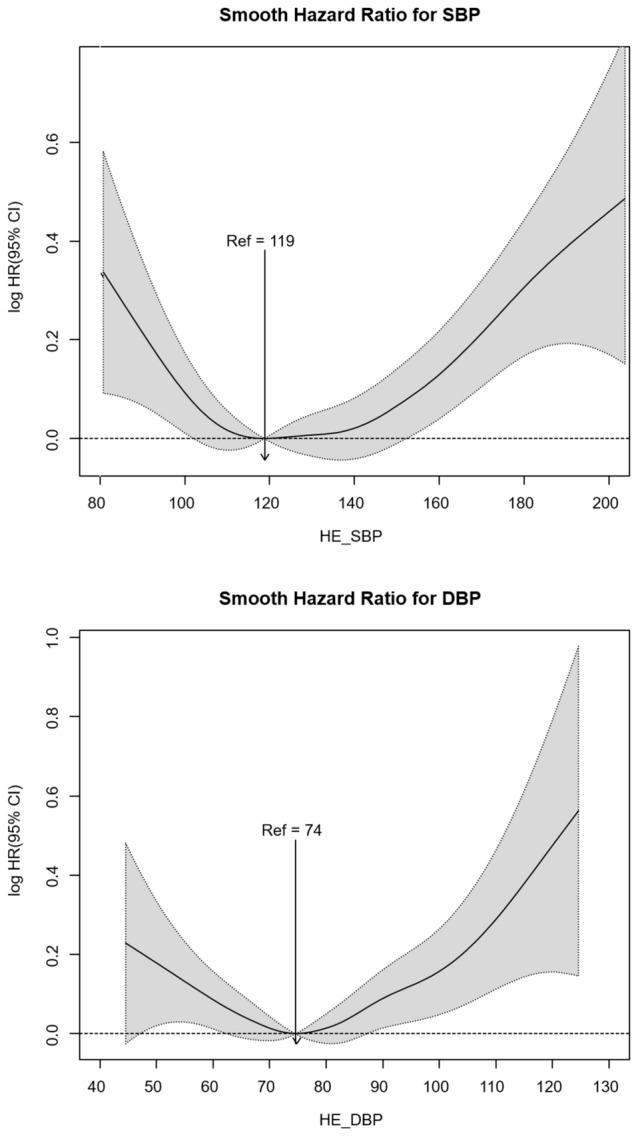
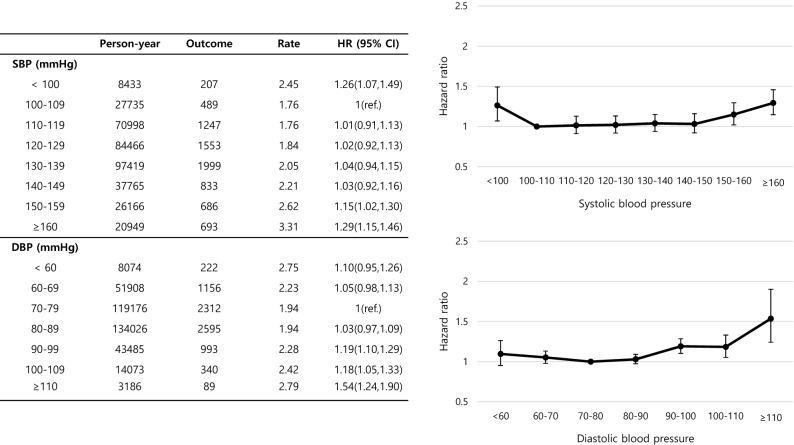
Revascularization procedures, including percutaneous coronary intervention (PCI), for coronary artery disease (CAD) are increasingly performed in Korea. However, studies on blood pressure control targets in these patients remain insufficient. To assess the relationship between baseline blood pressure and all-cause mortality in CAD patients who underwent PCI. A population-based retrospective cohort study based on the national claims database of the Korean National Health Insurance System, which represents the entire Korean population. A total 38,330 patients with a history of PCI for CAD between 2005 and 2008 were recruited and followed up for all-cause mortality until December 31, 2017. Baseline systolic blood pressure (SBP) and diastolic blood pressure (DBP) were measured, and they were classified into eight SBP and DBP groups each. The hazard ratios (HRs) for all-cause mortality were measured for each group. The pattern of SBP and DBP in this population followed a J-curve relationship for all-cause mortality, with the nadir point at 119 and 74 mmHg, respectively. In subjects aged > 60 years, high SBP (≥ 160 mmHg) and high DBP (≥ 90 mmHg) were significantly related to death. Moreover, in subjects aged > 60 years, low DBP (< 70 mmHg) was significantly related to mortality. There is a J-curve relationship between baseline blood pressure and all-cause mortality in patients who underwent PCI, and intensive lowering of blood pressure may be beneficial for these patients. However, the elderly population needs more attention as excessive BP lowering, particularly DBP, could instead increase the risk of death.
在韩国,包括经皮冠状动脉介入治疗(PCI)在内的冠状动脉疾病(CAD)血运重建手术的实施越来越多。然而,关于这些患者血压控制目标的研究仍然不足。为了评估接受PCI的CAD患者基线血压与全因死亡率之间的关系。一项基于韩国国民健康保险系统国家索赔数据库的基于人群的回顾性队列研究,该数据库代表了整个韩国人口。总共招募了2005年至2008年间有CAD PCI病史的38330名患者,并随访全因死亡率直至2017年12月31日。测量基线收缩压(SBP)和舒张压(DBP),并将它们分别分为8个SBP和DBP组。测量每组全因死亡率的风险比(HRs)。该人群中SBP和DBP的模式与全因死亡率呈J曲线关系,最低点分别为119和74 mmHg。在年龄>60岁的受试者中,高SBP(≥160 mmHg)和高DBP(≥90 mmHg)与死亡显著相关。此外,在年龄>60岁的受试者中,低DBP(<70 mmHg)与死亡率显著相关。接受PCI的患者基线血压与全因死亡率之间存在J曲线关系,强化降压可能对这些患者有益。然而,老年人群需要更多关注,因为过度降低血压,尤其是DBP,反而可能增加死亡风险。
 Zotero 插件