
COVID-19 大流行期间产后抑郁症的患病率及相关风险因素:文献回顾和荟萃分析。
Prevalence and Risk Factors Associated with Postpartum Depression during the COVID-19 Pandemic: A Literature Review and Meta-Analysis.
机构信息
Health Science Centre, Shenzhen University, Shenzhen 518060, China.
出版信息
Int J Environ Res Public Health. 2022 Feb 16;19(4):2219. doi: 10.3390/ijerph19042219.
BACKGROUND
Owing to the high prevalence and detrimental consequences, postpartum depression (PPD) has been identified as one of the severe global public health issues in the last decade. Prior research found that during disasters or events, the prevalence rates of mental disorders among postpartum women are significantly high. However, the effect of the coronavirus disease 2019 (COVID-19) pandemic on PPD and its risk factors remained unclear for postpartum women. Therefore, the present systematic review and meta-analysis aimed to estimate the influence of the COVID-19 pandemic on the prevalence of PPD and to summarize risk factors for PPD during the COVID-19 pandemic.
METHODS
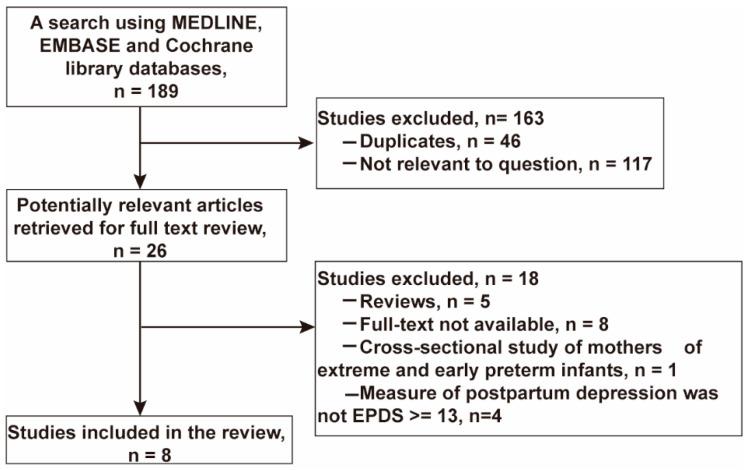
Three electronic databases of MEDLINE, EMBASE, and Cochrane library databases were systematically searched for articles from their commencements until 1 November 2021. Quality assessment of included studies, random-effects meta-analysis, and sensitivity analysis were performed.
RESULTS
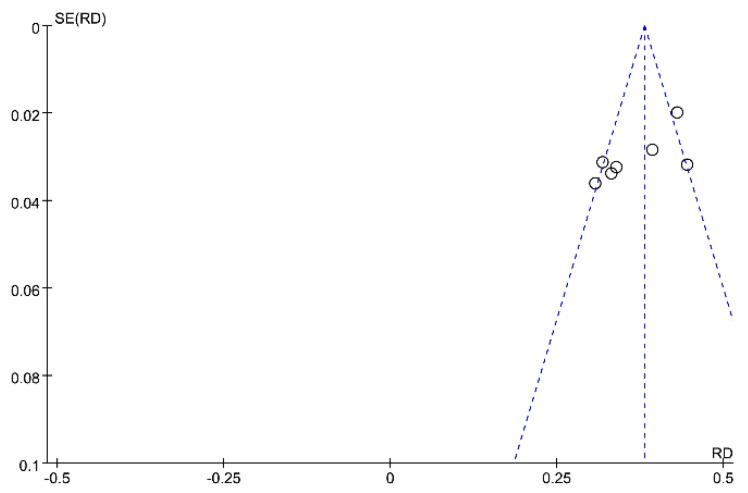
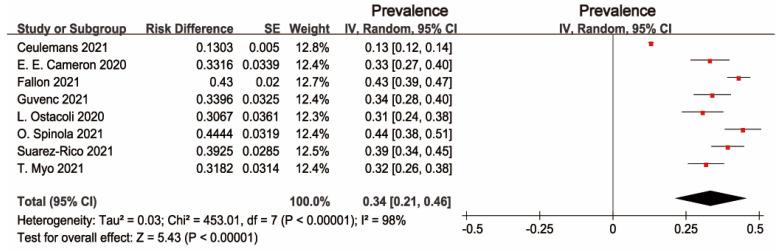
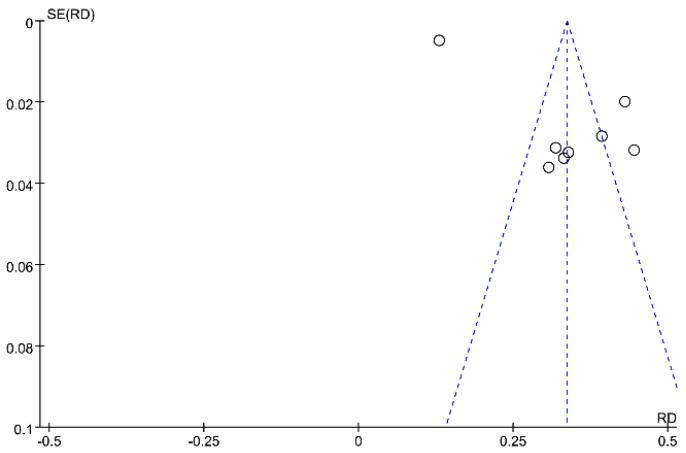
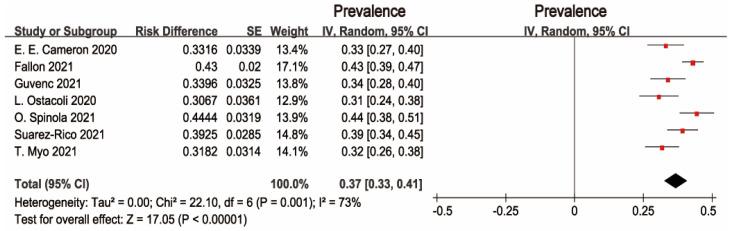
A total of eight studies with 6480 postpartum women during the COVID-19 pandemic were included, and most studies were conducted in developed countries. The pooled prevalence of PPD was 34% (95% CI: 21-46%) during the COVID-19 pandemic, much higher than the incident of previous research during the non-pandemic period. Risk factors for PPD during the COVID-19 pandemic were defined as socio-demographic and clinical characteristics, stress and anxiety, lack of various supports, and the COVID-19 related factors.
CONCLUSION
The research findings indicated that the COVID-19 pandemic could make detrimental effects on maternal mental wellbeing among women after childbirth. Investigating the prevalence and risk factors of PPD among postpartum women could shed some light on their mental and emotional states; so that support measures and tailored interventions from health professionals and policymakers could be offered to improve the maternal and infant outcomes, especially during the COVID-19 pandemic. Much more research on maternal psychological wellbeing during the COVID-19 pandemic was strongly recommended to undertake in the middle and low-income countries.
背景
由于产后抑郁症(PPD)的高患病率和不良后果,它已被确定为过去十年中严重的全球公共卫生问题之一。先前的研究发现,在灾难或事件期间,产后妇女的精神障碍患病率显著较高。然而,COVID-19 大流行对 PPD 及其危险因素的影响对于产后妇女而言仍不清楚。因此,本系统评价和荟萃分析旨在估计 COVID-19 大流行对 PPD 患病率的影响,并总结 COVID-19 大流行期间 PPD 的危险因素。
方法
系统检索 MEDLINE、EMBASE 和 Cochrane 图书馆数据库中的三个电子数据库,检索时间从数据库建立开始到 2021 年 11 月 1 日。对纳入研究进行质量评估、随机效应荟萃分析和敏感性分析。
结果
纳入了八项 COVID-19 大流行期间的研究,共涉及 6480 名产后妇女,其中大多数研究在发达国家进行。COVID-19 大流行期间 PPD 的总患病率为 34%(95%CI:21-46%),远高于非大流行期间的先前研究发生率。COVID-19 大流行期间 PPD 的危险因素定义为社会人口统计学和临床特征、压力和焦虑、缺乏各种支持以及与 COVID-19 相关的因素。
结论
研究结果表明,COVID-19 大流行可能对分娩后妇女的母婴心理健康产生不利影响。调查 COVID-19 大流行期间产后妇女 PPD 的患病率和危险因素可以了解她们的心理和情绪状态;以便卫生专业人员和政策制定者提供支持措施和量身定制的干预措施,从而改善母婴结局,尤其是在 COVID-19 大流行期间。强烈建议在中低收入国家开展更多关于 COVID-19 大流行期间母婴心理健康的研究。
 Zotero 插件