
柴油烟雾、臭氧和紫外线辐射对人体皮肤中微小RNA的影响。
MicroRNA Alterations Induced in Human Skin by Diesel Fumes, Ozone, and UV Radiation.
作者信息
Valacchi Giuseppe, Pambianchi Erika, Coco Simona, Pulliero Alessandra, Izzotti Alberto
机构信息
Animal Science Department, Plants for Human Health Institute, North Carolina State University, Research Campus Kannapolis, Kannapolis, NC 28081, USA.
Department of Environmental Sciences and Prevention, University of Ferrara, 44121 Ferrara, Italy.
出版信息
J Pers Med. 2022 Jan 28;12(2):176. doi: 10.3390/jpm12020176.
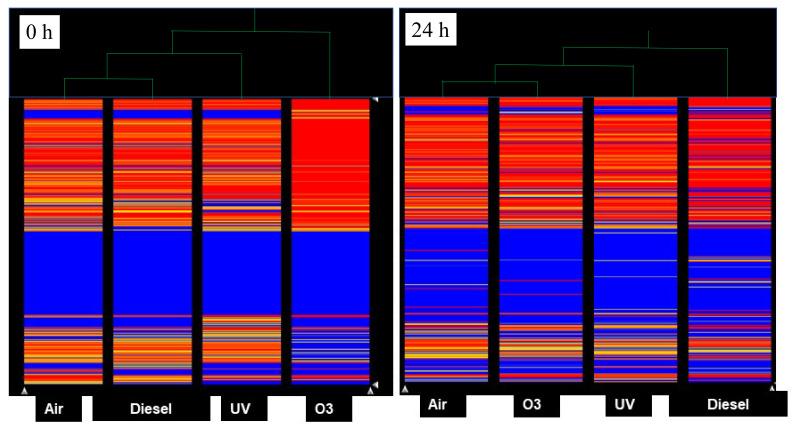
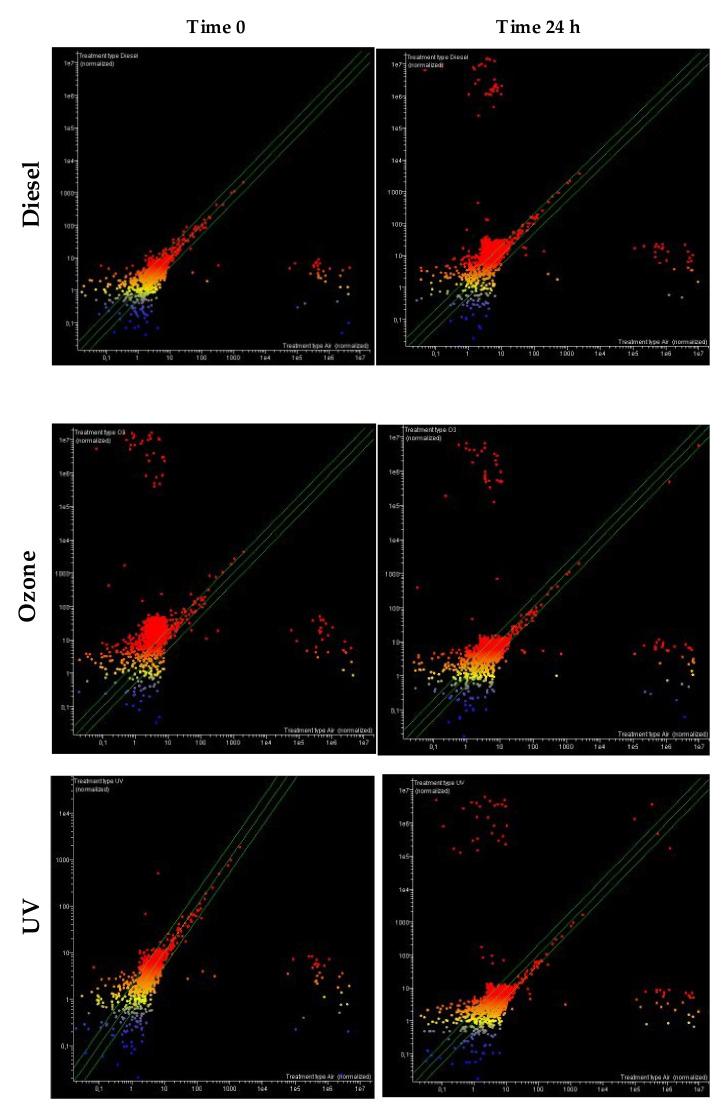
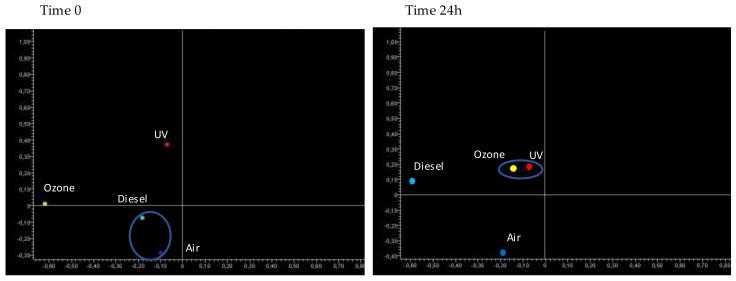
Epigenetic alterations are a driving force of the carcinogenesis process. MicroRNAs play a role in silencing mutated oncogenes, thus defending the cell against the adverse consequences of genotoxic damages induced by environmental pollutants. These processes have been well investigated in lungs; however, although skin is directly exposed to a great variety of environmental pollutants, more research is needed to better understand the effect on cutaneous tissue. Therefore, we investigated microRNA alteration in human skin biopsies exposed to diesel fumes, ozone, and UV light for over 24 h of exposure. UV and ozone-induced microRNA alteration right after exposure, while the peak of their deregulations induced by diesel fumes was reached only at the end of the 24 h. Diesel fumes mainly altered microRNAs involved in the carcinogenesis process, ozone in apoptosis, and UV in DNA repair. Accordingly, each tested pollutant induced a specific pattern of microRNA alteration in skin related to the intrinsic mechanisms activated by the specific pollutant. These alterations, over a short time basis, reflect adaptive events aimed at defending the tissue against damages. Conversely, whenever environmental exposure lasts for a long time, the irreversible alteration of the microRNA machinery results in epigenetic damage contributing to the pathogenesis of inflammation, dysplasia, and cancer induced by environmental pollutants.
表观遗传改变是致癌过程的驱动力。微小RNA在沉默突变的致癌基因中发挥作用,从而保护细胞免受环境污染物诱导的基因毒性损伤的不利影响。这些过程在肺部已得到充分研究;然而,尽管皮肤直接暴露于多种环境污染物中,但仍需要更多研究来更好地了解其对皮肤组织的影响。因此,我们研究了暴露于柴油烟雾、臭氧和紫外线超过24小时的人体皮肤活检组织中的微小RNA变化。紫外线和臭氧在暴露后立即引起微小RNA变化,而柴油烟雾诱导的微小RNA失调峰值仅在24小时结束时达到。柴油烟雾主要改变参与致癌过程的微小RNA,臭氧改变参与细胞凋亡的微小RNA,紫外线改变参与DNA修复的微小RNA。因此,每种测试污染物在皮肤中诱导了与特定污染物激活的内在机制相关的特定微小RNA变化模式。这些变化在短时间内反映了旨在保护组织免受损伤的适应性事件。相反,当环境暴露持续很长时间时,微小RNA机制的不可逆改变会导致表观遗传损伤,从而促进环境污染物诱导的炎症、发育异常和癌症的发病机制。

 Zotero 插件