
韩国 2019 年冠状病毒病患者合并感染的流行率和临床影响。
Prevalence and Clinical Impact of Coinfection in Patients with Coronavirus Disease 2019 in Korea.
机构信息
Department of Laboratory Medicine, Kangnam Sacred Heart Hospital, Hallym University College of Medicine, 1, Singil-ro, Yeongdeungpo-gu, Seoul 07441, Korea.
Department of Laboratory Medicine, Hangang Sacred Heart Hospital, Hallym University College of Medicine, 12, Beodeunaru-ro, 7-gil, Yeongdeungpo-gu, Seoul 07247, Korea.
出版信息
Viruses. 2022 Feb 21;14(2):446. doi: 10.3390/v14020446.
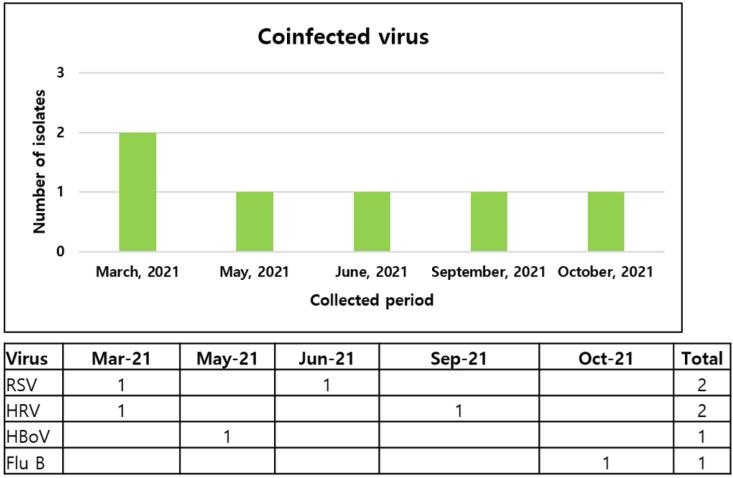
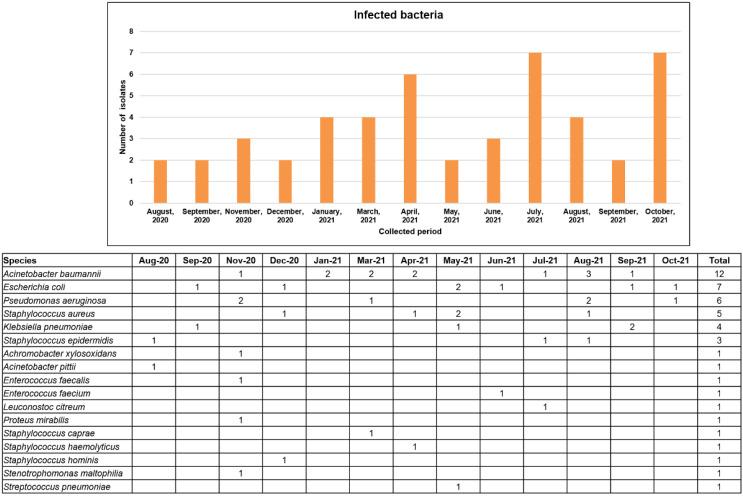
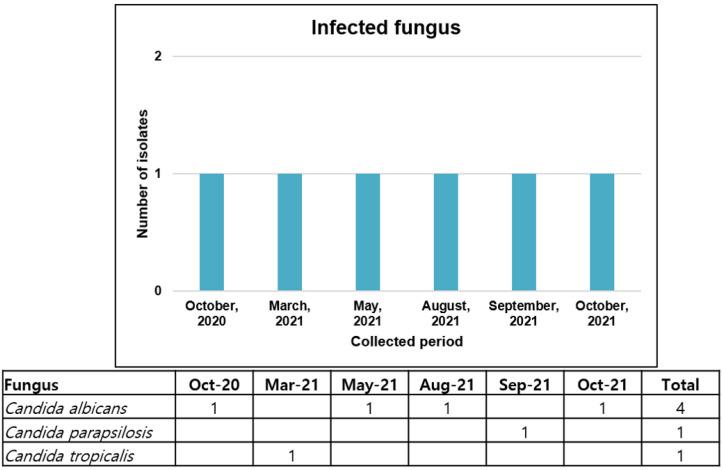
Coinfection rates with other pathogens in coronavirus disease 2019 (COVID-19) varied during the pandemic. We assessed the latest prevalence of coinfection with viruses, bacteria, and fungi in COVID-19 patients for more than one year and its impact on mortality. A total of 436 samples were collected between August 2020 and October 2021. Multiplex real-time PCR, culture, and antimicrobial susceptibility testing were performed to detect pathogens. The coinfection rate of respiratory viruses in COVID-19 patients was 1.4%. Meanwhile, the rates of bacteria and fungi were 52.6% and 10.5% in hospitalized COVID-19 patients, respectively. Respiratory syncytial virus, rhinovirus, , , , and were the most commonly detected pathogens. Ninety percent of isolated was non-susceptible to carbapenem. Based on a multivariate analysis, coinfection (odds ratio [OR] = 6.095), older age (OR = 1.089), and elevated lactate dehydrogenase (OR = 1.006) were risk factors for mortality as a critical outcome. In particular, coinfection with bacteria (OR = 11.250), resistant pathogens (OR = 11.667), and infection with multiple pathogens (OR = 10.667) were significantly related to death. Screening and monitoring of coinfection in COVID-19 patients, especially for hospitalized patients during the pandemic, are beneficial for better management and survival.
新型冠状病毒病 (COVID-19) 合并感染其他病原体的比率在大流行期间有所变化。我们评估了 COVID-19 患者超过一年的时间内合并感染病毒、细菌和真菌的最新流行率及其对死亡率的影响。在 2020 年 8 月至 2021 年 10 月期间共采集了 436 份样本。采用多重实时 PCR、培养和抗菌药物敏感性试验来检测病原体。COVID-19 患者呼吸道病毒合并感染率为 1.4%。同时,住院 COVID-19 患者的细菌和真菌合并感染率分别为 52.6%和 10.5%。呼吸道合胞病毒、鼻病毒、人偏肺病毒、腺病毒、副流感病毒和肠道病毒是最常检测到的病原体。90%分离出的 对碳青霉烯类药物不敏感。基于多变量分析,合并感染(比值比 [OR] = 6.095)、年龄较大(OR = 1.089)和乳酸脱氢酶升高(OR = 1.006)是死亡率作为关键结局的危险因素。特别是,细菌合并感染(OR = 11.250)、耐药病原体(OR = 11.667)和多种病原体感染(OR = 10.667)与死亡显著相关。对 COVID-19 患者,尤其是大流行期间住院患者的合并感染进行筛查和监测,有利于更好地管理和生存。



 Zotero 插件