
系统炎症标志物和慢性丙型肝炎病毒感染状态对接受局部消融治疗的肝细胞癌患者预后的预测价值。
Prognostic utility of systemic inflammatory markers and chronic hepatitis C virus infection status in hepatocellular carcinoma patients treated with local ablation.
机构信息
Department of Tropical Medicine and Gastroenterology, Sohag Faculty of Medicine, Naser City, Sohag, 82524, Egypt.
Division of Clinical Trials and Biostatistics, Department of Quantitative Health Sciences, Mayo Clinic College of Medicine and Science, 205 Third Street SW, Rochester, MN, 55905, USA.
出版信息
BMC Cancer. 2022 Feb 28;22(1):221. doi: 10.1186/s12885-021-09121-8.
BACKGROUND
Hepatocellular carcinoma (HCC) has high incidence and mortality worldwide. Local ablation using radiofrequency ablation (RFA) or microwave ablation (MWA) is potentially curative for early-stage HCC with outcomes comparable to surgical resection. We explored the influence of demographic, clinical, and laboratory factors on outcomes of HCC patients receiving ablation.
METHODS
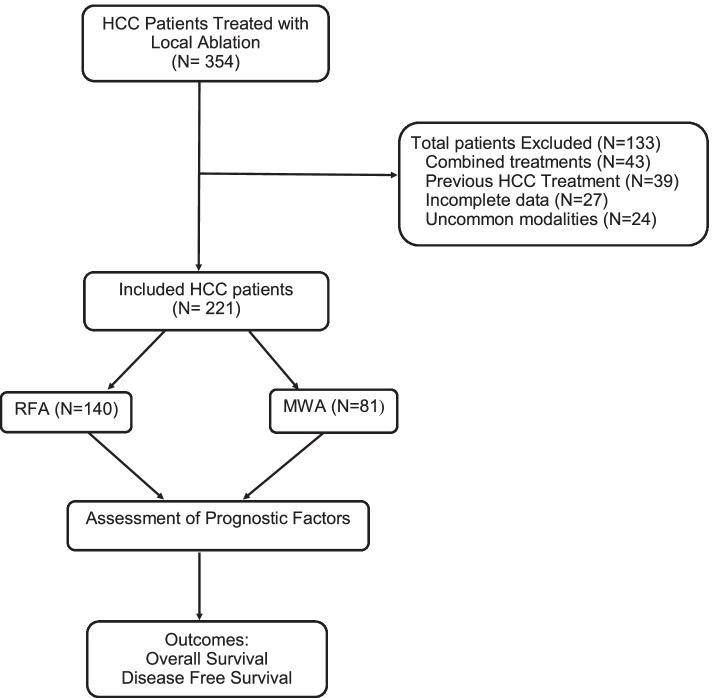
This retrospective cohort study included 221 HCC patients receiving local ablation at Mayo Clinic between January 2000 and October 2018, comprising 140 RFA and 81 MWA. Prognostic factors determining overall survival (OS) and disease-free survival (DFS) were identified using multivariate analysis.
RESULTS
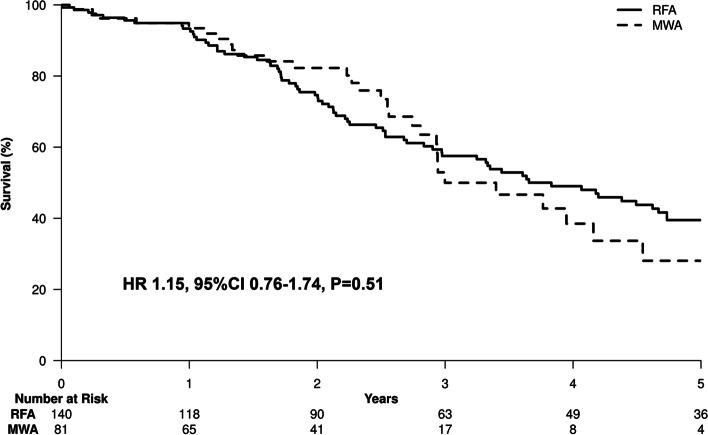
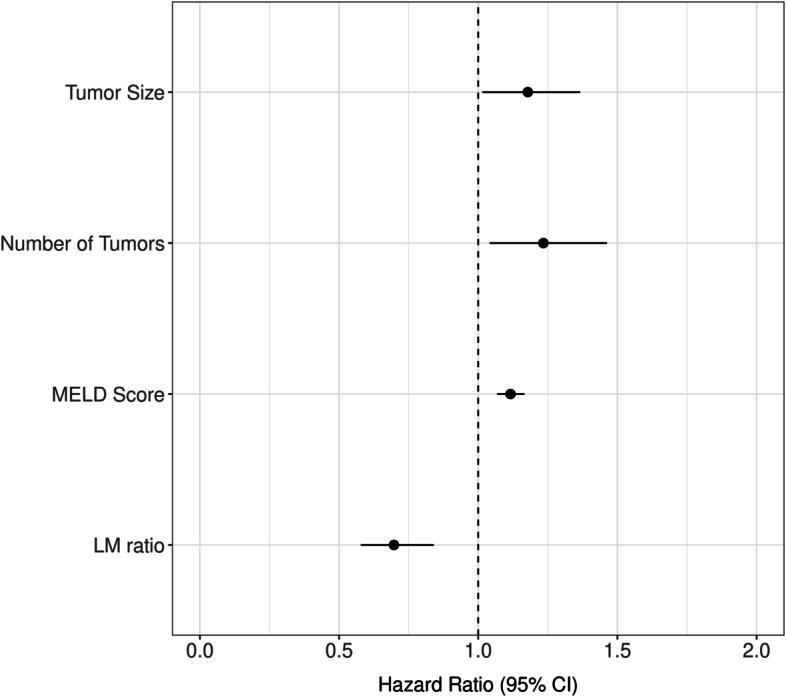
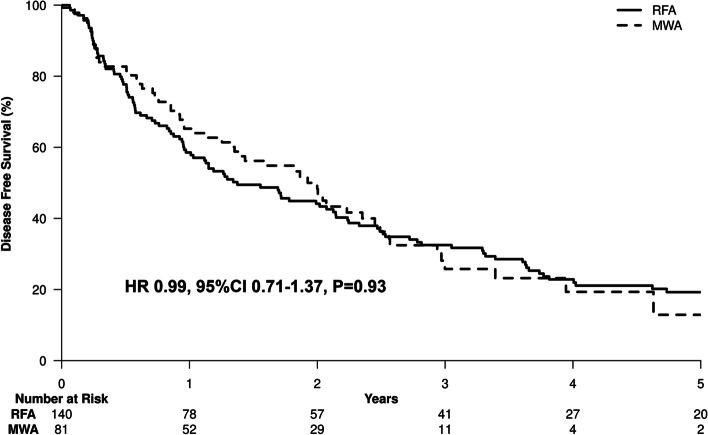
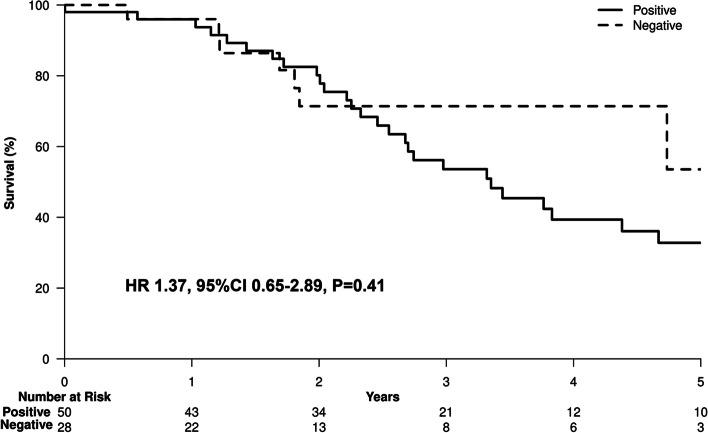
There was no clinically significant difference in OS or DFS between RFA and MWA. In multivariate analysis of OS, pre-ablation lymphocyte-monocyte ratio [Hazard ratio (HR) 0.7, 95% confidence interval (CI) 0.58-0.84, P = 0.0001], MELD score [HR 1.12, 95%CI 1.068-1.17, P < 0.0001], tumor number [HR 1.23, 95%CI 1.041-1.46, P = 0.015] and tumor size [HR 1.18, 95%CI 1.015-1.37, P = 0.031] were clinically-significant prognostic factors. Among HCC patients with chronic hepatitis C (HCV) infection, positive HCV PCR at HCC diagnosis was associated with 1.4-fold higher hazard of death, with 5-year survival of 32.8% vs 53.6% in HCV PCR-negative patients. Regarding DFS, pre-ablation lymphocyte-monocyte ratio [HR 0.77, 95%CI 0.66-0.9, P = 0.001], MELD score [HR 1.06, 95%CI 1.022-1.11, P = 0.002], Log AFP [HR 1.11, 95%CI 1.033-1.2, P = 0.005], tumor number [HR 1.29, 95%CI 1.078-1.53, P = 0.005] and tumor size [HR 1.25, 95%CI 1.043-1.51 P = 0.016] were independently prognostic.
CONCLUSIONS
Pre-ablation systemic inflammation represented by lymphocyte-monocyte ratio is significantly associated with OS and DFS in HCC patients treated with local ablation. HCV viremia is associated with poor OS. Tumor biology represented by tumor number and size are strongly prognostic for OS and DFS while AFP is significantly associated with DFS only.
背景
肝细胞癌 (HCC) 在全球范围内具有较高的发病率和死亡率。局部消融治疗(射频消融术或微波消融术)对于早期 HCC 具有潜在的治愈作用,其治疗效果可与手术切除相媲美。我们探讨了人口统计学、临床和实验室因素对接受消融治疗的 HCC 患者结局的影响。
方法
这是一项回顾性队列研究,纳入了 2000 年 1 月至 2018 年 10 月期间在 Mayo 诊所接受局部消融治疗的 221 例 HCC 患者,包括 140 例射频消融术和 81 例微波消融术。采用多变量分析确定总生存期 (OS) 和无疾病生存期 (DFS) 的预后因素。
结果
射频消融术和微波消融术之间的 OS 和 DFS 无明显临床差异。多变量分析 OS 结果显示,消融前淋巴细胞-单核细胞比值[风险比 (HR) 0.7,95%置信区间 (CI) 0.58-0.84,P = 0.0001]、MELD 评分[HR 1.12,95%CI 1.068-1.17,P < 0.0001]、肿瘤数量[HR 1.23,95%CI 1.041-1.46,P = 0.015]和肿瘤大小[HR 1.18,95%CI 1.015-1.37,P = 0.031]是具有临床意义的预后因素。在患有慢性丙型肝炎 (HCV) 感染的 HCC 患者中,HCC 诊断时 HCV PCR 阳性与死亡风险增加 1.4 倍相关,HCV PCR 阴性患者的 5 年生存率为 32.8%,而 HCV PCR 阳性患者的 5 年生存率为 53.6%。关于 DFS,消融前淋巴细胞-单核细胞比值[HR 0.77,95%CI 0.66-0.9,P = 0.001]、MELD 评分[HR 1.06,95%CI 1.022-1.11,P = 0.002]、Log AFP[HR 1.11,95%CI 1.033-1.2,P = 0.005]、肿瘤数量[HR 1.29,95%CI 1.078-1.53,P = 0.005]和肿瘤大小[HR 1.25,95%CI 1.043-1.51,P = 0.016]是独立的预后因素。
结论
消融前以淋巴细胞-单核细胞比值为代表的全身炎症与 HCC 患者接受局部消融治疗后的 OS 和 DFS 显著相关。HCV 病毒血症与 OS 不良相关。肿瘤生物学指标(肿瘤数量和大小)与 OS 和 DFS 具有强烈的预后相关性,而 AFP 与 DFS 显著相关。


 Zotero 插件