
用于拓展化学蛋白质合成范围的合成硫醇和硒醇衍生氨基酸。
Synthetic Thiol and Selenol Derived Amino Acids for Expanding the Scope of Chemical Protein Synthesis.
作者信息
Guan Ivy, Williams Kayla, Liu Joanna Shu Ting, Liu Xuyu
机构信息
School of Chemistry, Faculty of Science, The University of Sydney, Sydney, NSW, Australia.
The Heart Research Institute, The University of Sydney, Sydney, NSW, Australia.
出版信息
Front Chem. 2022 Feb 14;9:826764. doi: 10.3389/fchem.2021.826764. eCollection 2021.
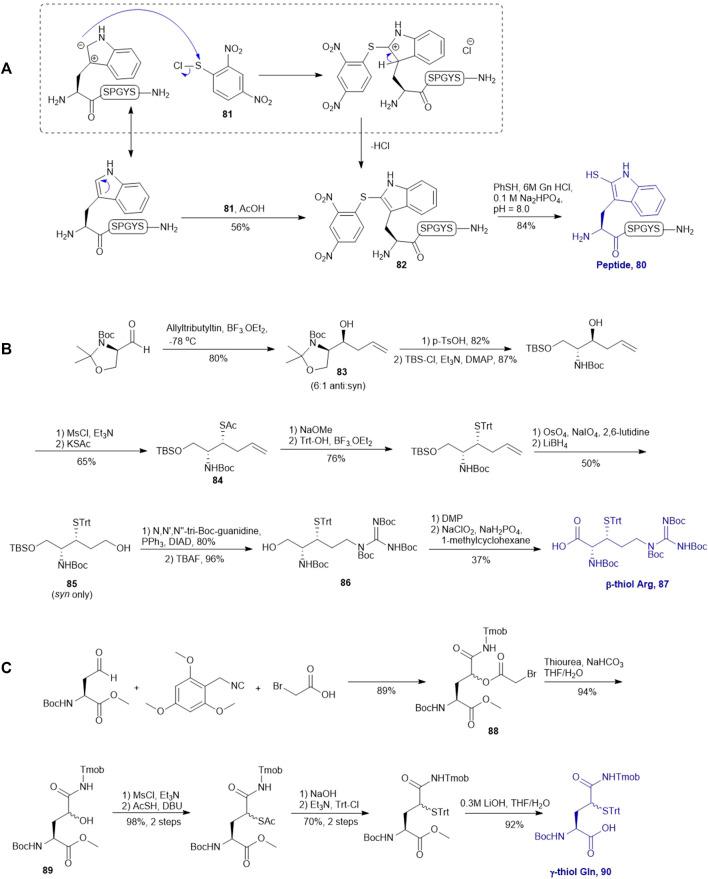
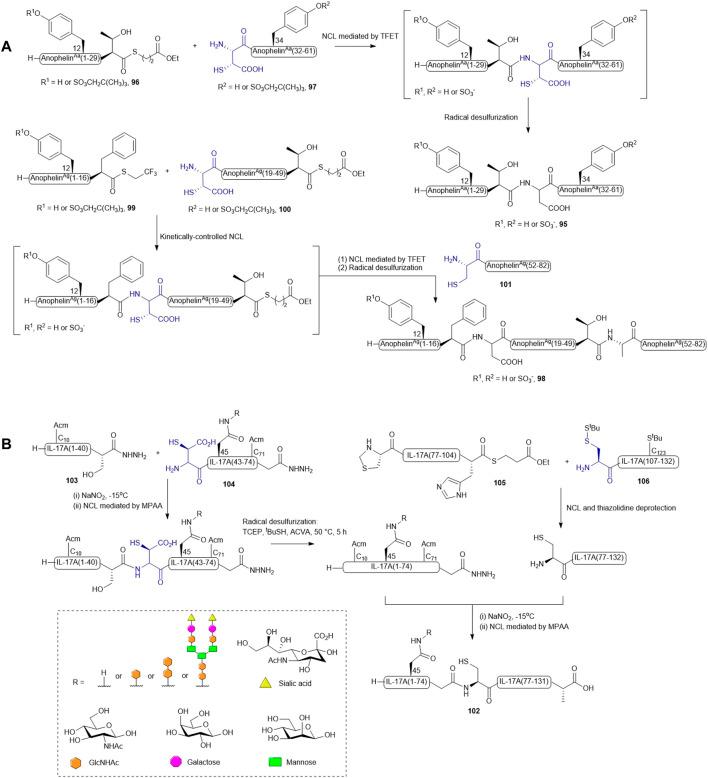
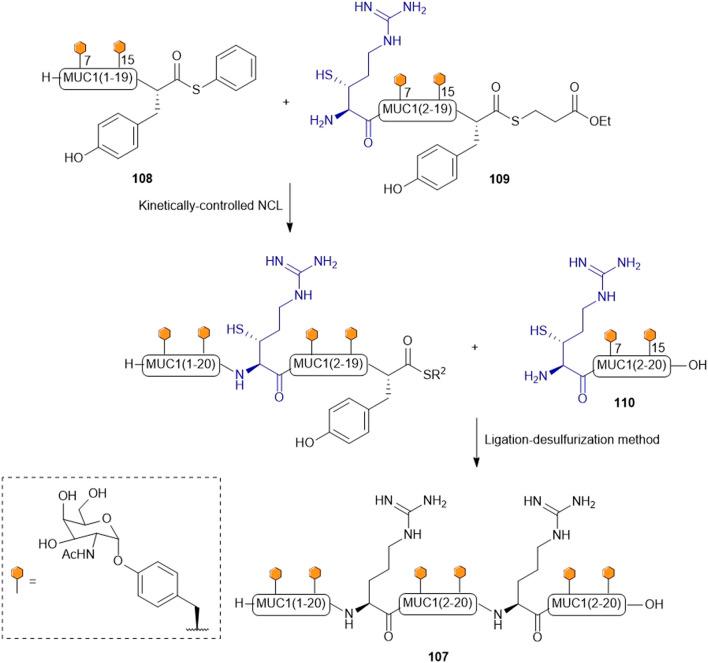
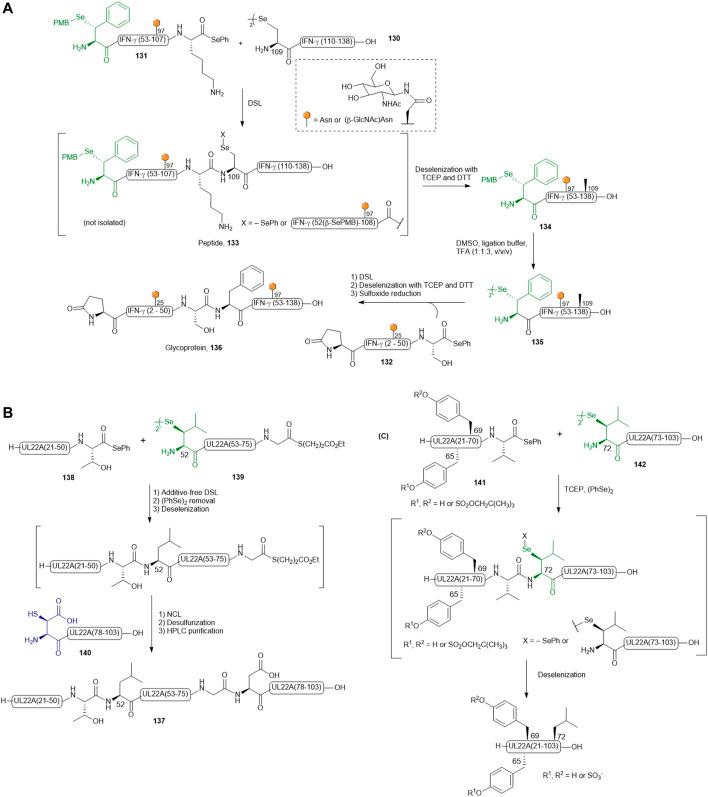
Cells employ post-translational modifications (PTMs) as key mechanisms to expand proteome diversity beyond the inherent limitations of a concise genome. The ability to incorporate post-translationally modified amino acids into protein targets via chemical ligation of peptide fragments has enabled the access to homogeneous proteins bearing discrete PTM patterns and empowered functional elucidation of individual modification sites. Native chemical ligation (NCL) represents a powerful and robust means for convergent assembly of two homogeneous, unprotected peptides bearing an N-terminal cysteine residue and a C-terminal thioester, respectively. The subsequent discovery that protein cysteine residues can be chemoselectively desulfurized to alanine has ignited tremendous interest in preparing unnatural thiol-derived variants of proteogenic amino acids for chemical protein synthesis following the ligation-desulfurization logic. Recently, the 21st amino acid selenocysteine, together with other selenyl derivatives of amino acids, have been shown to facilitate ultrafast ligation with peptidyl selenoesters, while the advancement in deselenization chemistry has provided reliable bio-orthogonality to PTMs and other amino acids. The combination of these ligation techniques and desulfurization/deselenization chemistries has led to streamlined synthesis of multiple structurally-complex, post-translationally modified proteins. In this review, we aim to summarize the latest chemical synthesis of thiolated and selenylated amino-acid building blocks and exemplify their important roles in conquering challenging protein targets with distinct PTM patterns.
细胞利用翻译后修饰(PTM)作为关键机制,突破简洁基因组的固有局限,扩展蛋白质组的多样性。通过肽片段的化学连接将翻译后修饰的氨基酸掺入蛋白质靶标的能力,使得能够获得具有离散PTM模式的均一蛋白质,并有助于对单个修饰位点进行功能阐释。天然化学连接(NCL)是一种强大且可靠的方法,用于分别将两个带有N端半胱氨酸残基和C端硫酯的均一、未保护的肽进行汇聚组装。随后发现蛋白质半胱氨酸残基可化学选择性地脱硫为丙氨酸,这激发了人们对按照连接-脱硫逻辑制备用于化学蛋白质合成的非天然硫醇衍生的蛋白质原氨基酸变体的极大兴趣。最近,第21种氨基酸硒代半胱氨酸以及其他氨基酸的硒基衍生物已被证明可促进与肽基硒酯的超快连接,而脱硒化学的进展为PTM和其他氨基酸提供了可靠的生物正交性。这些连接技术与脱硫/脱硒化学的结合,已实现了多种结构复杂的翻译后修饰蛋白质的简化合成。在本综述中,我们旨在总结硫醇化和硒化氨基酸构建块的最新化学合成方法,并举例说明它们在攻克具有独特PTM模式的挑战性蛋白质靶标中的重要作用。





 Zotero 插件