
医学气体疗法对组织、器官和中枢神经系统的保护作用:系统评价的影响、机制和挑战。
Medical Gas Therapy for Tissue, Organ, and CNS Protection: A Systematic Review of Effects, Mechanisms, and Challenges.
机构信息
Department of Physical Medicine and Rehabilitation, Harvard Medical School, Boston, MA, 02115, USA.
Neurotrauma Recovery Research, Department of Physical Medicine and Rehabilitation, Spaulding Rehabilitation Hospital Network, Mass General Brigham, and Harvard Medical School, Boston, MA, 02129, USA.
出版信息
Adv Sci (Weinh). 2022 May;9(13):e2104136. doi: 10.1002/advs.202104136. Epub 2022 Mar 4.
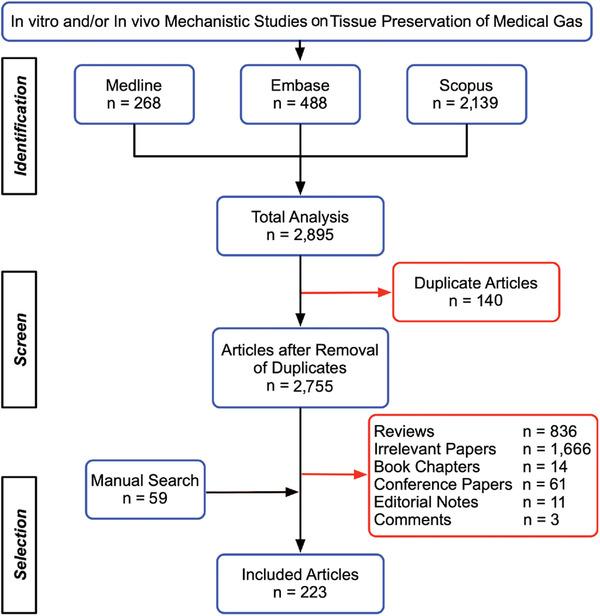
Gaseous molecules have been increasingly explored for therapeutic development. Here, following an analytical background introduction, a systematic review of medical gas research is presented, focusing on tissue protections, mechanisms, data tangibility, and translational challenges. The pharmacological efficacies of carbon monoxide (CO) and xenon (Xe) are further examined with emphasis on intracellular messengers associated with cytoprotection and functional improvement for the CNS, heart, retina, liver, kidneys, lungs, etc. Overall, the outcome supports the hypothesis that readily deliverable "biological gas" (CO, H , H S, NO, O , O , and N O) or "noble gas" (He, Ar, and Xe) treatment may preserve cells against common pathologies by regulating oxidative, inflammatory, apoptotic, survival, and/or repair processes. Specifically, CO, in safe dosages, elicits neurorestoration via igniting sGC/cGMP/MAPK signaling and crosstalk between HO-CO, HIF-1α/VEGF, and NOS pathways. Xe rescues neurons through NMDA antagonism and PI3K/Akt/HIF-1α/ERK activation. Primary findings also reveal that the need to utilize cutting-edge molecular and genetic tactics to validate mechanistic targets and optimize outcome consistency remains urgent; the number of neurotherapeutic investigations is limited, without published results from large in vivo models. Lastly, the broad-spectrum, concurrent multimodal homeostatic actions of medical gases may represent a novel pharmaceutical approach to treating critical organ failure and neurotrauma.
气体分子在治疗开发方面的应用越来越受到关注。在这里,在分析背景介绍之后,对医学气体研究进行了系统综述,重点介绍了组织保护、机制、数据的可操作性以及转化挑战。还进一步检查了一氧化碳 (CO) 和氙 (Xe) 的药理学功效,重点是与细胞保护和 CNS、心脏、视网膜、肝脏、肾脏、肺等功能改善相关的细胞内信使。总的来说,研究结果支持了这样的假设,即易于输送的“生物气体”(CO、H 2 、H 2 S、NO、O 2 、O 3 和 NO)或“惰性气体”(He、Ar 和 Xe)治疗可能通过调节氧化、炎症、细胞凋亡、存活和/或修复过程来保护细胞免受常见疾病的影响。具体而言,CO 在安全剂量下通过激活 sGC/cGMP/MAPK 信号通路和 HO-CO、HIF-1α/VEGF 和 NOS 通路之间的串扰引发神经恢复。Xe 通过 NMDA 拮抗和 PI3K/Akt/HIF-1α/ERK 激活来挽救神经元。主要发现还表明,仍然迫切需要利用尖端的分子和遗传策略来验证机制靶点并优化结果一致性;神经治疗研究的数量有限,没有来自大型体内模型的发表结果。最后,医用气体的广谱、同时的多模式稳态作用可能代表着治疗危急器官衰竭和神经创伤的一种新的药物治疗方法。




 Zotero 插件