
肠热病实验性挑战人体志愿者的遗传易感性。
Genetic Susceptibility to Enteric Fever in Experimentally Challenged Human Volunteers.
机构信息
Oxford Vaccine Group, Department of Paediatrics, University of Oxfordgrid.4991.5 and the NIHR Oxford Biomedical Research Centre, Oxford, United Kingdom.
Clinical Research Department, London School of Hygiene and Tropical Medicine, London, United Kingdom.
出版信息
Infect Immun. 2022 Apr 21;90(4):e0038921. doi: 10.1128/iai.00389-21. Epub 2022 Mar 7.
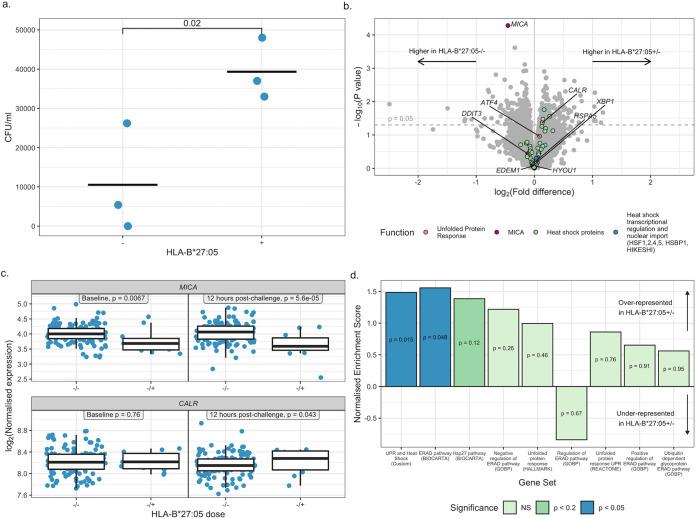
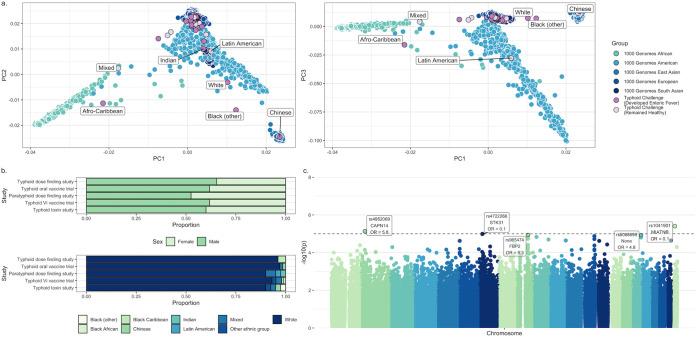
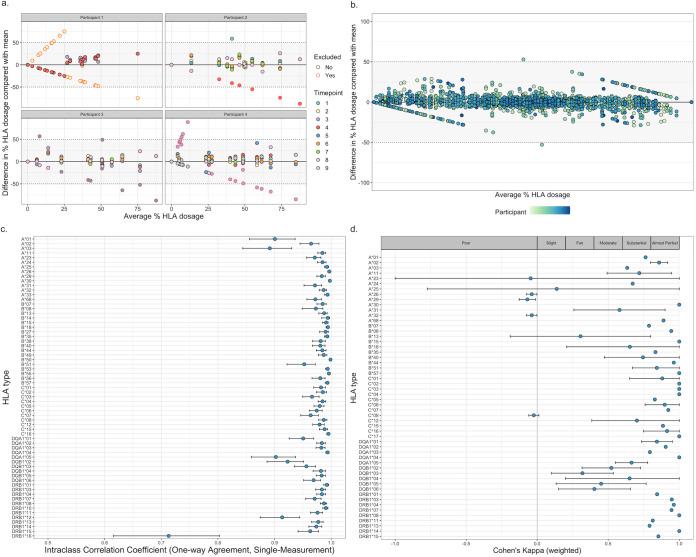
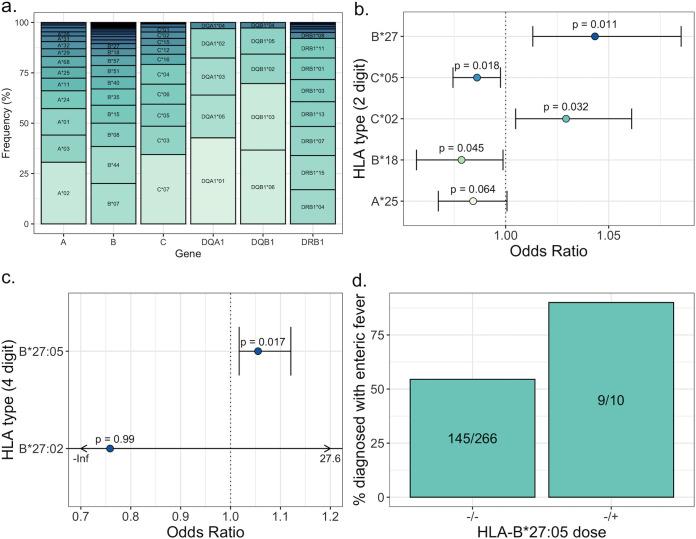
Infections with Salmonella enterica serovars Typhi and Paratyphi A cause an estimated 14 million cases of enteric fever annually. Here, the controlled nature of challenge studies is exploited to identify genetic variants associated with enteric fever susceptibility. Human challenge participants were genotyped by Illumina OmniExpress-24 BeadChip array ( = 176) and/or transcriptionally profiled by RNA sequencing ( = 174). While the study was underpowered to detect any single nucleotide polymorphisms (SNPs) significant at the whole-genome level, two SNPs within and were identified with < 10 for association with development of symptoms or bacteremia following oral S. Typhi or Paratyphi A challenge. Imputation of classical human leukocyte antigen (HLA) types from genomic and transcriptomic data identified HLA-B27:05, previously associated with nontyphoidal Salmonella-induced reactive arthritis, as the HLA type most strongly associated with enteric fever susceptibility ( = 0.011). Gene sets relating to the unfolded protein response/heat shock and endoplasmic reticulum-associated protein degradation were overrepresented in HLA-B27:05 participants following challenge. Furthermore, intracellular replication of S. Typhi is higher in C1R cells transfected with HLA-B27:05 ( = 0.02). These data suggest that activation of the unfolded protein response by HLA-B27:05 misfolding may create an intracellular environment conducive to S. Typhi replication, increasing susceptibility to enteric fever.
每年估计有 1400 万例伤寒和甲型副伤寒沙门氏菌感染引起的肠热病。在这里,利用受控的挑战研究来鉴定与肠热病易感性相关的遗传变异。通过 Illumina OmniExpress-24 BeadChip 芯片( = 176)对人类挑战参与者进行基因分型,并通过 RNA 测序( = 174)进行转录谱分析。虽然该研究没有足够的能力来检测全基因组水平上任何具有统计学意义的单核苷酸多态性(SNP),但在 和 内鉴定出了两个与口服伤寒或甲型副伤寒沙门氏菌感染后出现症状或菌血症相关的 SNP,其关联度 < 10。从基因组和转录组数据推断经典人类白细胞抗原(HLA)类型,鉴定出与非伤寒沙门氏菌引起的反应性关节炎相关的 HLA-B27:05 与肠热病易感性最相关( = 0.011)。在 HLA-B27:05 参与者中,与未折叠蛋白反应/热休克和内质网相关蛋白降解相关的基因集在挑战后过表达。此外,用 HLA-B27:05 转染的 C1R 细胞中伤寒沙门氏菌的细胞内复制率更高( = 0.02)。这些数据表明,HLA-B27:05 的错误折叠可能会激活未折叠蛋白反应,从而创造出有利于伤寒沙门氏菌复制的细胞内环境,增加患肠热病的易感性。

 Zotero 插件