
单细胞转录组学揭示了布氏锥虫有性阶段的表达谱。
Single-cell transcriptomics reveals expression profiles of Trypanosoma brucei sexual stages.
机构信息
Institute of Biodiversity, Animal Health, and Comparative Medicine, University of Glasgow, Glasgow, United Kingdom.
Wellcome Centre for Integrative Parasitology, University of Glasgow, Glasgow, United Kingdom.
出版信息
PLoS Pathog. 2022 Mar 7;18(3):e1010346. doi: 10.1371/journal.ppat.1010346. eCollection 2022 Mar.
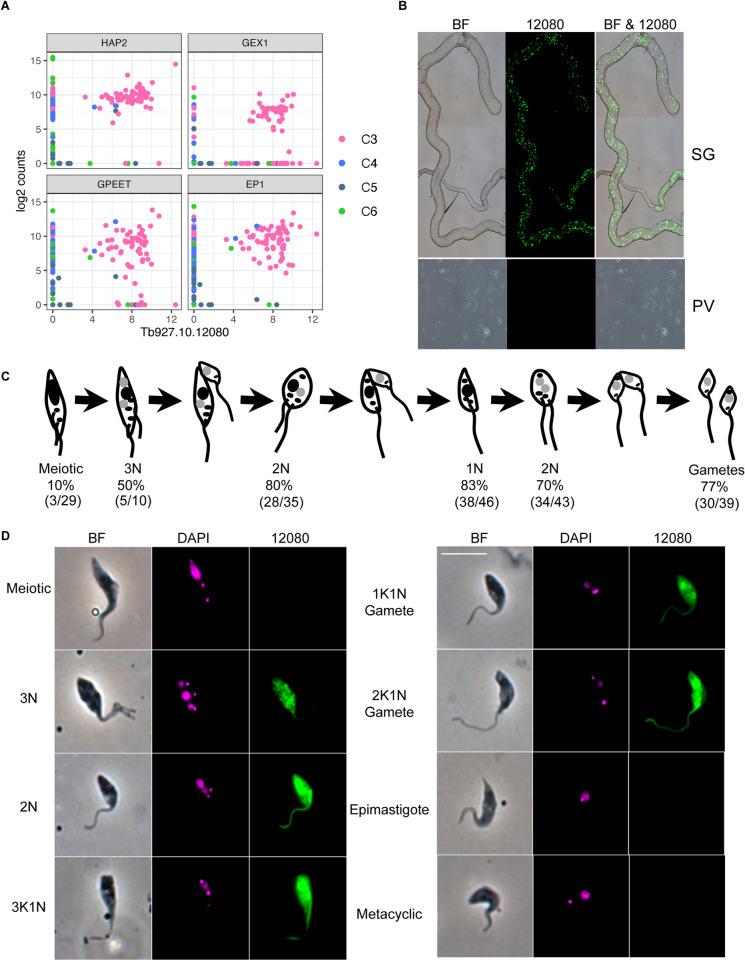
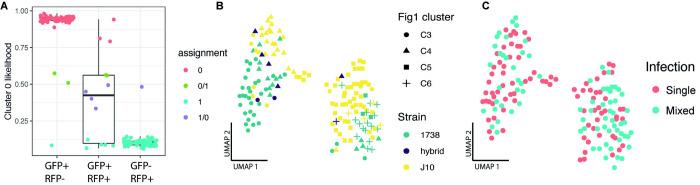
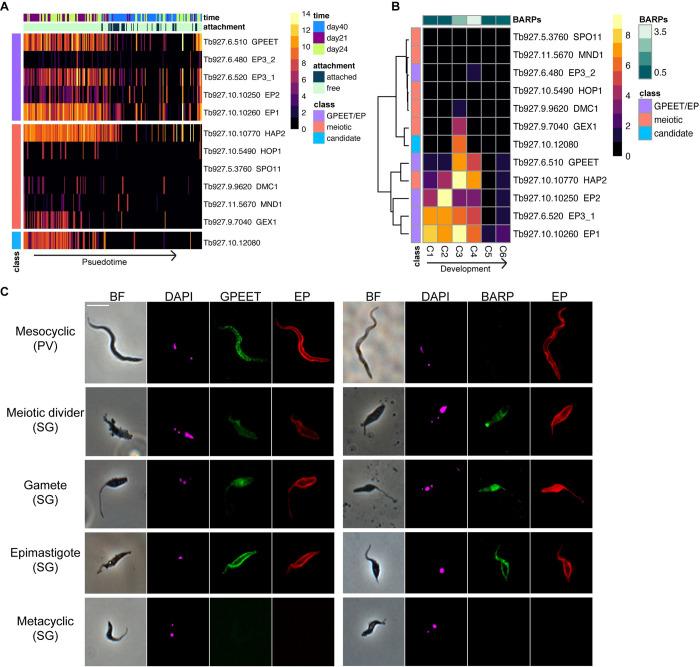
Early diverging lineages such as trypanosomes can provide clues to the evolution of sexual reproduction in eukaryotes. In Trypanosoma brucei, the pathogen that causes Human African Trypanosomiasis, sexual reproduction occurs in the salivary glands of the insect host, but analysis of the molecular signatures that define these sexual forms is complicated because they mingle with more numerous, mitotically-dividing developmental stages. We used single-cell RNA-sequencing (scRNAseq) to profile 388 individual trypanosomes from midgut, proventriculus, and salivary glands of infected tsetse flies allowing us to identify tissue-specific cell types. Further investigation of salivary gland parasite transcriptomes revealed fine-scale changes in gene expression over a developmental progression from putative sexual forms through metacyclics expressing variant surface glycoprotein genes. The cluster of cells potentially containing sexual forms was characterized by high level transcription of the gamete fusion protein HAP2, together with an array of surface proteins and several genes of unknown function. We linked these expression patterns to distinct morphological forms using immunofluorescence assays and reporter gene expression to demonstrate that the kinetoplastid-conserved gene Tb927.10.12080 is exclusively expressed at high levels by meiotic intermediates and gametes. Further experiments are required to establish whether this protein, currently of unknown function, plays a role in gamete formation and/or fusion.
早期分歧较大的谱系,如锥虫,可以为真核生物有性生殖的进化提供线索。在引起人类非洲锥虫病的病原体布氏锥虫中,有性生殖发生在昆虫宿主的唾液腺中,但分析定义这些有性形态的分子特征较为复杂,因为它们与数量更多、有丝分裂分裂的发育阶段混合在一起。我们使用单细胞 RNA 测序 (scRNAseq) 对来自受感染采采蝇的中肠、前胃和唾液腺的 388 个单个锥虫进行了分析,从而能够鉴定出组织特异性细胞类型。对唾液腺寄生虫转录组的进一步研究表明,在从假定的有性形式到表达变异表面糖蛋白基因的环幼体的发育过程中,基因表达发生了精细的变化。可能包含有性形式的细胞簇的特征是配子融合蛋白 HAP2 的高水平转录,以及一系列表面蛋白和几个未知功能的基因。我们使用免疫荧光测定和报告基因表达将这些表达模式与不同的形态形式联系起来,证明了动基体保守基因 Tb927.10.12080 仅由减数分裂中间体和配子高水平表达。需要进一步的实验来确定这种目前功能未知的蛋白质是否在配子形成和/或融合中发挥作用。


 Zotero 插件