
程序性细胞坏死相关基因与肿瘤内 CD3 和 CD8 T 细胞密度相关,并可预测肝细胞癌的预后。
Necroptosis-driving genes and are associated with intratumoral CD3 and CD8 T cell density and predict prognosis in hepatocellular carcinoma.
机构信息
Department of Medicine (DIMED), University of Padova, Padova, Italy.
Department of Pathology, Angelo Hospital, Mestre, Italy.
出版信息
J Immunother Cancer. 2022 Mar;10(3). doi: 10.1136/jitc-2021-004031.
BACKGROUND
Hepatocellular carcinoma (HCC) is a highly lethal cancer and the second leading cause of cancer-related deaths worldwide. As demonstrated in other solid neoplasms and HCC, infiltrating CD8 T cells seem to be related to a better prognosis, but the mechanisms affecting the immune landscape in HCC are still mostly unknown. Necroptosis is a programmed, caspase-independent cell death that, unlike apoptosis, evokes immune response by releasing damage-associated molecular factors. However, in HCC, the relationship between the necroptotic machinery and the tumor-infiltrating lymphocytes has not been fully investigated so far.
METHODS
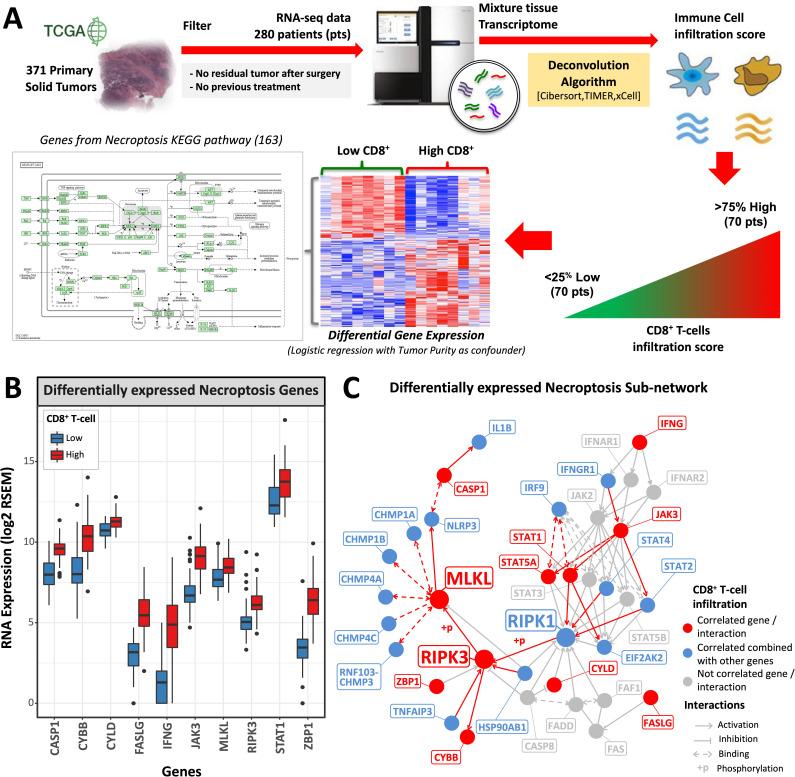
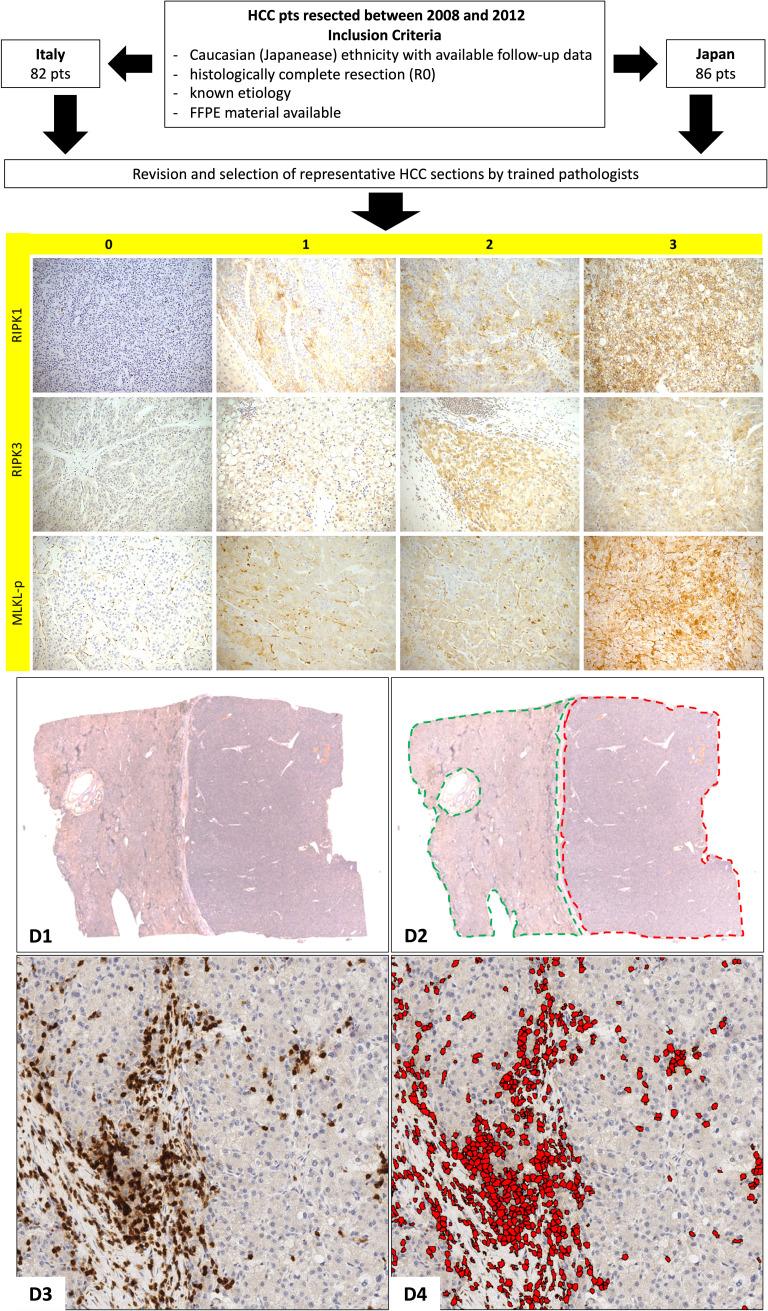
We investigated the association between the main necroptosis-related genes, that is, , , and CD3/CD8 tumor-infiltrating T cell by RNA-seq data analysis in 371 patients with primary HCC from The Cancer Genome Atlas and then by immunohistochemistry in two independent cohorts of HCC patients from Italy (82) and Japan (86).
RESULTS
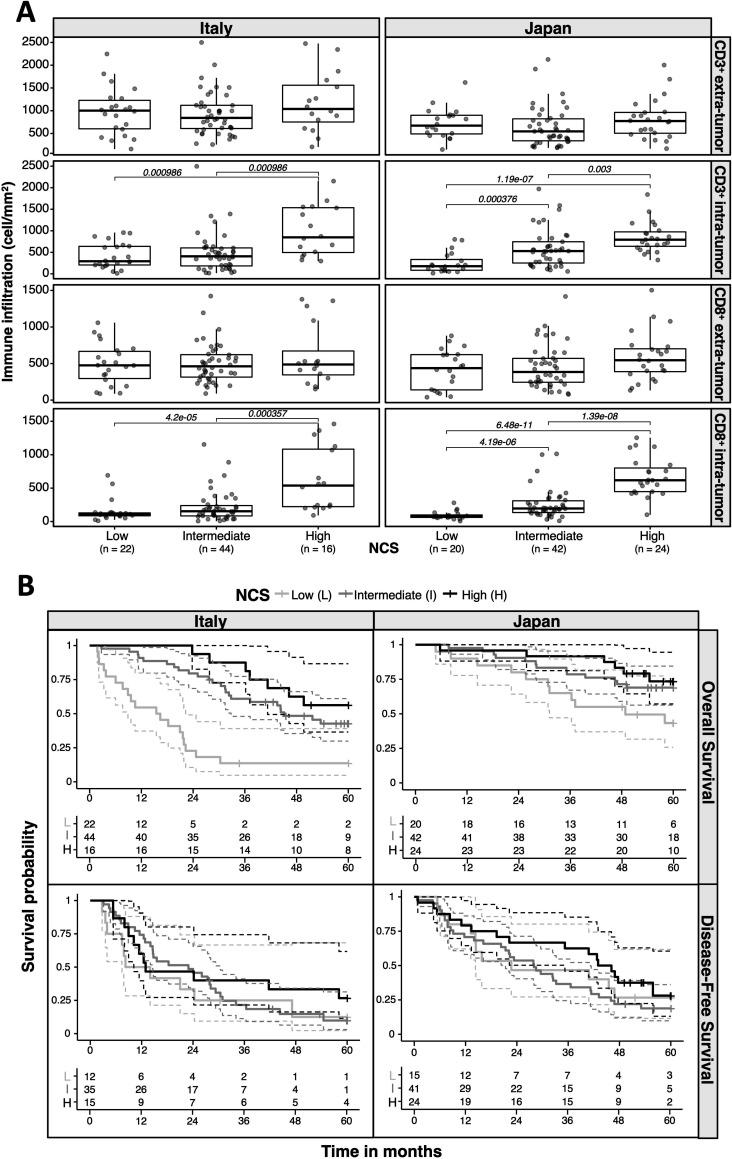
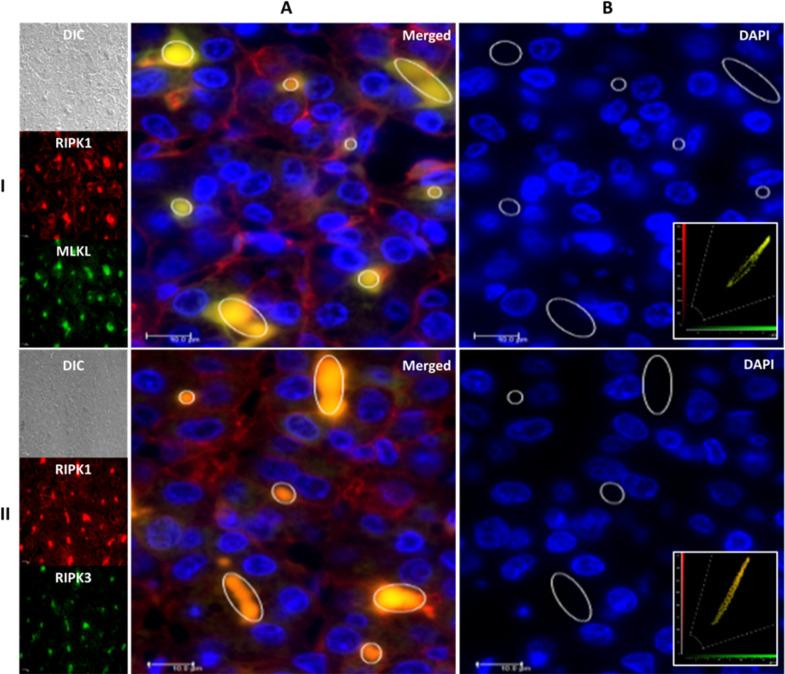
Our findings highlighted the immunogenetic role of necroptosis and its potential prognostic role in HCC: RIPK1, RIPK3 and MLKL-p were found significantly associated with intratumoral CD3 and CD8 T cells. In addition, multivariate survival analysis showed that the expression of RIPK1, RIPK3 and MLKL-p was associated with better overall survival in the two independent cohorts.
CONCLUSIONS
Our results confirmed the immunogenetic properties of necroptosis (NCP) in human HCC, showing that tumor-infiltrating lymphocytes (TILs) and, specifically, CD8+ T cells accumulate in tumors with higher expression of the necroptosis-related genes. These results suggest the importance of further studies to better assess the specific composition, as well as the functional features of the immune environment associated with a necroptotic signature in order to explore new possible diagnostic and immunotherapeutic scenarios.
背景
肝细胞癌(HCC)是一种高度致命的癌症,也是全球癌症相关死亡的第二大主要原因。与其他实体肿瘤和 HCC 一样,浸润的 CD8 T 细胞似乎与更好的预后相关,但影响 HCC 免疫景观的机制在很大程度上仍不清楚。细胞坏死是一种程序性的、不依赖于半胱天冬酶的细胞死亡,与凋亡不同,它通过释放损伤相关分子因子引发免疫反应。然而,在 HCC 中,坏死机制与肿瘤浸润淋巴细胞之间的关系尚未得到充分研究。
方法
我们通过 RNA-seq 数据分析,在来自癌症基因组图谱的 371 例原发性 HCC 患者中,研究了主要坏死相关基因(即、、和)与 CD3/CD8 肿瘤浸润 T 细胞之间的关系,然后在意大利(82 例)和日本(86 例)的两个独立 HCC 患者队列中通过免疫组织化学进行研究。
结果
我们的研究结果突出了坏死的免疫遗传作用及其在 HCC 中的潜在预后作用:RIPK1、RIPK3 和 MLKL-p 与肿瘤内 CD3 和 CD8 T 细胞显著相关。此外,多变量生存分析显示,RIPK1、RIPK3 和 MLKL-p 的表达与两个独立队列的总生存时间延长相关。
结论
我们的研究结果证实了人类 HCC 中坏死的免疫遗传特性,表明浸润肿瘤的淋巴细胞(TILs),特别是 CD8+T 细胞,在坏死相关基因表达较高的肿瘤中聚集。这些结果表明,需要进一步研究以更好地评估与坏死特征相关的免疫环境的特定组成以及功能特征,以便探索新的可能的诊断和免疫治疗方案。

 Zotero 插件