
蜜蜂肠道细菌对宿主代谢和神经过程的独特作用。
Distinct Roles of Honeybee Gut Bacteria on Host Metabolism and Neurological Processes.
机构信息
College of Food Science and Nutritional Engineering, China Agricultural University, Beijing, China.
出版信息
Microbiol Spectr. 2022 Apr 27;10(2):e0243821. doi: 10.1128/spectrum.02438-21. Epub 2022 Mar 10.
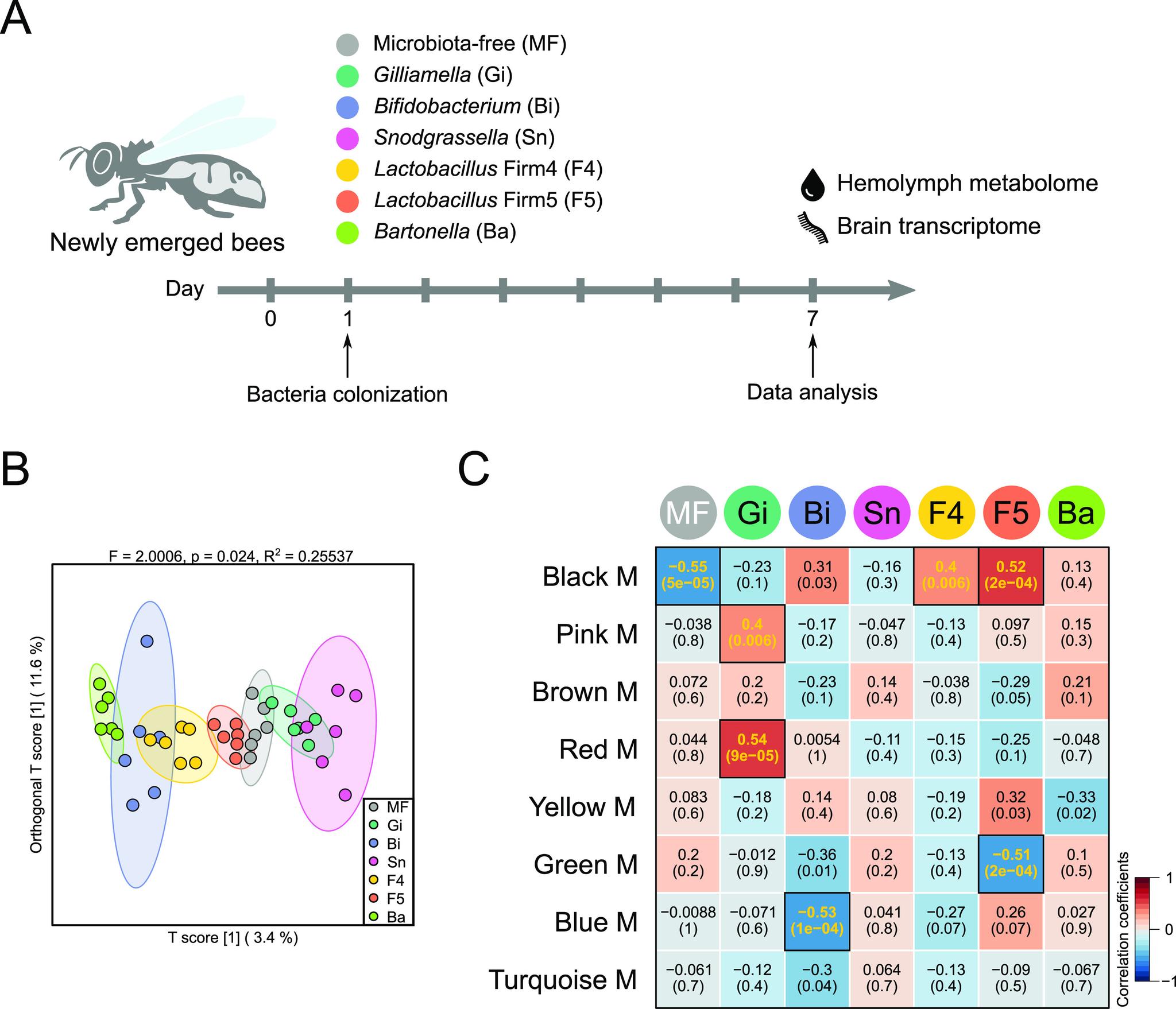
The honeybee possesses a limited number of bacterial phylotypes that play essential roles in host metabolism, hormonal signaling, and feeding behavior. However, the contribution of individual gut members in shaping honeybee brain profiles remains unclear. By generating gnotobiotic bees which were mono-colonized by a single gut bacterium, we revealed that different species regulated specific modules of metabolites in the hemolymph. Circulating metabolites involved in carbohydrate and glycerophospholipid metabolism pathways were mostly regulated by , while Firm4 and Firm5 mainly altered amino acid metabolism pathways. We then analyzed the brain transcriptomes of bees mono-colonized with these three bacteria. These showed distinctive gene expression profiles, and genes related to olfactory functions and labor division were upregulated by . Interestingly, differentially spliced genes in the brains of gnotobiotic bees largely overlapped with those of bees unresponsive to social stimuli. The differentially spliced genes were enriched in pathways involved in neural development and synaptic transmission. We showed that gut bacteria altered neurotransmitter levels in the brain. In particular, dopamine and serotonin, which show inhibitory effects on the sensory sensitivity of bees, were downregulated in bacteria-colonized bees. The proboscis extension response showed that a normal gut microbiota is essential for the taste-related behavior of honeybees, suggesting the contribution of potential interactions among different gut species to the host's physiology. Our findings provide fundamental insights into the diverse functions of gut bacteria which likely contribute to honeybee neurological processes. The honeybee possesses a simple and host-restricted gut community that contributes to the metabolic health of its host, while the effects of bacterial symbionts on host neural functions remain elusive. We found that the colonization of specific bee gut bacteria regulates distinct circulating metabolites enriched in carbohydrate, amino acid, and glycerophospholipid metabolic pathways. The brains of bees colonized with different gut members display distinct transcriptomic profiles of genes crucial for bee behaviors and division of labor. Alternative splicing of genes related to disordered bee behaviors is also mediated. The presence of gut bacteria promotes sucrose sensitivity with major neurotransmitters being regulated in the brain. Our findings demonstrate how individual bee gut species affect host behaviors, highlighting the gut-brain connections important for honeybee neurobiological and physiological states.
蜜蜂拥有有限数量的细菌菌群,这些菌群在宿主代谢、激素信号传递和摄食行为中发挥着重要作用。然而,单个肠道成员在塑造蜜蜂大脑特征方面的贡献仍不清楚。通过生成单定植于单一肠道细菌的无菌蜜蜂,我们揭示了不同的细菌物种调节了血淋巴中特定的代谢物模块。涉及碳水化合物和甘油磷脂代谢途径的循环代谢物主要受调节,而和则主要改变了氨基酸代谢途径。然后,我们分析了被这三种细菌单定植的蜜蜂的大脑转录组。这些表现出独特的基因表达谱,与嗅觉功能和劳动分工相关的基因被上调。有趣的是,无菌蜜蜂大脑中的差异剪接基因与对社会刺激无反应的蜜蜂的差异剪接基因大部分重叠。差异剪接基因在涉及神经发育和突触传递的途径中富集。我们表明,肠道细菌改变了大脑中的神经递质水平。特别是,对蜜蜂感觉敏感性具有抑制作用的多巴胺和血清素在定植细菌的蜜蜂中下调。口器延伸反应表明,正常的肠道微生物群对于蜜蜂的味觉相关行为是必不可少的,这表明不同肠道物种之间的潜在相互作用有助于宿主的生理机能。我们的研究结果为肠道细菌的多种功能提供了基本的见解,这些功能可能有助于蜜蜂的神经过程。蜜蜂拥有简单且宿主受限的肠道群落,有助于其宿主的代谢健康,而细菌共生体对宿主神经功能的影响仍不清楚。我们发现,特定蜜蜂肠道细菌的定植调节了富含碳水化合物、氨基酸和甘油磷脂代谢途径的独特循环代谢物。定植不同肠道成员的蜜蜂大脑显示出与蜜蜂行为和劳动分工相关的关键基因的不同转录组谱。与失调的蜜蜂行为相关的基因的选择性剪接也受到调节。肠道细菌的存在促进了蔗糖敏感性,大脑中的主要神经递质也受到调节。我们的研究结果表明,单个蜜蜂肠道物种如何影响宿主行为,强调了肠道-大脑连接对蜜蜂神经生物学和生理状态的重要性。



 Zotero 插件