
黑色素瘤患者血清外泌体 CD73 抑制淋巴细胞功能,并与抗 PD-1 药物治疗耐药相关。
Exosomal CD73 from serum of patients with melanoma suppresses lymphocyte functions and is associated with therapy resistance to anti-PD-1 agents.
机构信息
Department of Pharmacy, University of Salerno, Fisciano, Italy.
PhD Program in Drug Discovery and Development, University of Salerno, Fisciano, Italy.
出版信息
J Immunother Cancer. 2022 Mar;10(3). doi: 10.1136/jitc-2021-004043.
BACKGROUND
CD73 is an ectonucleotidase producing the immunosuppressor mediator adenosine. Elevated levels of circulating CD73 in patients with cancer have been associated with disease progression and poor response to immunotherapy. Immunosuppressive pathways associated with exosomes can affect T-cell function and the therapeutic efficacy of anti-programmed cell-death protein 1 (anti-PD-1) therapy. Here, we conducted a retrospective pilot study to evaluate levels of exosomal CD73 before and early during treatment with anti-PD-1 agents in patients with melanoma and its potential contribution to affect T-cell functions and to influence the clinical outcomes of anti-PD-1 monotherapy.
METHODS
Exosomes were isolated by mini size exclusion chromatography from serum of patients with melanoma (n=41) receiving nivolumab or pembrolizumab monotherapy. Expression of CD73 and programmed death-ligand 1 (PD-L1) were evaluated on exosomes enriched for CD63 by on-bead flow cytometry. The CD73 AMPase activity was evaluated by mass spectrometry, also in the presence of selective inhibitors of CD73. Interferon (IFN)-γ production and granzyme B expression were measured in CD3/28 activated T cells incubated with exosomes in presence of the CD73 substrate AMP. Levels of CD73 and PD-L1 on exosomes were correlated with therapy response. Exosomes isolated from healthy subjects were used as control.
RESULTS
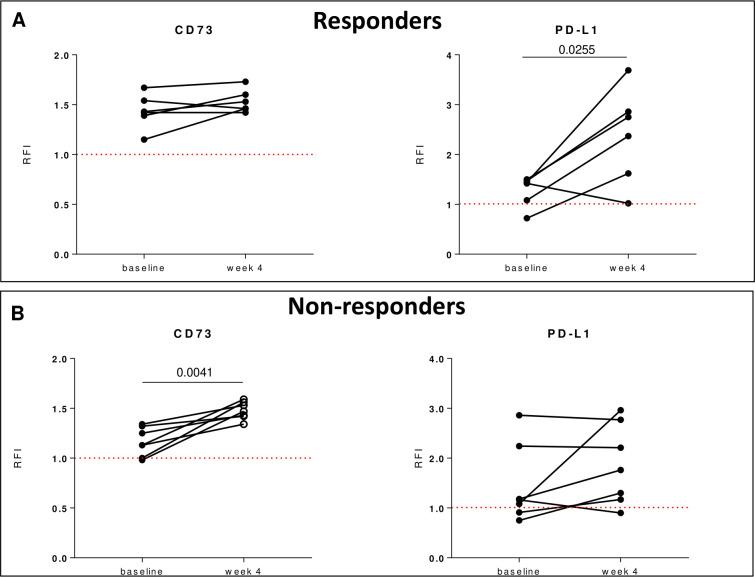
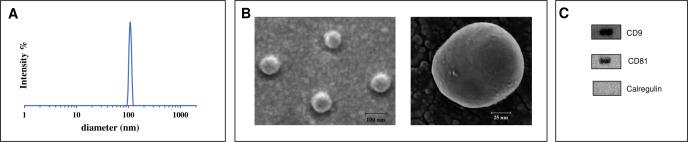
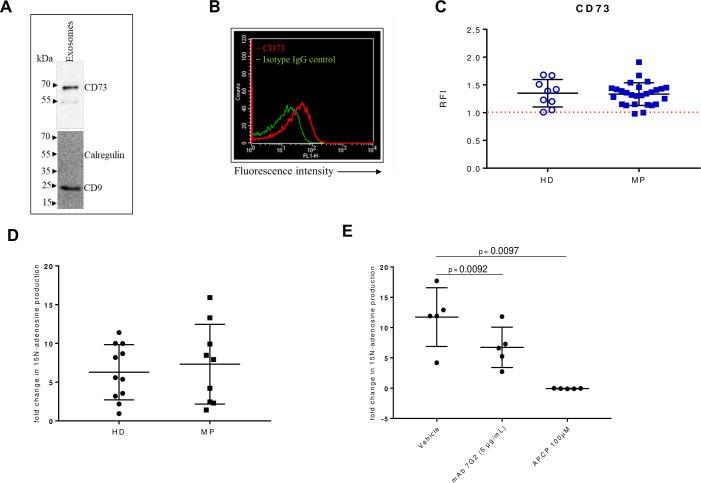
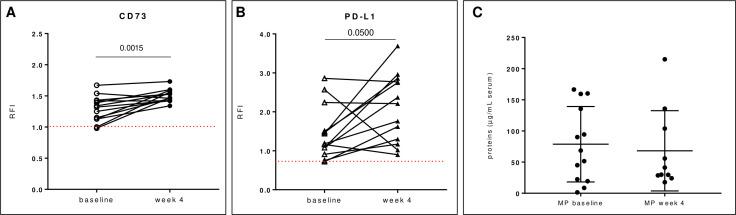
Isolated exosomes carried CD73 on their surface, which is enzymatically active in producing adenosine. Incubation of exosomes with CD3/28 activated T cells in the presence of AMP resulted in a significant reduction of IFN-γ release, which was reversed by the CD73 inhibitor APCP or by the selective A2A adenosine receptor antagonist ZM241385. Expression levels of exosomal CD73 from serum of patients with melanoma were not significantly different from those in healthy subjects. Early on-treatment, expression levels of both CD73 and PD-L1 on exosomes isolated from patients receiving pembrolizumab or nivolumab monotherapy were significantly increased compared with baseline. Early during therapy exosomal PD-L1 increased in responders, while exosomal CD73 resulted significantly increased in non-responders.
CONCLUSIONS
CD73 expressed on exosomes from serum of patients with melanoma produces adenosine and contributes to suppress T-cell functions. Early on-treatment, elevated expression levels of exosomal CD73 might affect the response to anti-PD-1 agents in patients with melanoma who failed to respond to therapy.
背景
CD73 是一种产生免疫抑制介质腺苷的外核苷酸酶。癌症患者循环中 CD73 水平升高与疾病进展和免疫治疗反应不佳有关。与外泌体相关的免疫抑制途径会影响 T 细胞功能和抗程序性细胞死亡蛋白 1(抗 PD-1)治疗的疗效。在这里,我们进行了一项回顾性试点研究,以评估黑色素瘤患者接受抗 PD-1 药物治疗前和早期治疗过程中外泌体 CD73 的水平,及其对 T 细胞功能的潜在影响,并影响抗 PD-1 单药治疗的临床结局。
方法
通过迷你尺寸排阻色谱法从接受纳武单抗或帕博利珠单抗单药治疗的黑色素瘤患者(n=41)的血清中分离出外泌体。通过流式细胞术在富含 CD63 的外泌体上评估 CD73 和程序性死亡配体 1(PD-L1)的表达。通过质谱法评估 CD73 AMPase 活性,也在 CD73 的选择性抑制剂存在下进行。在存在 CD73 底物 AMP 的情况下,用 CD3/28 激活的 T 细胞孵育外泌体,测量干扰素(IFN)-γ的产生和颗粒酶 B 的表达。CD73 和 PD-L1 在 exosomes 上的水平与治疗反应相关。来自健康受试者的外泌体被用作对照。
结果
分离的外泌体表面携带 CD73,该酶在产生腺苷方面具有酶活性。在 AMP 的存在下,用 CD3/28 激活的 T 细胞孵育外泌体导致 IFN-γ释放显著减少,这可以通过 CD73 抑制剂 APCP 或选择性 A2A 腺苷受体拮抗剂 ZM241385 逆转。黑色素瘤患者血清中外泌体 CD73 的表达水平与健康受试者无显著差异。在早期治疗时,接受帕博利珠单抗或纳武单抗单药治疗的患者分离的外泌体中 CD73 和 PD-L1 的表达水平均明显高于基线。在治疗早期,应答者的外泌体 PD-L1 增加,而非应答者的外泌体 CD73 则显著增加。
结论
黑色素瘤患者血清中外泌体表达的 CD73 产生腺苷并有助于抑制 T 细胞功能。在早期治疗时,外泌体 CD73 的表达水平升高可能会影响对治疗无反应的黑色素瘤患者对抗 PD-1 药物的反应。


 Zotero 插件