
lncRNA SEMA3B-AS1/HMGB1/FBXW7 轴通过调节 BGN 蛋白泛素化来介导胃癌的腹膜转移。
The lncRNA SEMA3B-AS1/HMGB1/FBXW7 Axis Mediates the Peritoneal Metastasis of Gastric Cancer by Regulating BGN Protein Ubiquitination.
机构信息
Department of Gastrointestinal Surgery & Department of Gastric and Colorectal Surgical Oncology, Zhongnan Hospital of Wuhan University, Wuhan, China.
Department of Gastrointestinal Surgery, Central Hospital of Enshi Tujia and Miao Autonomous Prefecture, Enshi, China.
出版信息
Oxid Med Cell Longev. 2022 Feb 27;2022:5055684. doi: 10.1155/2022/5055684. eCollection 2022.
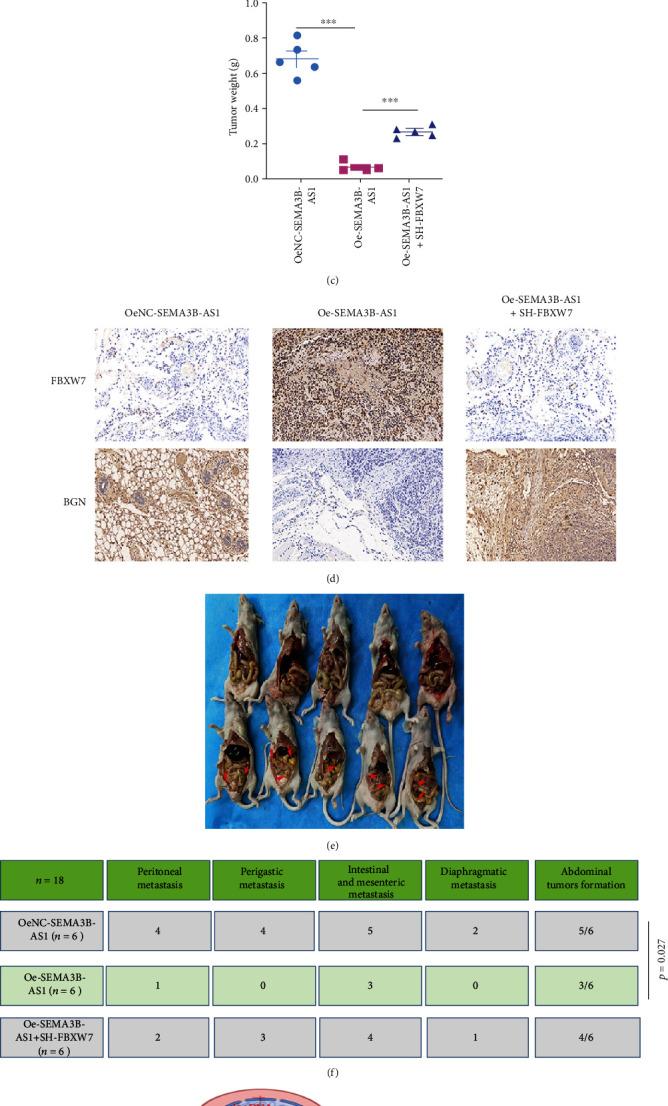
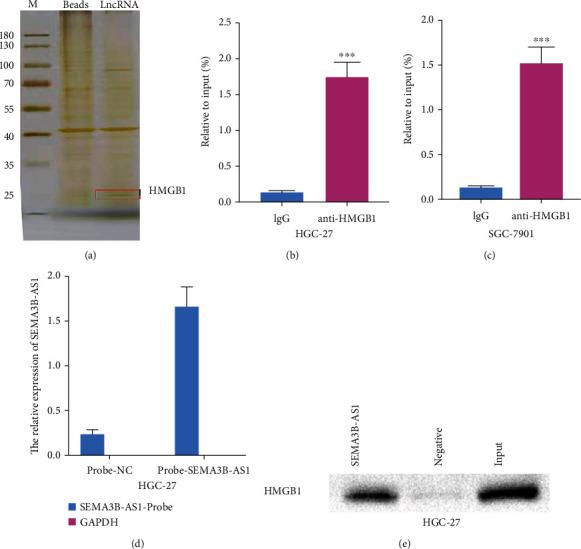
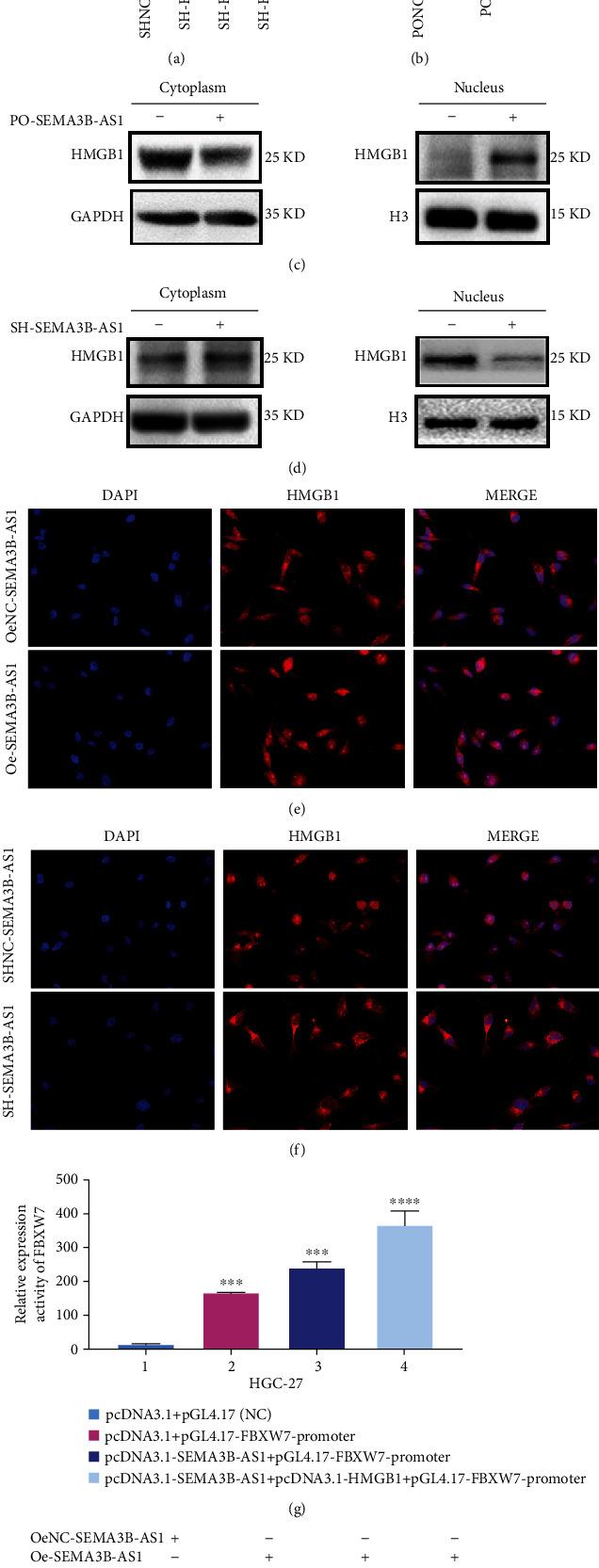
Peritoneal metastasis (PM) is one of the main causes of a poor prognosis in patients with advanced gastric cancer (GC). lncRNAs have been confirmed to play a very crucial role in the occurrence, development, and metastasis of many human cancers, including gastric cancer. However, the mechanism of lncRNA in PM of GC is rarely studied. We explored the mechanism of PM of GC through lncRNA gene sequencing and protein profiling analysis to detect PM-associated lncRNAs and proteins. A quantitative reverse transcription polymerase chain reaction (qRT-PCR) was performed to identify the mRNA expression of SEMA3B-AS1 and BGN in GC tissues and adjacent normal tissues. The biological function of SEMA3B-AS1 in the PM of GC was identified through gain- and loss-of-function assays. Chromatin isolation by RNA purification (ChIRP), RNA immunoprecipitation (RIP), RNA pull-down, luciferase reporter, and coimmunoprecipitation (co-IP) assays was carried out to demonstrate the potential mechanism between SEMA3B-AS1 and its downstream genes, including HMGB1, FBXW7, and BGN. Finally, the biological function of SEMA3B-AS1 was demonstrated in animal experiments. The mRNA expression level of SEMA3B-AS1 was downregulated in GC and PM tissues compared to normal stomach tissues; however, BGN was highly expressed at the mRNA level. SEMA3B-AS1 was closely related to PM and the overall survival (OS) of GC patients. Functionally, the overexpression of SEMA3B-AS1 was related to GC progression, PM, and prognosis. Mechanistically, SEMA3B-AS1 could combine with HMGB1 to regulate the transcription of FBXW7, thus facilitating the ubiquitination of BGN. In conclusion, our study demonstrated that the SEMA3B-AS1/HMGB1/FBXW7 axis plays an inhibitory role in the PM of GC by regulating BGN protein ubiquitination. It also provides a new biological marker for the diagnosis and treatment of the PM of GC.
腹膜转移(PM)是晚期胃癌(GC)患者预后不良的主要原因之一。lncRNAs 已被证实在许多人类癌症(包括胃癌)的发生、发展和转移中发挥着非常关键的作用。然而,lncRNA 在 GC 的 PM 中的作用机制很少被研究。我们通过 lncRNA 基因测序和蛋白质谱分析来探讨 GC 的 PM 机制,以检测与 PM 相关的 lncRNAs 和蛋白质。通过定量逆转录聚合酶链反应(qRT-PCR)检测 GC 组织和相邻正常组织中 SEMA3B-AS1 和 BGN 的 mRNA 表达。通过功能获得和功能丧失实验鉴定 SEMA3B-AS1 在 GC 的 PM 中的生物学功能。通过 RNA 纯化的染色质免疫沉淀(ChIRP)、RNA 免疫沉淀(RIP)、RNA 下拉、荧光素酶报告基因和共免疫沉淀(co-IP)实验,证明了 SEMA3B-AS1 与其下游基因(包括 HMGB1、FBXW7 和 BGN)之间的潜在机制。最后,在动物实验中证明了 SEMA3B-AS1 的生物学功能。与正常胃组织相比,GC 和 PM 组织中 SEMA3B-AS1 的 mRNA 表达水平下调,而 BGN 的 mRNA 水平高表达。SEMA3B-AS1 与 PM 和 GC 患者的总生存期(OS)密切相关。功能上,SEMA3B-AS1 的过表达与 GC 进展、PM 和预后有关。机制上,SEMA3B-AS1 可以与 HMGB1 结合,调节 FBXW7 的转录,从而促进 BGN 的泛素化。总之,我们的研究表明,SEMA3B-AS1/HMGB1/FBXW7 轴通过调节 BGN 蛋白的泛素化在 GC 的 PM 中发挥抑制作用。它还为 GC 的 PM 的诊断和治疗提供了一个新的生物标志物。



 Zotero 插件