
巨噬细胞与生物钟的相遇:生物钟在急性下呼吸道感染中巨噬细胞作用的意义。
Macrophage Meets the Circadian Clock: Implication of the Circadian Clock in the Role of Macrophages in Acute Lower Respiratory Tract Infection.
机构信息
Department of Molecular Predictive Medicine and Sport Science, Kyorin University School of Medicine, Mitaka, Japan.
Center for Biological Clocks Research, Department of Biology, Texas A&M University, College Station, TX, United States.
出版信息
Front Cell Infect Microbiol. 2022 Feb 23;12:826738. doi: 10.3389/fcimb.2022.826738. eCollection 2022.
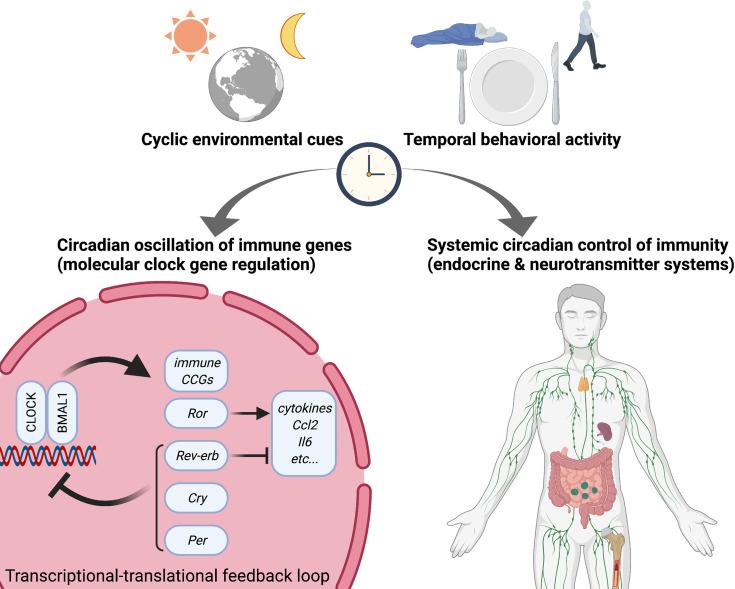
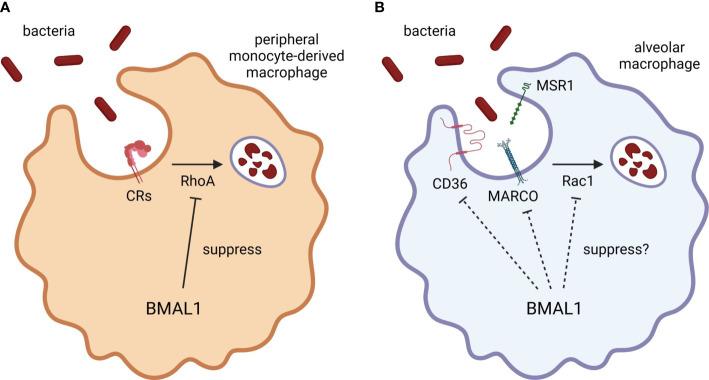
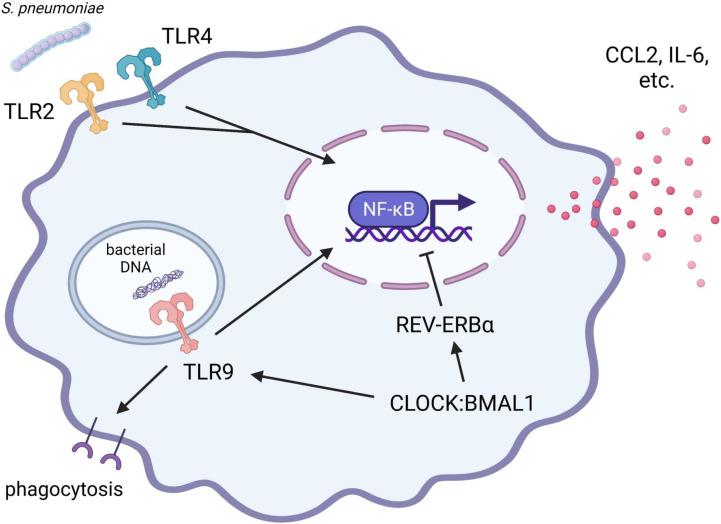
The circadian rhythm is a biological system that creates daily variations of physiology and behavior with a 24-h cycle, which is precisely controlled by the molecular circadian clock. The circadian clock dominates temporal activity of physiological homeostasis at the molecular level, including endocrine secretion, metabolic, immune response, coupled with extrinsic environmental cues (, light/dark cycles) and behavioral cues (, sleep/wake cycles and feeding/fasting cycles). The other side of the clock is that the misaligned circadian rhythm contributes to the onset of a variety of diseases, such as cancer, metabolic diseases, and cardiovascular diseases, the acceleration of aging, and the development of systemic inflammation. The role played by macrophages is a key mediator between circadian disruption and systemic inflammation. At the molecular level, macrophage functions are under the direct control of the circadian clock, and thus the circadian misalignment remodels the phenotype of macrophages toward a 'killer' mode. Remarkably, the inflammatory macrophages induce systemic and chronic inflammation, leading to the development of inflammatory diseases and the dampened immune defensive machinery against infectious diseases such as COVID-19. Here, we discuss how the circadian clock regulates macrophage immune functions and provide the potential risk of misaligned circadian rhythms against inflammatory and infectious diseases.
昼夜节律是一个生物系统,以 24 小时为周期创造生理和行为的日常变化,由分子生物钟精确控制。生物钟主宰着分子水平上生理稳态的时间活性,包括内分泌分泌、代谢、免疫反应,与外在环境线索(光/暗周期)和行为线索(睡眠/觉醒周期和进食/禁食周期)相结合。生物钟的另一面是,昼夜节律紊乱会导致多种疾病的发生,如癌症、代谢疾病和心血管疾病,加速衰老,并引发全身性炎症。巨噬细胞的作用是昼夜节律紊乱和全身炎症之间的关键中介。在分子水平上,巨噬细胞的功能受到生物钟的直接控制,因此昼夜节律的紊乱会重塑巨噬细胞的表型,使其向“杀伤”模式转变。值得注意的是,炎症性巨噬细胞会引发全身性和慢性炎症,导致炎症性疾病的发展,并削弱对 COVID-19 等传染病的免疫防御机制。在这里,我们讨论了生物钟如何调节巨噬细胞的免疫功能,并提供了昼夜节律紊乱对炎症和传染病的潜在风险。

 Zotero 插件