
LINC-DUBR通过下调miR-107诱导SMAC表达来抑制卵巢癌的恶性进展。
LINC-DUBR Suppresses Malignant Progression of Ovarian Cancer by Downregulating miR-107 to Induce SMAC Expression.
作者信息
Han Zhehui, Li Dan, Yang Yun, Zhang Hong
机构信息
Department of Gynecology, Tianjin Central Hospital of Gynecology and Obstetrics, Tianjin Key Laboratory of Human Development and Reproductive Regulation, Maternity Hospital of Nankai University, Tianjin 300000, China.
Department of Gynecologic Oncology, Tianjin Central Hospital of Gynecology and Obstetrics, Tianjin Key Laboratory of Human Development and Reproductive Regulation, Maternity Hospital of Nankai University, Tianjin 300000, China.
出版信息
J Healthc Eng. 2022 Mar 3;2022:4535655. doi: 10.1155/2022/4535655. eCollection 2022.
BACKGROUND
LINC-DUBR may be a potential therapeutic target in ovarian cancer (OC). The purpose of this research was to explore the impact of miR-107 on the tumorigenicity of OC and its underlying molecular mechanisms.
METHODS
RT-qPCR was adopted to measure the expression of LINC-DUBR and miR-107 in ovarian cancer tissues and cells. CCK-8 assays and transwell chamber assays were conducted to evaluate the impacts of LINC-DUBR and miR-107 on the proliferation and invasion of human ovarian cancer cells (SKOV3). In addition, we determined the relationship between LINC-DUBR, miR-107, and SMAC using TargetScan and luciferase reporter assay. The protein expression of SMAC was determined by western blot.
RESULTS
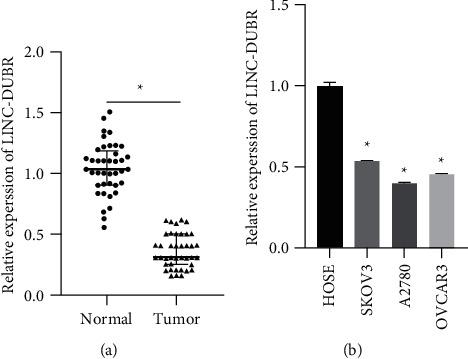
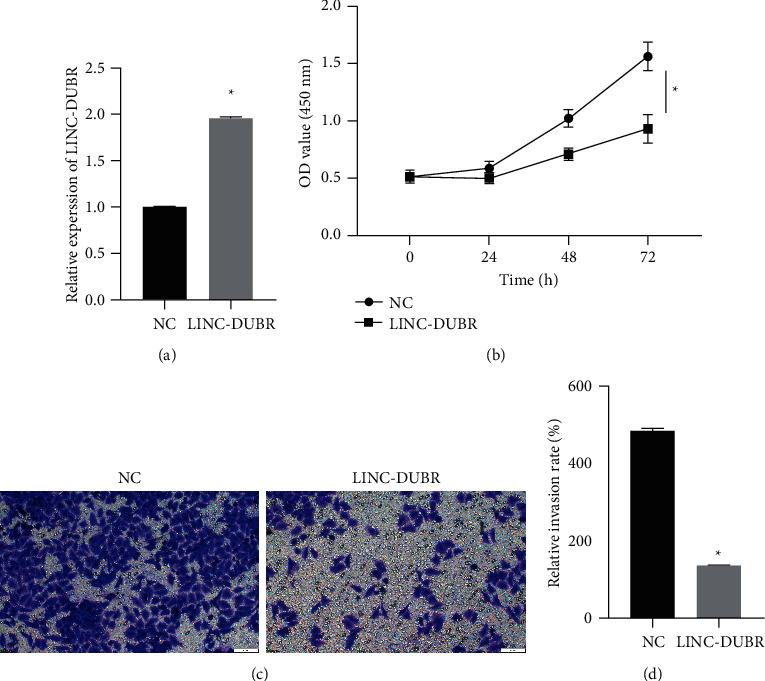
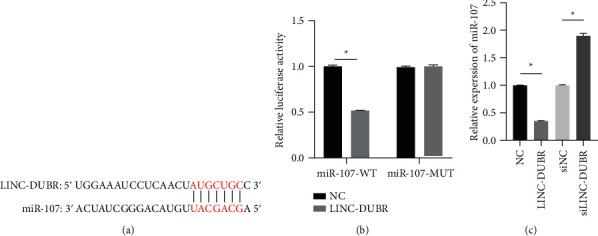
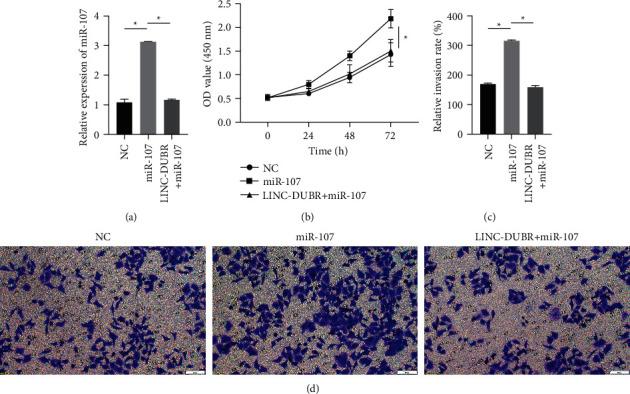
Compared with normal tissues and cells, LINC-DUBR was downregulated and miR-107 was highly expressed in ovarian cancer tissues and cell lines. Overexpression of LINC-DUBR inhibited the cell proliferation and invasive ability in OC cells SKOV3. The luciferase reporter assay proved overexpression of LINC-DUBR repressed cells proliferation and invasion via binding to miR-107 in ovarian cancer. In addition, we found that SMAC was downregulated directly by miR-107 in ovarian cancer. miR-107 mimic significantly increased cell proliferation and invasiveness of SKOV3, while overexpressed SMAC eliminated this effect. Furthermore, miR-107 could regulate the XIAP/caspase-3 signaling pathway in ovarian cancer by targeting SMAC.
CONCLUSION
LINC-DUBR suppressed malignant progression of ovarian cancer by downregulating miR-107 to induce SMAC expression and involving in the XIAP/caspase-3 signaling pathway.
背景
长链非编码RNA DUBR(LINC-DUBR)可能是卵巢癌(OC)的一个潜在治疗靶点。本研究旨在探讨miR-107对OC致瘤性的影响及其潜在分子机制。
方法
采用逆转录定量聚合酶链反应(RT-qPCR)检测卵巢癌组织和细胞中LINC-DUBR和miR-107的表达。进行细胞计数试剂盒-8(CCK-8)检测和Transwell小室检测,以评估LINC-DUBR和miR-107对人卵巢癌细胞(SKOV3)增殖和侵袭的影响。此外,我们使用TargetScan和荧光素酶报告基因检测确定LINC-DUBR、miR-107和凋亡诱导因子(SMAC)之间的关系。通过蛋白质免疫印迹法检测SMAC的蛋白表达。
结果
与正常组织和细胞相比,卵巢癌组织和细胞系中LINC-DUBR表达下调,miR-107高表达。LINC-DUBR过表达抑制了OC细胞SKOV3的细胞增殖和侵袭能力。荧光素酶报告基因检测证明,LINC-DUBR过表达通过与卵巢癌中的miR-107结合抑制细胞增殖和侵袭。此外,我们发现卵巢癌中miR-107直接下调SMAC。miR-107模拟物显著增加了SKOV3的细胞增殖和侵袭能力,而过表达SMAC消除了这种作用。此外,miR-107可通过靶向SMAC调节卵巢癌中的X连锁凋亡抑制蛋白(XIAP)/半胱天冬酶-3信号通路。
结论
LINC-DUBR通过下调miR-107诱导SMAC表达并参与XIAP/半胱天冬酶-3信号通路,从而抑制卵巢癌的恶性进展。

 Zotero 插件