
共偶联图谱推进 GPCR-G 蛋白选择性。
Common coupling map advances GPCR-G protein selectivity.
机构信息
Department of Drug Design and Pharmacology, University of Copenhagen, Copenhagen, Denmark.
Institute for Research in Immunology and Cancer (IRIC), and Department of Biochemistry and Molecular Medicine, Université de Montréal, Montréal, Canada.
出版信息
Elife. 2022 Mar 18;11:e74107. doi: 10.7554/eLife.74107.
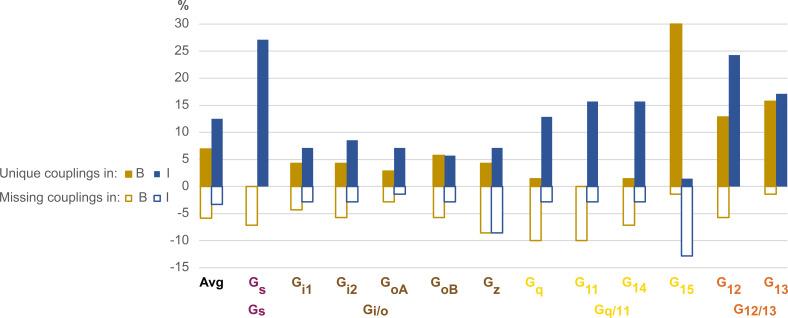
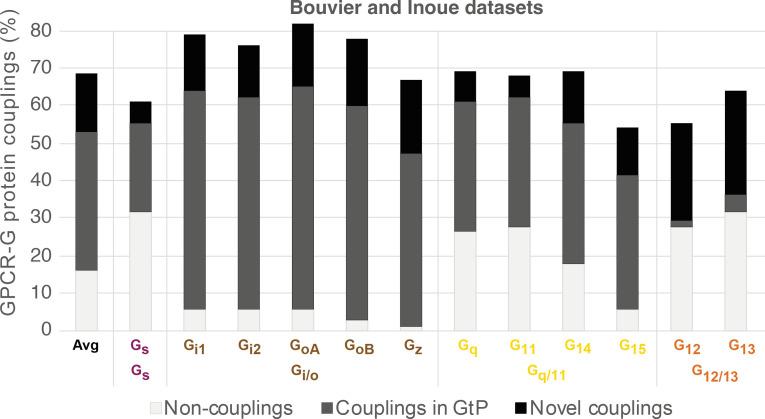
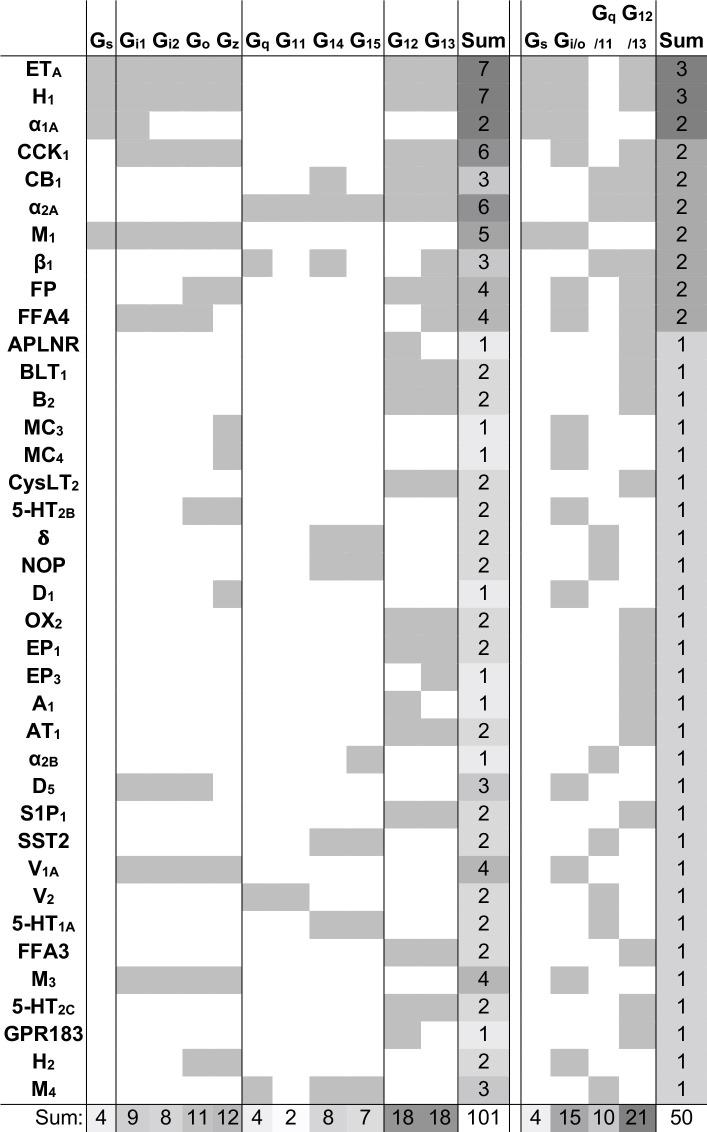
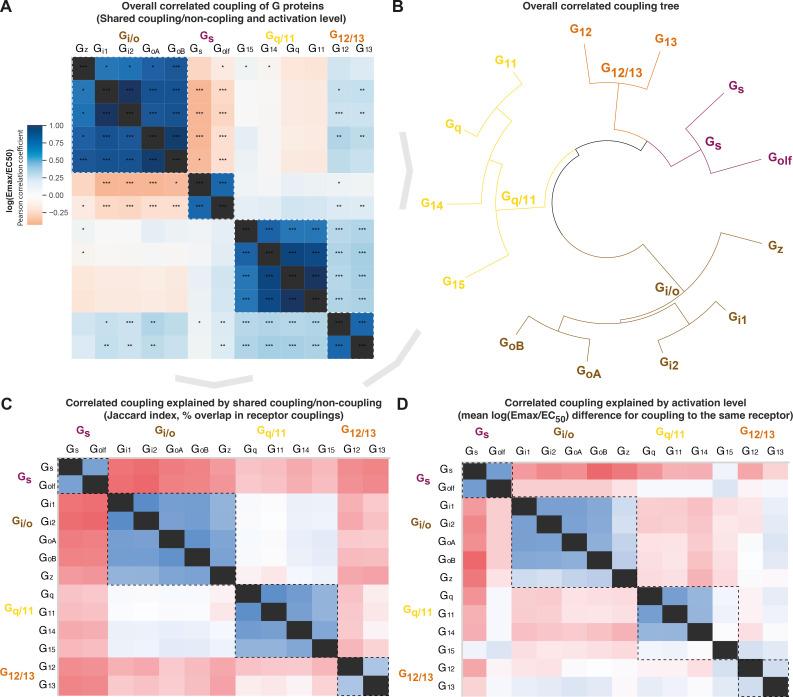
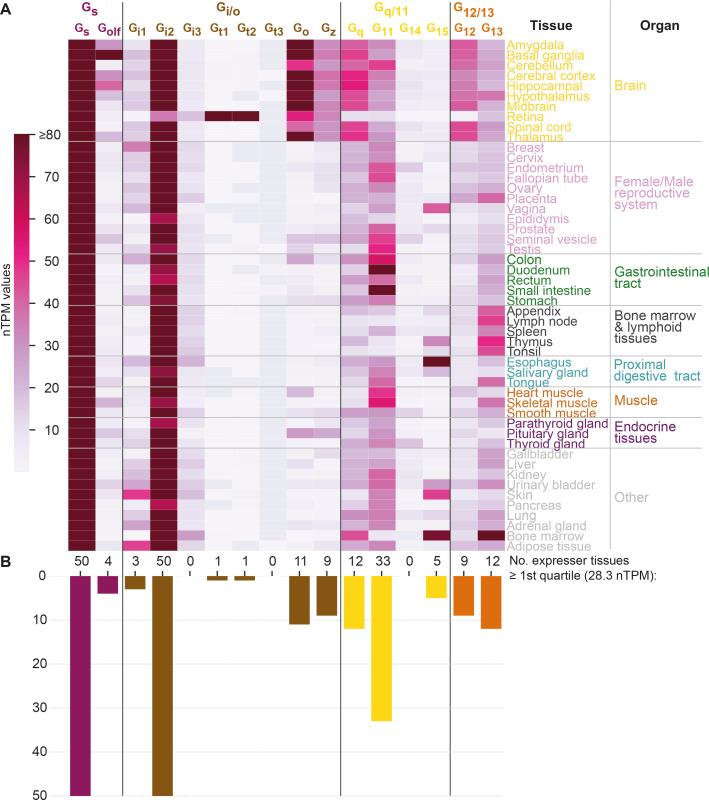
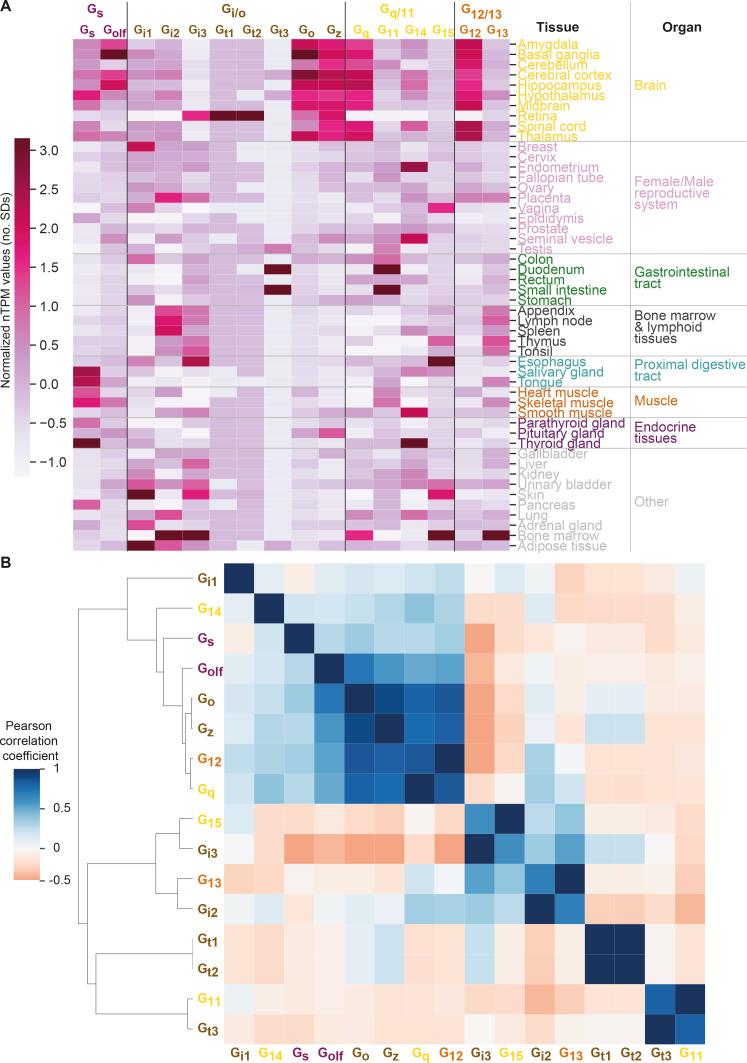
Two-thirds of human hormones and one-third of clinical drugs act on membrane receptors that couple to G proteins to achieve appropriate functional responses. While G protein transducers from literature are annotated in the Guide to Pharmacology database, two recent large-scale datasets now expand the receptor-G protein 'couplome'. However, these three datasets differ in scope and reported G protein couplings giving different coverage and conclusions on G protein-coupled receptor (GPCR)-G protein signaling. Here, we report a common coupling map uncovering novel couplings supported by both large-scale studies, the selectivity/promiscuity of GPCRs and G proteins, and how the co-coupling and co-expression of G proteins compare to the families from phylogenetic relationships. The coupling map and insights on GPCR-G protein selectivity will catalyze advances in receptor research and cellular signaling toward the exploitation of G protein signaling bias in design of safer drugs.
三分之二的人体激素和三分之一的临床药物作用于膜受体,这些受体与 G 蛋白偶联,以实现适当的功能反应。虽然文献中的 G 蛋白转导物已在药理学数据库指南中进行了注释,但最近的两个大型数据集现在扩展了受体-G 蛋白“偶联体”。然而,这三个数据集在范围和报告的 G 蛋白偶联方面存在差异,因此对 G 蛋白偶联受体 (GPCR)-G 蛋白信号转导的覆盖范围和结论也不同。在这里,我们报告了一个共同的偶联图谱,揭示了由两项大型研究支持的新偶联,以及 GPCR 和 G 蛋白的选择性/混杂性,以及 G 蛋白的共偶联和共表达如何与从系统发育关系的家族相比较。该偶联图谱和关于 GPCR-G 蛋白选择性的见解将促进受体研究和细胞信号转导的进展,以利用 G 蛋白信号转导偏倚来设计更安全的药物。



 Zotero 插件