
使用逆转录环介导等温扩增结合生物发光实时检测法(RT-LAMP-BART)检测严重急性呼吸综合征冠状病毒2(SARS-CoV-2)及L452R刺突突变
Detection of SARS-CoV-2 and the L452R spike mutation using reverse transcription loop-mediated isothermal amplification plus bioluminescent assay in real-time (RT-LAMP-BART).
作者信息
Iijima Takahiro, Ando Shinnosuke, Kanamori Dai, Kuroda Kazumichi, Nomura Tsutomu, Tisi Laurence, Kilgore Paul E, Percy Neil, Kohase Hikaru, Hayakawa Satoshi, Seki Mitsuko, Hoshino Tomonori
机构信息
Division of Pediatric Dentistry, Department of Human Development and Fostering, Meikai University School of Dentistry, Saitama, Japan.
Division of Dental Anesthesiology, Department of Diagnostic and Therapeutic Sciences, Meikai University School of Dentistry, Saitama, Japan.
出版信息
PLoS One. 2022 Mar 21;17(3):e0265748. doi: 10.1371/journal.pone.0265748. eCollection 2022.
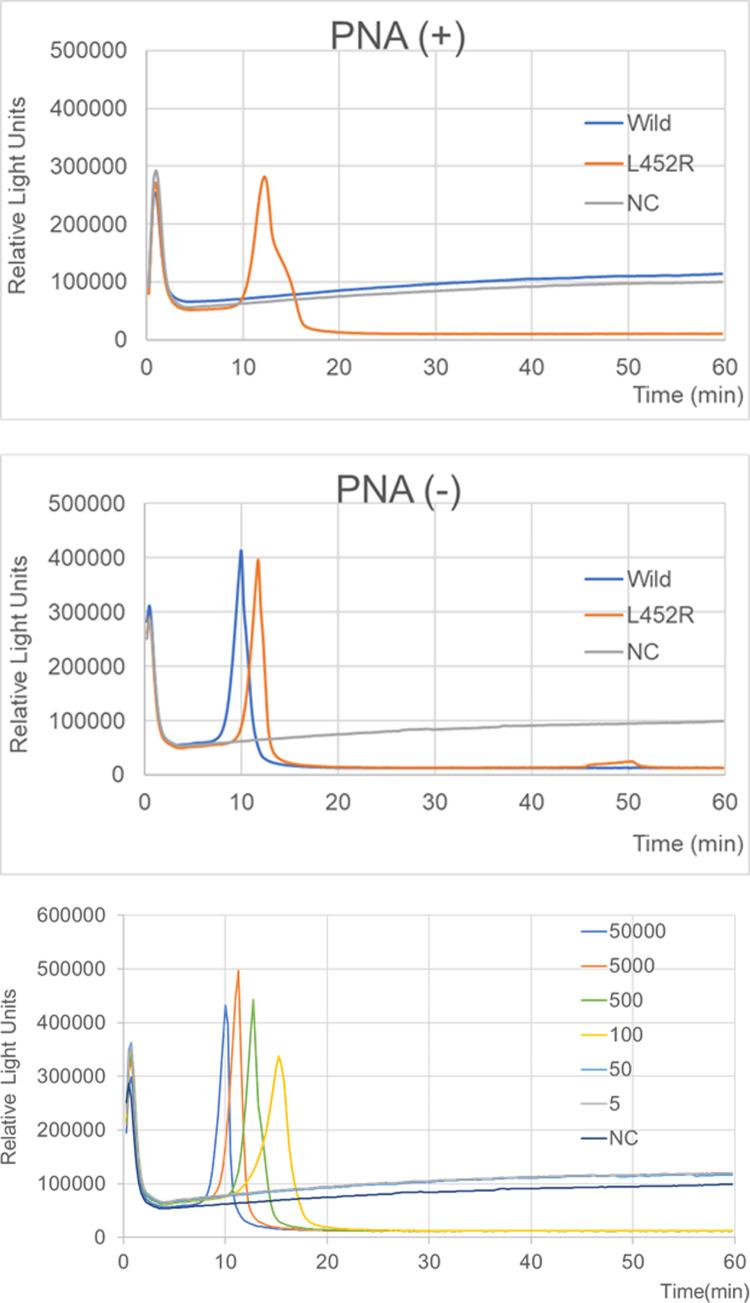
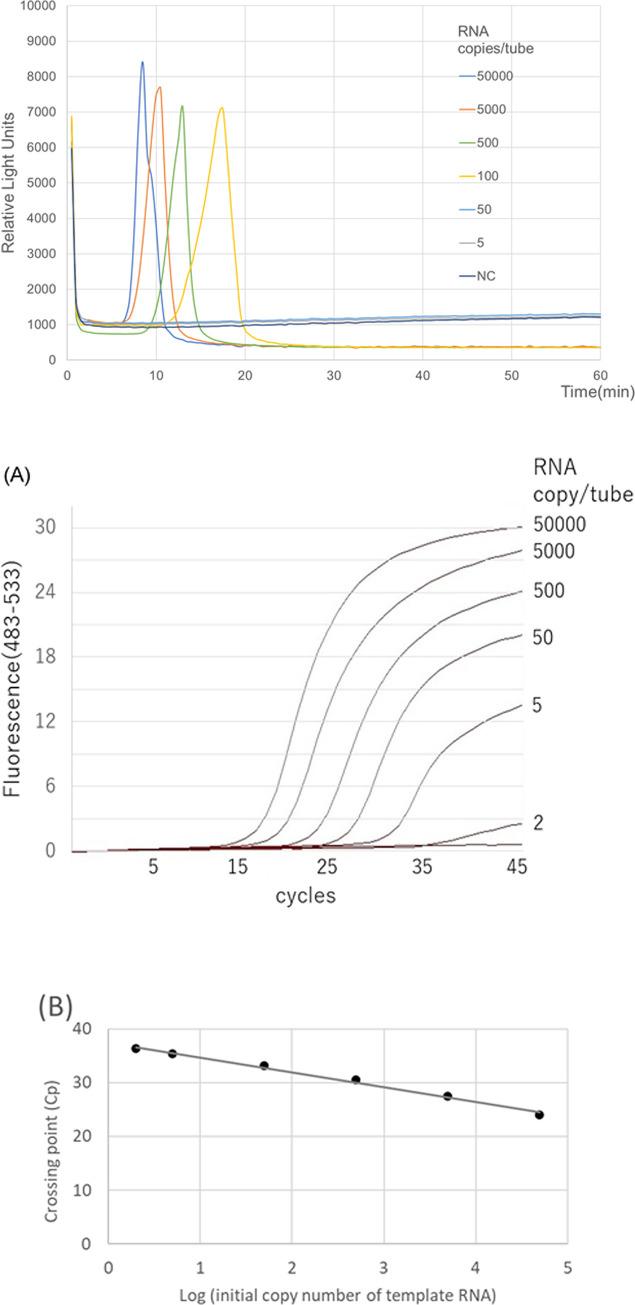
The new coronavirus infection (COVID-19) caused by severe acute respiratory syndrome coronavirus 2 (SARS-CoV-2) can be fatal, and several variants of SARS-CoV-2 with mutations of the receptor-binding domain (RBD) have increased avidity for human cell receptors. A single missense mutation of U to G at nucleotide position 1355 (U1355G) in the spike (S) gene changes leucine to arginine (L452R) in the spike protein. This mutation has been observed in the India and California strains (B.1.617 and B.1.427/B.1.429, respectively). Control of COVID-19 requires rapid and reliable detection of SARS-CoV-2. Therefore, we established a reverse transcription loop-mediated isothermal amplification (RT-LAMP) assay plus a bioluminescent assay in real-time (BART) to detect SARS-CoV-2 and the L452R spike mutation. The specificity and sensitivity of the RT-LAMP-BART assay was evaluated using synthetic RNAs including target sequences and RNA-spiked clinical nasopharyngeal and saliva specimens as well as reference strains representing five viral and four bacterial pathogens. The novel RT-LAMP-BART assay to detect SARS-CoV-2 was highly specific compared to the conventional real-time RT-PCR. Within 25 min, the RT-LAMP-BART assay detected 80 copies of the target gene in a sample, whereas the conventional real-time RT-PCR method detected 5 copies per reaction within 130 min. Using RNA-spiked specimens, the sensitivity of the RT-LAMP-BART assay was slightly attenuated compared to purified RNA as a template. The results were identical to those of the conventional real-time RT-PCR method. Furthermore, using a peptide nucleic acid (PNA) probe, the RT-LAMP-BART method correctly identified the L452R spike mutation. This is the first report describes RT-LAMP-BART as a simple, inexpensive, rapid, and useful assay for detection of SARS-CoV-2, its variants of concern, and for screening of COVID-19.
严重急性呼吸综合征冠状病毒2(SARS-CoV-2)引起的新型冠状病毒感染(COVID-19)可能致命,并且几种受体结合域(RBD)发生突变的SARS-CoV-2变体对人类细胞受体的亲和力有所增加。刺突(S)基因中核苷酸位置1355处的U到G的单个错义突变(U1355G)使刺突蛋白中的亮氨酸变为精氨酸(L452R)。在印度和加利福尼亚毒株(分别为B.1.617和B.1.427/B.1.429)中已观察到这种突变。控制COVID-19需要快速可靠地检测SARS-CoV-2。因此,我们建立了一种逆转录环介导等温扩增(RT-LAMP)检测方法以及实时生物发光检测(BART),以检测SARS-CoV-2和L452R刺突突变。使用包括靶序列的合成RNA、RNA加标的临床鼻咽和唾液标本以及代表五种病毒和四种细菌病原体的参考菌株,对RT-LAMP-BART检测方法的特异性和灵敏度进行了评估。与传统的实时RT-PCR相比,用于检测SARS-CoV-2的新型RT-LAMP-BART检测方法具有高度特异性。在25分钟内,RT-LAMP-BART检测方法在样品中检测到80个靶基因拷贝,而传统的实时RT-PCR方法在130分钟内每个反应检测到5个拷贝。使用RNA加标的标本时,与以纯化RNA为模板相比,RT-LAMP-BART检测方法的灵敏度略有降低。结果与传统实时RT-PCR方法的结果相同。此外,使用肽核酸(PNA)探针,RT-LAMP-BART方法正确鉴定了L452R刺突突变。这是第一份将RT-LAMP-BART描述为一种简单、廉价、快速且有用的检测方法的报告,该方法用于检测SARS-CoV-2、其关注的变体以及用于COVID-19的筛查。
 Zotero 插件