
COMMIT:考虑代谢物渗漏和群落组成可提高微生物群落重建。
COMMIT: Consideration of metabolite leakage and community composition improves microbial community reconstructions.
机构信息
Bioinformatics, Institute of Biochemistry and Biology, University of Potsdam, Potsdam, Germany.
Systems Biology and Mathematical Modeling, Max Planck Institute of Molecular Plant Physiology, Potsdam, Germany.
出版信息
PLoS Comput Biol. 2022 Mar 23;18(3):e1009906. doi: 10.1371/journal.pcbi.1009906. eCollection 2022 Mar.
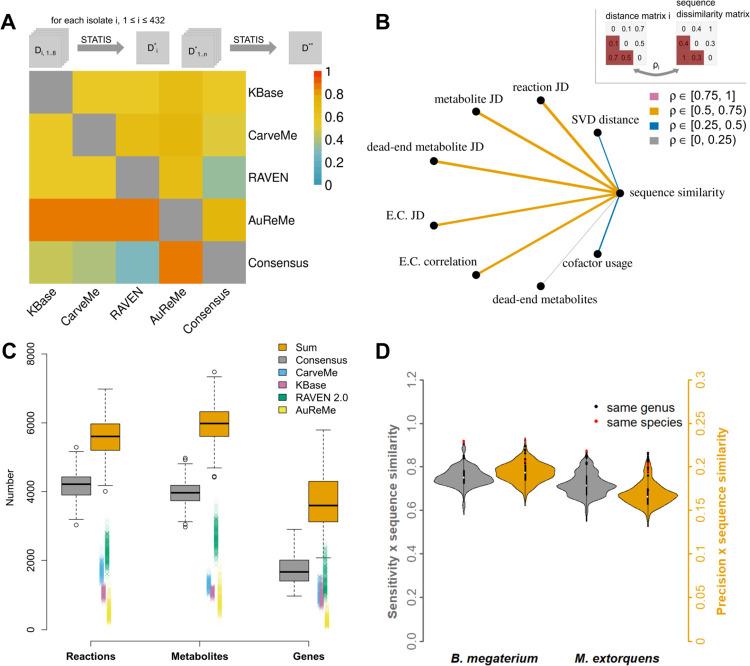
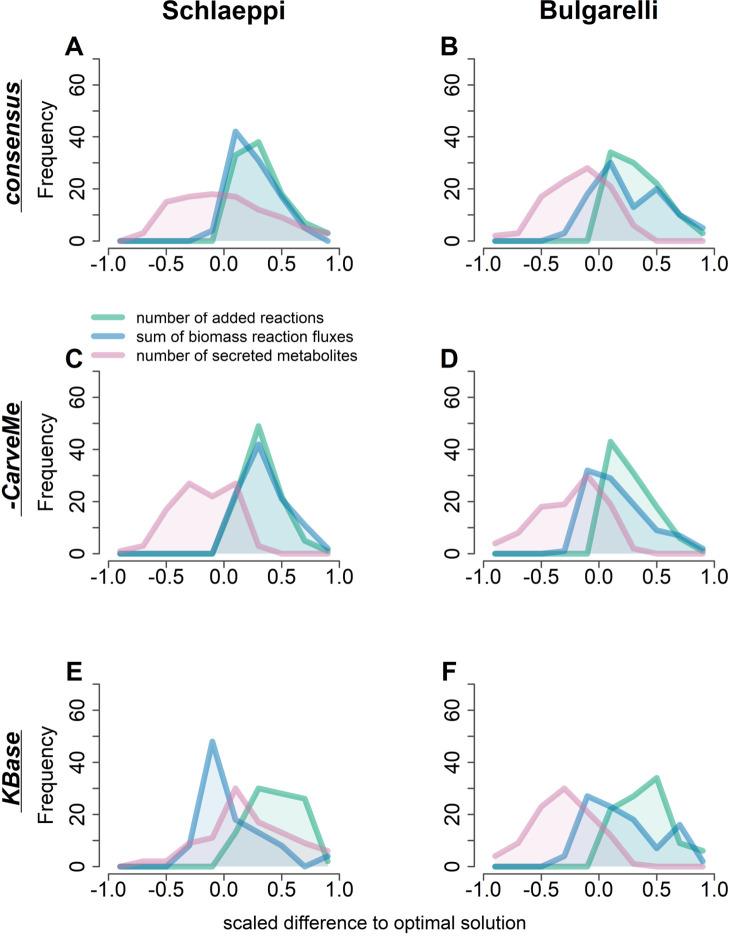
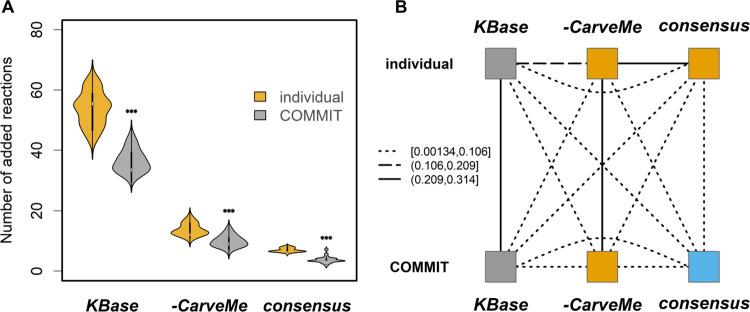
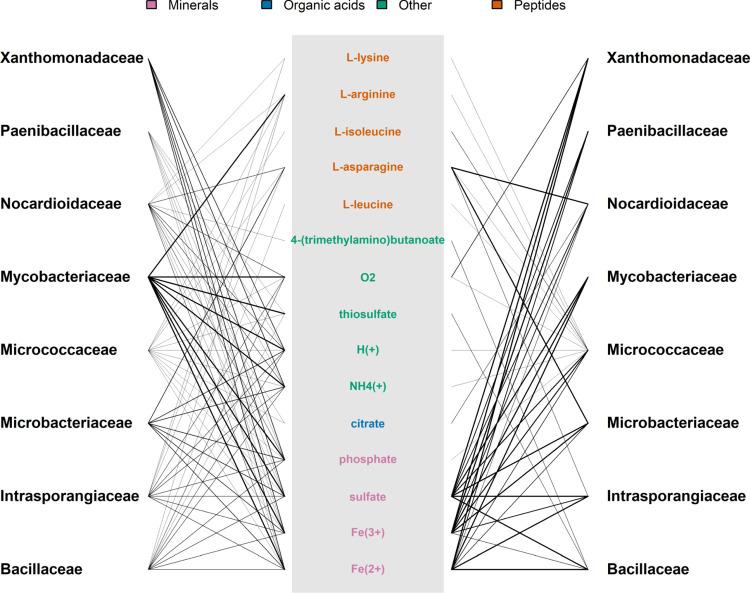
Composition and functions of microbial communities affect important traits in diverse hosts, from crops to humans. Yet, mechanistic understanding of how metabolism of individual microbes is affected by the community composition and metabolite leakage is lacking. Here, we first show that the consensus of automatically generated metabolic reconstructions improves the quality of the draft reconstructions, measured by comparison to reference models. We then devise an approach for gap filling, termed COMMIT, that considers metabolites for secretion based on their permeability and the composition of the community. By applying COMMIT with two soil communities from the Arabidopsis thaliana culture collection, we could significantly reduce the gap-filling solution in comparison to filling gaps in individual reconstructions without affecting the genomic support. Inspection of the metabolic interactions in the soil communities allows us to identify microbes with community roles of helpers and beneficiaries. Therefore, COMMIT offers a versatile fully automated solution for large-scale modelling of microbial communities for diverse biotechnological applications.
微生物群落的组成和功能会影响从作物到人类等各种宿主的重要特征。然而,我们对于单个微生物的代谢是如何受到群落组成和代谢物泄漏的影响的,其机制尚不清楚。在这里,我们首先表明,自动生成的代谢重建共识可以通过与参考模型的比较,提高草案重建的质量。然后,我们设计了一种称为 COMMIT 的填补空白的方法,该方法基于微生物的渗透性和群落组成来考虑分泌的代谢物。通过在拟南芥培养物收集的两个土壤群落中应用 COMMIT,与单独填补重建中的空白相比,我们可以显著减少填补空白的解决方案,而不会影响基因组支持。对土壤群落中代谢相互作用的检查使我们能够识别具有辅助者和受益者社区角色的微生物。因此,COMMIT 为各种生物技术应用的大规模微生物群落建模提供了一种通用的全自动解决方案。


 Zotero 插件