
SARS-CoV-2 变体包括 B.1.1.529 等的强效抗体中和作用的结构基础。
Structural basis for potent antibody neutralization of SARS-CoV-2 variants including B.1.1.529.
机构信息
Vaccine Research Center, National Institute of Allergy and Infectious Diseases, National Institutes of Health, Bethesda, MD 20892, USA.
Electron Microscopy Laboratory, Cancer Research Technology Program, Leidos Biomedical Research, Frederick National Laboratory for Cancer Research, Frederick, MD 21702, USA.
出版信息
Science. 2022 Apr 22;376(6591):eabn8897. doi: 10.1126/science.abn8897.
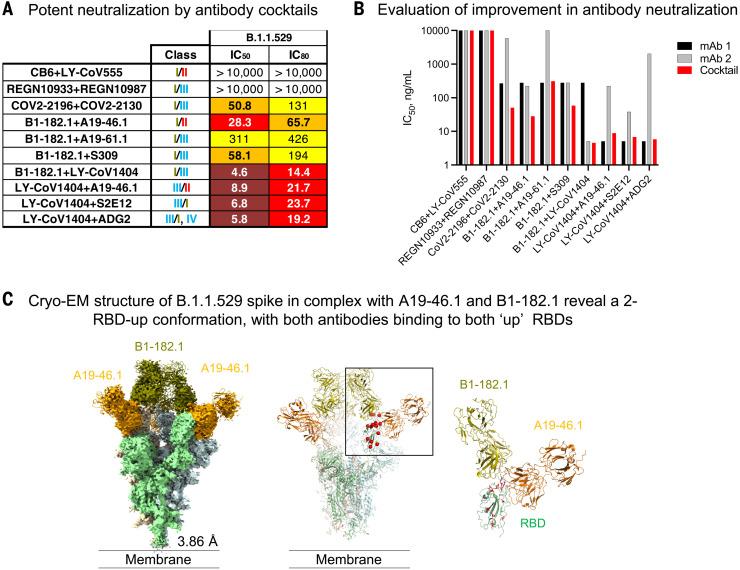
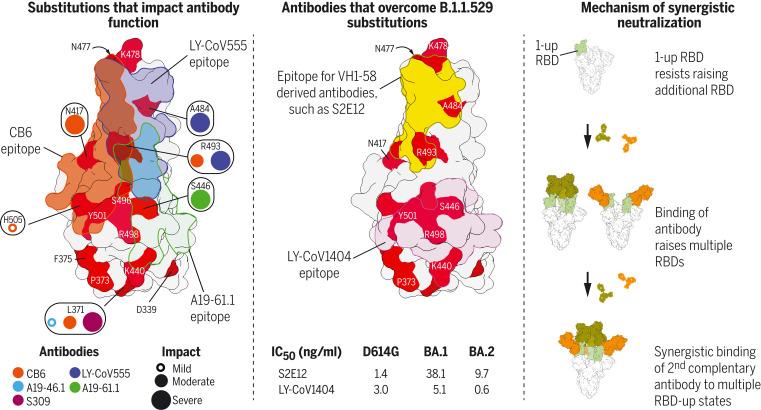
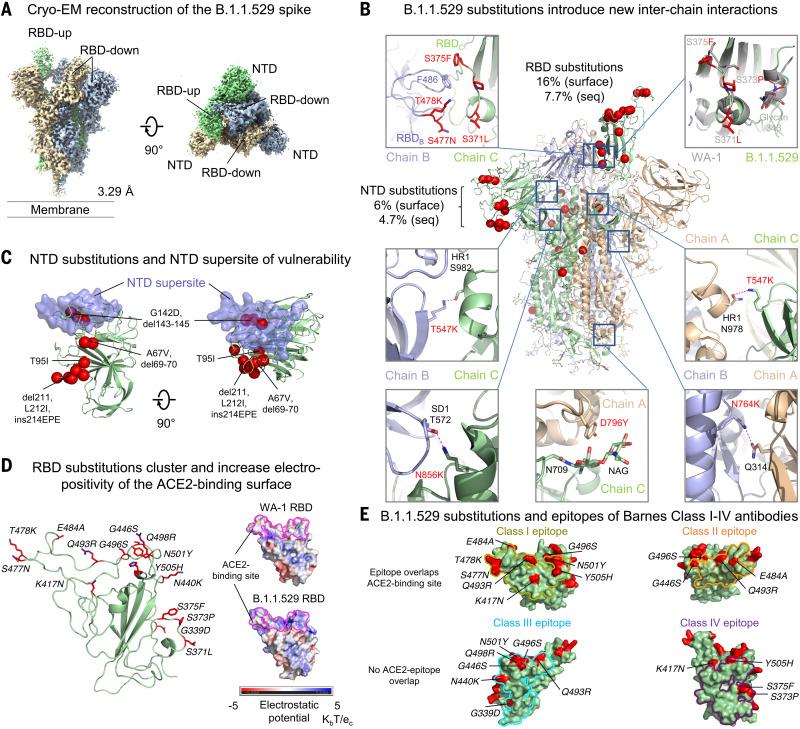
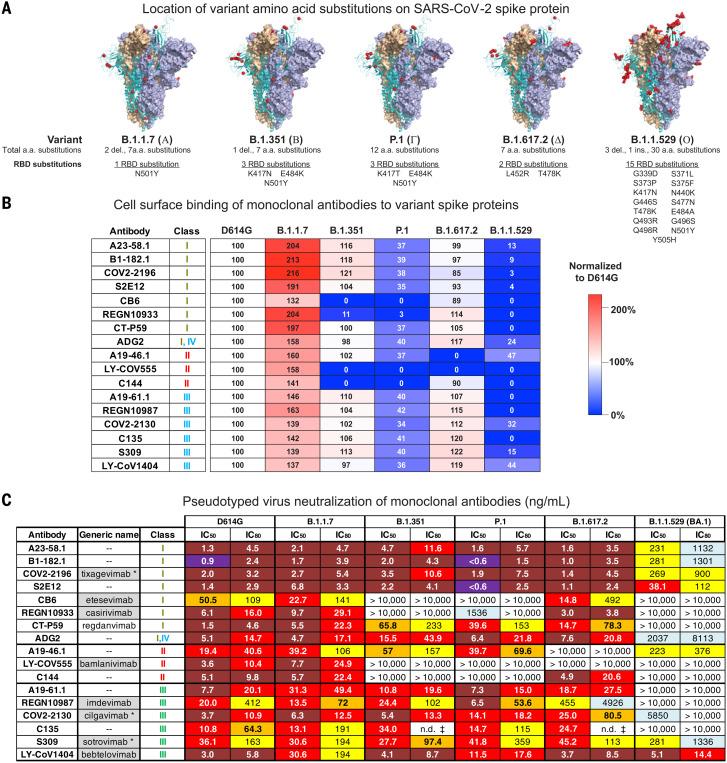
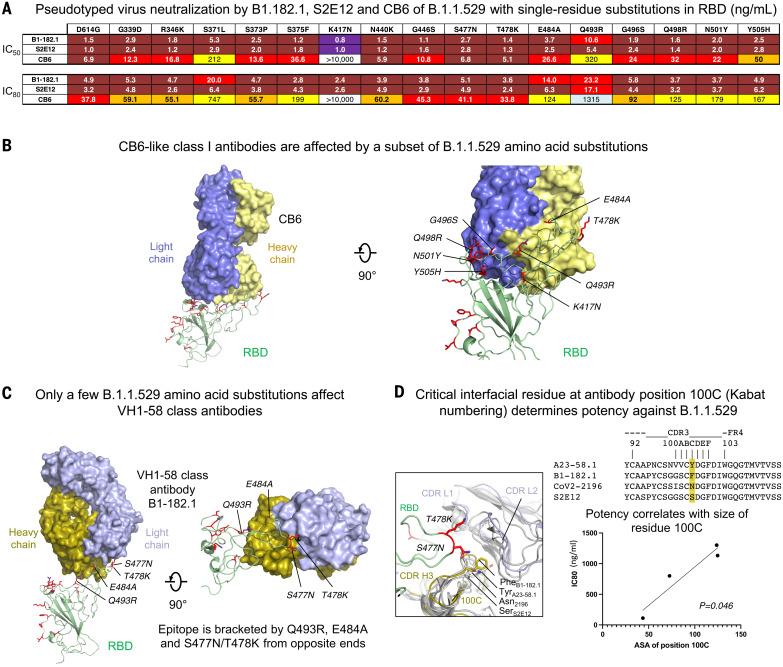
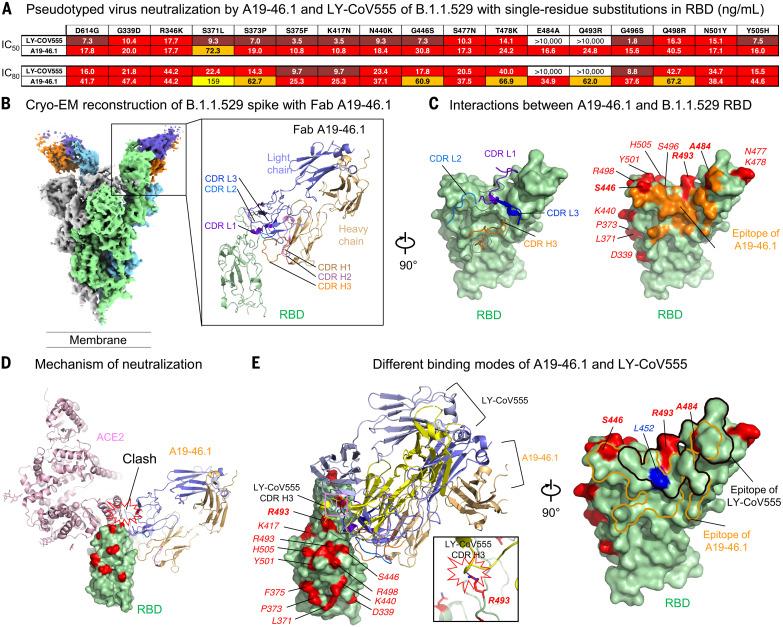
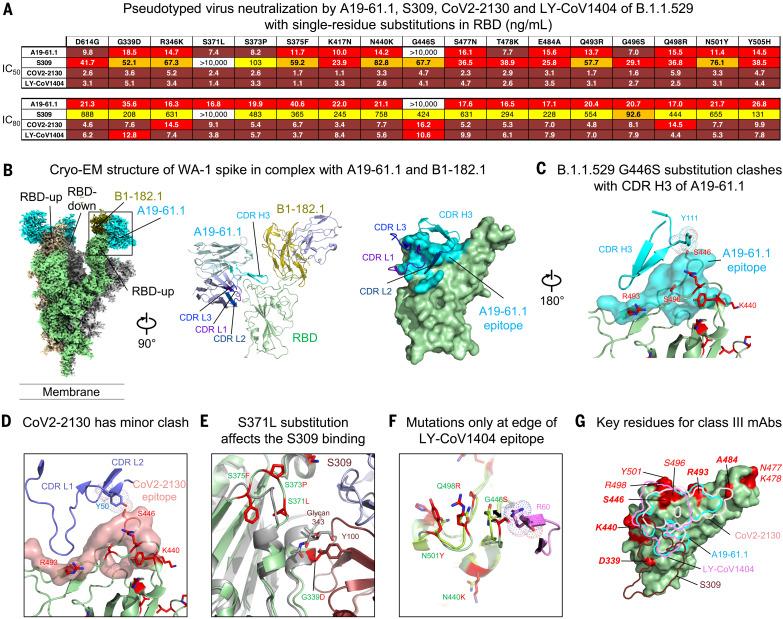
The rapid spread of the severe acute respiratory syndrome coronavirus 2 (SARS-CoV-2) B.1.1.529 (Omicron) variant and its resistance to neutralization by vaccinee and convalescent sera are driving a search for monoclonal antibodies with potent neutralization. To provide insight into effective neutralization, we determined cryo-electron microscopy structures and evaluated receptor binding domain (RBD) antibodies for their ability to bind and neutralize B.1.1.529. Mutations altered 16% of the B.1.1.529 RBD surface, clustered on an RBD ridge overlapping the angiotensin-converting enzyme 2 (ACE2)-binding surface and reduced binding of most antibodies. Substantial inhibitory activity was retained by select monoclonal antibodies-including A23-58.1, B1-182.1, COV2-2196, S2E12, A19-46.1, S309, and LY-CoV1404-that accommodated these changes and neutralized B.1.1.529. We identified combinations of antibodies with synergistic neutralization. The analysis revealed structural mechanisms for maintenance of potent neutralization against emerging variants.
严重急性呼吸综合征冠状病毒 2 (SARS-CoV-2) B.1.1.529 (奥密克戎) 变体的迅速传播及其对疫苗接种者和恢复期血清的中和作用的抵抗力,正在推动寻找具有强大中和作用的单克隆抗体。为了深入了解有效的中和作用,我们确定了冷冻电子显微镜结构,并评估了受体结合域 (RBD) 抗体结合和中和 B.1.1.529 的能力。突变改变了 B.1.1.529 RBD 表面的 16%,聚集在与血管紧张素转化酶 2 (ACE2) 结合表面重叠的 RBD 脊上,并降低了大多数抗体的结合能力。包括 A23-58.1、B1-182.1、COV2-2196、S2E12、A19-46.1、S309 和 LY-CoV1404 在内的选定单克隆抗体保留了大量抑制活性,这些抗体能够适应这些变化并中和 B.1.1.529。我们确定了具有协同中和作用的抗体组合。该分析揭示了针对新出现变体保持强大中和作用的结构机制。
 Zotero 插件