
儿童 B 细胞急性淋巴细胞白血病的耐药机制。
Resistance Mechanisms in Pediatric B-Cell Acute Lymphoblastic Leukemia.
机构信息
Student Scientific Society of Laboratory of Genetic Diagnostics, Medical University of Lublin, 20-093 Lublin, Poland.
Department of Pediatric Hematology, Oncology and Transplantology, Medical University of Lublin, 20-093 Lublin, Poland.
出版信息
Int J Mol Sci. 2022 Mar 12;23(6):3067. doi: 10.3390/ijms23063067.
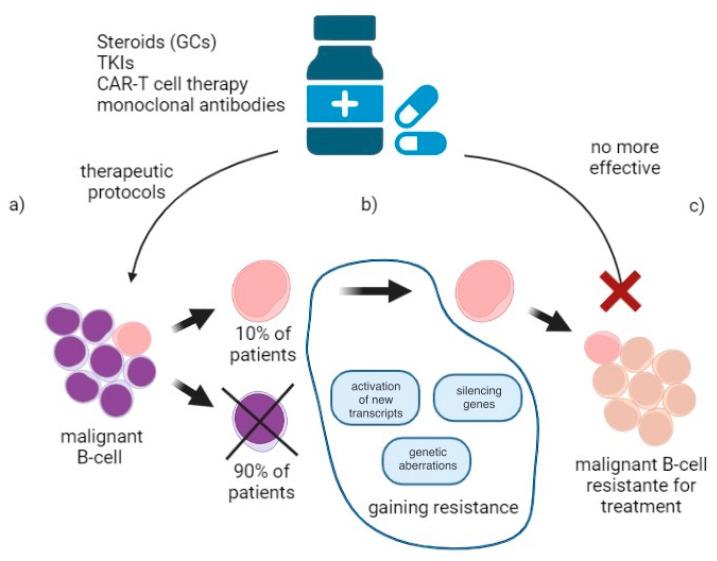
Despite the rapid development of medicine, even nowadays, acute lymphoblastic leukemia (ALL) is still a problem for pediatric clinicians. Modern medicine has reached a limit of curability even though the recovery rate exceeds 90%. Relapse occurs in around 20% of treated patients and, regrettably, 10% of diagnosed ALL patients are still incurable. In this article, we would like to focus on the treatment resistance and disease relapse of patients with B-cell leukemia in the context of prognostic factors of ALL. We demonstrate the mechanisms of the resistance to steroid therapy and Tyrosine Kinase Inhibitors and assess the impact of genetic factors on the treatment resistance, especially translocation. We compare therapeutic protocols and decipher how cancer cells become resistant to innovative treatments-including CAR-T-cell therapies and monoclonal antibodies. The comparisons made in our article help to bring closer the main factors of resistance in hematologic malignancies in the context of ALL.
尽管医学发展迅速,但即使在今天,急性淋巴细胞白血病(ALL)仍然是儿科临床医生面临的问题。尽管现代医学的治愈率已经超过 90%,但仍有治疗患者的约 20%会复发,不幸的是,10%被诊断出 ALL 的患者仍然无法治愈。在本文中,我们将重点关注 B 细胞白血病患者在 ALL 预后因素背景下的治疗耐药和疾病复发。我们展示了对类固醇治疗和酪氨酸激酶抑制剂耐药的机制,并评估了遗传因素对治疗耐药的影响,特别是易位。我们比较了治疗方案,并揭示了癌细胞如何对包括 CAR-T 细胞疗法和单克隆抗体在内的创新疗法产生耐药性。我们在文章中进行的比较有助于在 ALL 背景下更深入地了解血液恶性肿瘤中耐药的主要因素。

 Zotero 插件