
抹茶和脱咖啡因抹茶对快速老化(SAMP8)小鼠海马学习、记忆和蛋白质组学的影响。
The Effects of Matcha and Decaffeinated Matcha on Learning, Memory and Proteomics of Hippocampus in Senescence-Accelerated (SAMP8) Mice.
机构信息
Faculty of Agriculture, Yamagata University, 1-23 Wakaba-machi, Tsuruoka, Yamagata 997-8555, Japan.
Yamagata Prefectural Fishery Research Institute, 594 Okuzure, Kamo, Tsuruoka, Yamagata 997-1204, Japan.
出版信息
Nutrients. 2022 Mar 11;14(6):1197. doi: 10.3390/nu14061197.
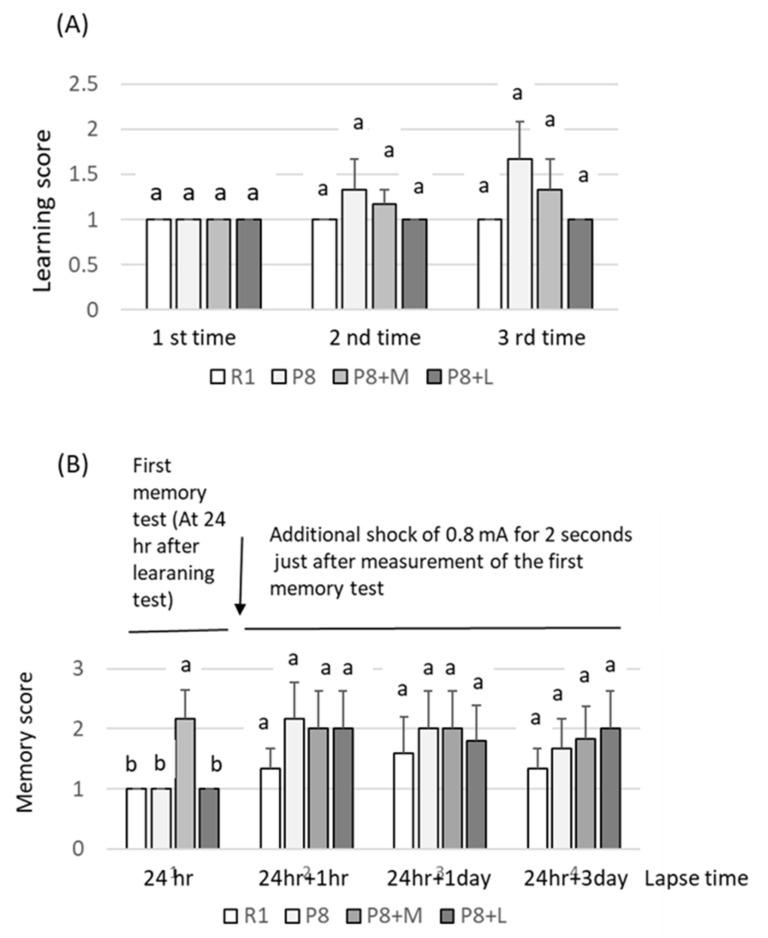
Although the benefits of the consumption of green tea and its components, including catechins and theanine, regarding aging, memory impairment and age-related cognitive decline have been investigated in senescence-accelerated prone mice (SAMP8), studies that simultaneously measured the kinds of proteins that vary in their expression due to the administration of green tea and its extracts were not found. In this study, the effect of dietary and decaffeinated matcha on protein expression in the hippocampus of SAMP 8 was examined comprehensively, mainly using proteomics. Although improvements in memory and the hair appearance of the back coat were limited upon administering the samples, the following regulations were observed in some of the proteins involved in neuron degeneration, Parkinson’s and Alzheimer’s diseases, synapse transmission and nerve cell plasticity, antioxidation, glutamate transport and metabolism, GABA (γ-amino butyric acid) formation and transport and excitatory amino acid transporters: proteins downregulated upon sample intake (p < 0.05): brain acid-soluble protein 1, microtubule-associated protein tau, synapsin-2, sodium- and chloride-dependent GABA transporter; proteins that tended to decrease upon sample intake (0.05 < p < 0.10): Parkinson’s disease (autosomal recessive and early-onset) 7 and synapsin-1; proteins upregulated upon sample intake (p > 0.95): glutathione S-transferase Mu 1, tubulin alpha-1A chain, dynamin-2, calcium/calmodulin-dependent protein kinase type II subunit gamma and tyrosine 3-monooxygenase/tyrosine 5-monooxygenase activation protein epsilon polypeptide; proteins that tended to increase upon sample intake (0.95 > p > 0.90): glutathione S-transferase Mu7 and soluble carrier family 1 (glial high-affinity glutamate transporter); proteins that tended to decrease: sodium- and chloride-dependent GABA transporter 3. These results indicate that matcha and decaffeinated matcha could reduce aging and cognitive impairment by regulating the expression of these proteins. Furthermore, these proteins could be used as markers for the evaluation of food and its available components for reducing aging and cognitive impairment.
虽然绿茶及其成分(包括儿茶素和茶氨酸)对衰老、记忆障碍和与年龄相关的认知能力下降的益处已在快速老化品系小鼠(SAMP8)中进行了研究,但没有发现同时测量由于绿茶及其提取物的给药而在表达上发生变化的蛋白质种类的研究。在这项研究中,使用蛋白质组学方法全面研究了膳食和脱咖啡因抹茶对 SAMP8 海马体蛋白质表达的影响。虽然给样品后对记忆和背部毛发外观的改善有限,但观察到一些与神经元变性、帕金森病和阿尔茨海默病、突触传递和神经细胞可塑性、抗氧化、谷氨酸转运和代谢、GABA(γ-氨基丁酸)形成和转运以及兴奋性氨基酸转运体相关的蛋白质发生了以下调节:摄入样品后下调的蛋白质(p < 0.05):脑酸性可溶性蛋白 1、微管相关蛋白 tau、突触素-2、钠和氯离子依赖性 GABA 转运体;摄入样品后有下降趋势的蛋白质(0.05 < p < 0.10):帕金森病(常染色体隐性和早发性)7 和突触素-1;摄入样品后上调的蛋白质(p > 0.95):谷胱甘肽 S-转移酶 Mu1、微管蛋白 alpha-1A 链、动力蛋白-2、钙/钙调蛋白依赖性蛋白激酶 II 亚基 gamma 和酪氨酸 3-单加氧酶/酪氨酸 5-单加氧酶激活蛋白 epsilon 多肽;摄入样品后有上升趋势的蛋白质(0.95 > p > 0.90):谷胱甘肽 S-转移酶 Mu7 和可溶性载体家族 1(胶质高亲和力谷氨酸转运体);摄入样品后有下降趋势的蛋白质:钠和氯离子依赖性 GABA 转运体 3。这些结果表明,抹茶和脱咖啡因抹茶可以通过调节这些蛋白质的表达来减少衰老和认知障碍。此外,这些蛋白质可以作为评估食物及其可用成分以减少衰老和认知障碍的标志物。


 Zotero 插件