
1990年至2019年全球、区域和国家层面慢性淋巴细胞白血病疾病负担趋势及至2030年的预测:一项基于人群的流行病学研究
Trends in Disease Burden of Chronic Lymphocytic Leukemia at the Global, Regional, and National Levels From 1990 to 2019, and Projections Until 2030: A Population-Based Epidemiologic Study.
作者信息
Ou Yang, Long Yichen, Ji Lili, Zhan Yanxia, Qiao Tiankui, Wang Xiangdong, Chen Hao, Cheng Yunfeng
机构信息
Center for Tumor Diagnosis & Therapy, Jinshan Hospital, Fudan University, Shanghai, China.
School of Life Science, University of Chinese Academy of Sciences, Beijing, China.
出版信息
Front Oncol. 2022 Mar 10;12:840616. doi: 10.3389/fonc.2022.840616. eCollection 2022.
BACKGROUND
The prognosis of chronic lymphocytic leukemia (CLL) has been improved dramatically, but there are limited studies focusing on CLL disease burden on a global scale. We aimed to evaluate the accurate assessment of the disease burden of CLL that may provide more detailed epidemiological information for rational policies.
METHODS
The main source of the data was the Global Burden of Disease (GBD) study 2019. Incident cases, death cases, disability-adjusted life years (DALYs), and their corresponding age-standardized rates (ASRs) from 1990 to 2019 were used to describe the burden of CLL. Data about attributable risk factors were also extracted and analyzed. Bayesian age-period-cohort (BAPC) models were used to assess and project the incidence and mortality rates till 2030.
RESULTS
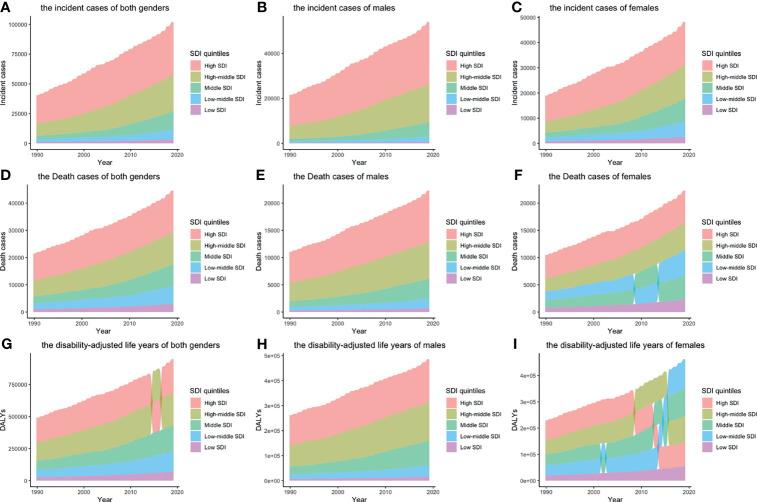
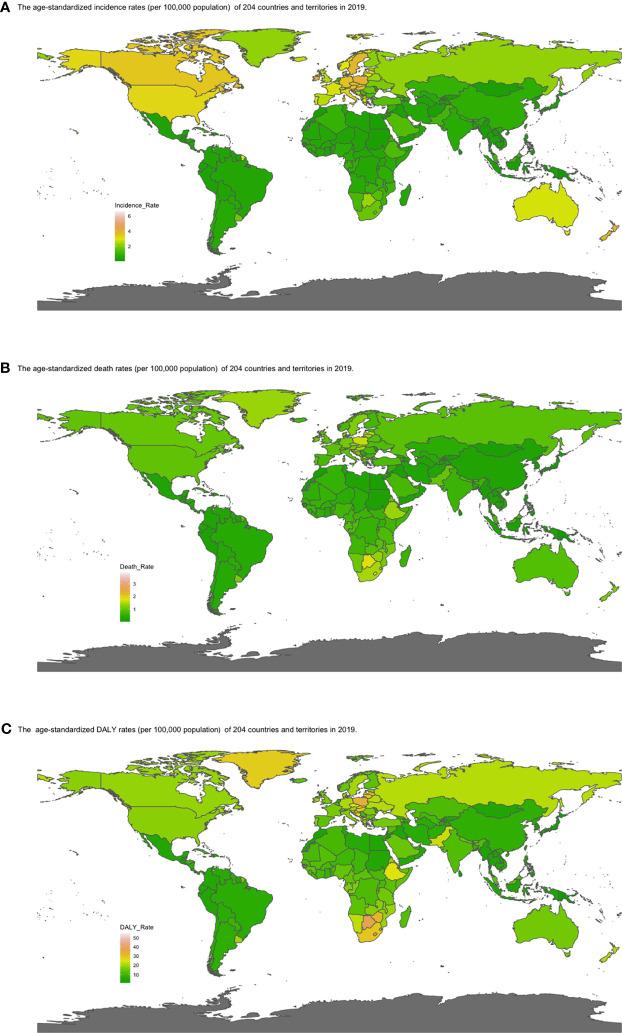
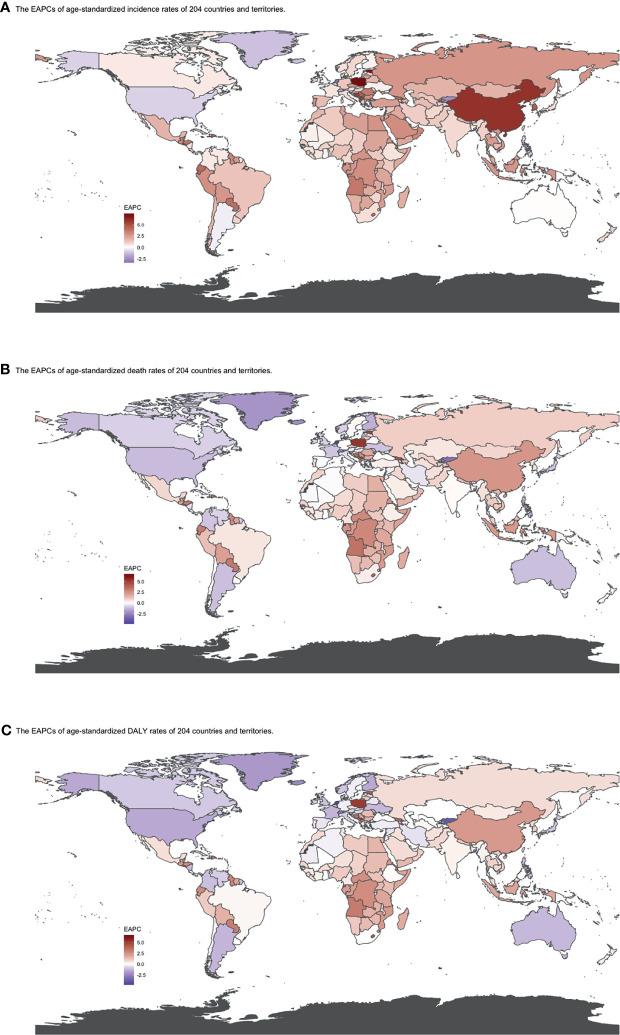
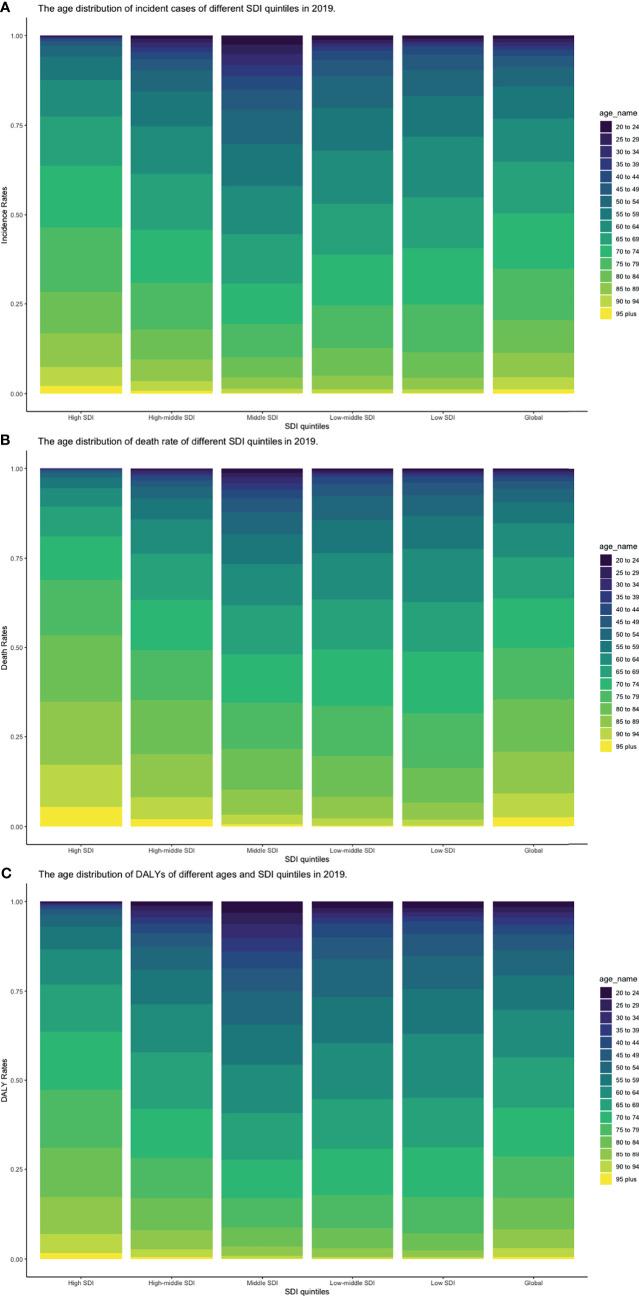
Globally, the incidence of CLL had been increasing. Deaths and DALYs decreased slightly. The burden of death and DALY is affected by socio-demographic index (SDI). The incidence rate, death rate, and DALY rate of CLL increased significantly with age. Male-to-female ratios of incidence rates varied in different SDI quintiles. Smoking, high body mass index, and occupational exposure to benzene or formaldehyde were the potential risk factors related to CLL. Global ASIRs might tend to increase until 2030, while ASDR would decrease until 2030.
CONCLUSION
The disease burden of CLL decreased in higher SDI countries but increased in lower ones. Strategies for early detection of asymptomatic CLL, development of novel drugs, and measures against attributable factors should be implemented to combat CLL burden.
背景
慢性淋巴细胞白血病(CLL)的预后已得到显著改善,但在全球范围内,针对CLL疾病负担的研究有限。我们旨在评估对CLL疾病负担的准确评估,这可能为合理的政策提供更详细的流行病学信息。
方法
数据的主要来源是《2019年全球疾病负担研究》。使用1990年至2019年的发病病例、死亡病例、伤残调整生命年(DALYs)及其相应的年龄标准化率(ASRs)来描述CLL的负担。还提取并分析了关于可归因风险因素的数据。使用贝叶斯年龄-时期-队列(BAPC)模型评估并预测到2030年的发病率和死亡率。
结果
在全球范围内,CLL的发病率一直在上升。死亡人数和伤残调整生命年略有下降。死亡和伤残调整生命年的负担受社会人口指数(SDI)的影响。CLL的发病率、死亡率和伤残调整生命年率随年龄显著增加。不同SDI五分位数组的发病率男女比例有所不同。吸烟、高体重指数以及职业接触苯或甲醛是与CLL相关的潜在风险因素。到2030年,全球年龄标准化发病率(ASIRs)可能会趋于上升,而年龄标准化死亡率(ASDR)将下降。
结论
CLL的疾病负担在高SDI国家有所下降,但在低SDI国家有所上升。应实施无症状CLL的早期检测策略、开发新型药物以及针对可归因因素的措施,以应对CLL负担。





 Zotero 插件