
辅助技术对老年人的有效性及虚弱的影响:随机对照试验的系统文献综述
The Effectiveness of Assistive Technologies for Older Adults and the Influence of Frailty: Systematic Literature Review of Randomized Controlled Trials.
作者信息
Fotteler Marina Liselotte, Mühlbauer Viktoria, Brefka Simone, Mayer Sarah, Kohn Brigitte, Holl Felix, Swoboda Walter, Gaugisch Petra, Risch Beate, Denkinger Michael, Dallmeier Dhayana
机构信息
DigiHealth Institute, Neu-Ulm University of Applied Sciences, Neu-Ulm, Germany.
Research Unit on Ageing, Agaplesion Bethesda Clinic Ulm, Ulm, Germany.
出版信息
JMIR Aging. 2022 Apr 4;5(2):e31916. doi: 10.2196/31916.
BACKGROUND
The use of assistive technologies (ATs) to support older people has been fueled by the demographic change and technological progress in many countries. These devices are designed to assist seniors, enable independent living at home or in residential facilities, and improve quality of life by addressing age-related difficulties.
OBJECTIVE
We aimed to evaluate the effectiveness of ATs on relevant outcomes with a focus on frail older adults.
METHODS
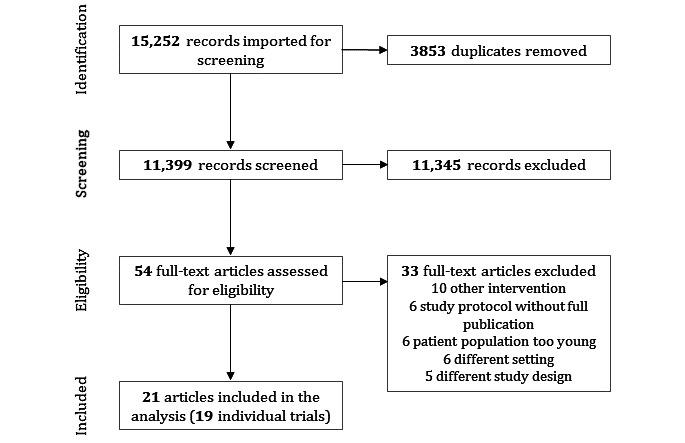
A systematic literature review of randomized controlled trials evaluating ATs was performed according to the PRISMA (Preferred Reporting Items for Systematic Reviews and Meta-Analyses) guidelines. The Ovid Medline, PsycINFO, SocIndex, CINAHL (Cumulative Index to Nursing and Allied Health Literature), CENTRAL (Cochrane Central Register of Controlled Trials), and IEEEXplore databases were searched from January 1, 2009, to March 15, 2019. ATs were included when aiming to support the domains autonomy, communication, or safety of older people with a mean age ≥65 years. Trials performed within a laboratory setting were excluded. Studies were retrospectively categorized according to the physical frailty status of participants.
RESULTS
A total of 19 trials with a high level of heterogeneity were included in the analysis. Six device categories were identified: mobility, personal disease management, medication, mental support, hearing, and vision. Eight trials showed significant effectiveness in all or some of the primary outcome measures. Personal disease management devices seem to be the most effective, with four out of five studies showing significant improvement of disease-related outcomes. Frailty could only be assessed for seven trials. Studies including participants with significant or severe impairment showed no effectiveness.
CONCLUSIONS
Different ATs show some promising results in well-functioning but not in frail older adults, suggesting that the evaluated ATs might not (yet) be suitable for this subgroup. The uncertainty of the effectiveness of ATs and the lack of high-quality research for many promising supportive devices were confirmed in this systematic review. Large studies, also including frail older adults, and clear standards are needed in the future to guide professionals, older users, and their relatives.
TRIAL REGISTRATION
PROSPERO CRD42019130249; https://www.crd.york.ac.uk/prospero/display_record.php?RecordID=130249.
背景
在许多国家,人口结构变化和技术进步推动了辅助技术(AT)的使用,以帮助老年人。这些设备旨在协助老年人,使其能够在家中或居住设施中独立生活,并通过解决与年龄相关的困难来提高生活质量。
目的
我们旨在评估辅助技术对相关结果的有效性,重点关注体弱的老年人。
方法
根据PRISMA(系统评价和Meta分析的首选报告项目)指南,对评估辅助技术的随机对照试验进行系统文献综述。检索了2009年1月1日至2019年3月15日期间的Ovid Medline、PsycINFO、SocIndex、CINAHL(护理学与健康相关文献累积索引)、CENTRAL(Cochrane对照试验中心注册库)和IEEEXplore数据库。当旨在支持平均年龄≥65岁的老年人的自主、沟通或安全领域时,纳入辅助技术。排除在实验室环境中进行的试验。根据参与者的身体虚弱状况对研究进行回顾性分类。
结果
分析共纳入19项异质性较高的试验。确定了六类设备:移动性、个人疾病管理、药物治疗、心理支持、听力和视力。八项试验在全部或部分主要结局指标上显示出显著效果。个人疾病管理设备似乎最有效,五项研究中有四项显示与疾病相关的结局有显著改善。仅对七项试验评估了虚弱情况。纳入有显著或严重损伤参与者的研究未显示出有效性。
结论
不同的辅助技术在功能良好的老年人中显示出一些有希望的结果,但在体弱的老年人中并非如此,这表明所评估的辅助技术可能(目前)不适用于这一亚组。在本系统综述中证实了辅助技术有效性的不确定性以及许多有前景的支持性设备缺乏高质量研究。未来需要开展大型研究,也包括体弱的老年人,并制定明确的标准来指导专业人员、老年用户及其亲属。
试验注册
PROSPERO CRD42019130249;https://www.crd.york.ac.uk/prospero/display_record.php?RecordID=130249 。
 Zotero 插件