
基于芳香族废弃物的能源危机解决方案,白蚁体内是否隐藏着一座由鲜为人知却颇具潜力的酵母构成的金矿?一篇关键的最新综述。
Could termites be hiding a goldmine of obscure yet promising yeasts for energy crisis solutions based on aromatic wastes? A critical state-of-the-art review.
作者信息
Ali Sameh S, Al-Tohamy Rania, Mohamed Tarek M, Mahmoud Yehia A-G, Ruiz Héctor A, Sun Lushan, Sun Jianzhong
机构信息
School of the Environment and Safety Engineering, Biofuels Institute, Jiangsu University, Zhenjiang, 212013, China.
Botany Department, Faculty of Science, Tanta University, Tanta, 31527, Egypt.
出版信息
Biotechnol Biofuels Bioprod. 2022 Apr 4;15(1):35. doi: 10.1186/s13068-022-02131-z.
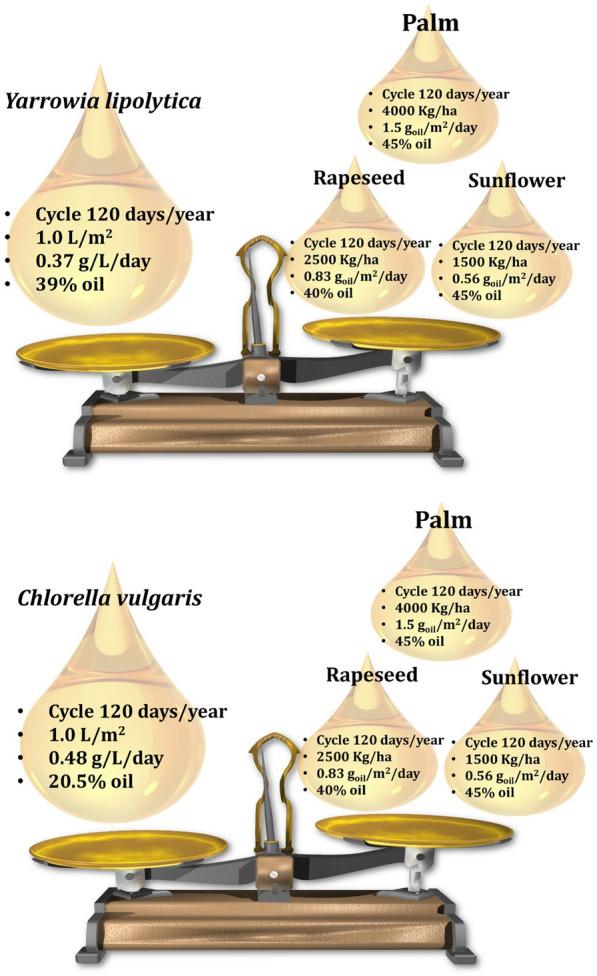
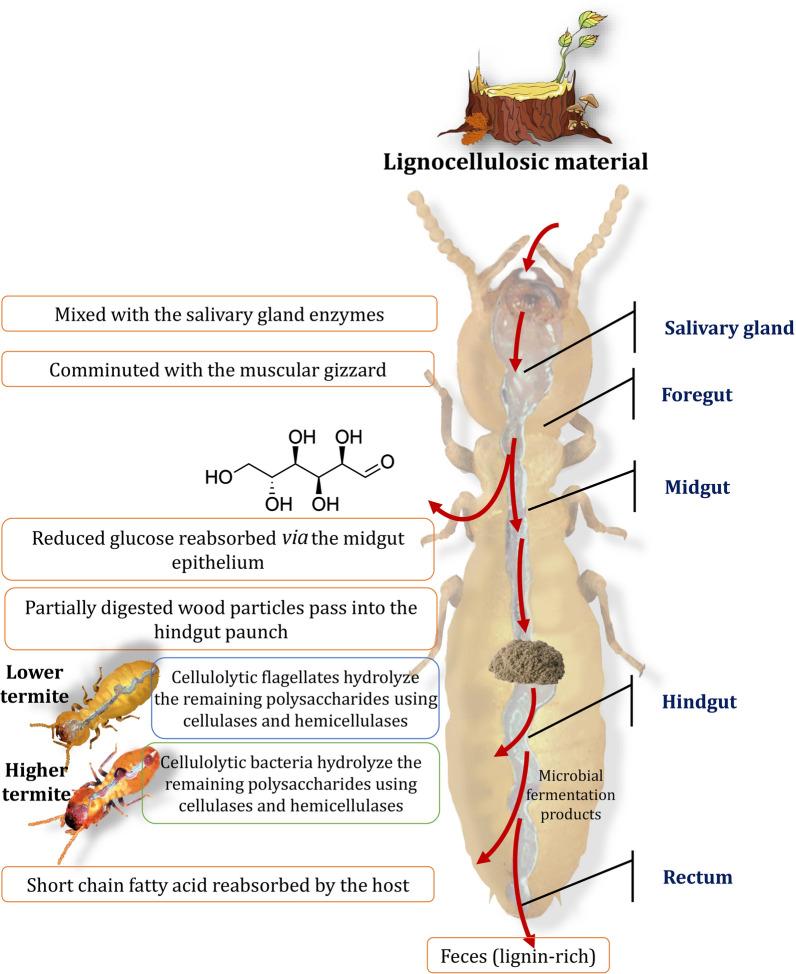
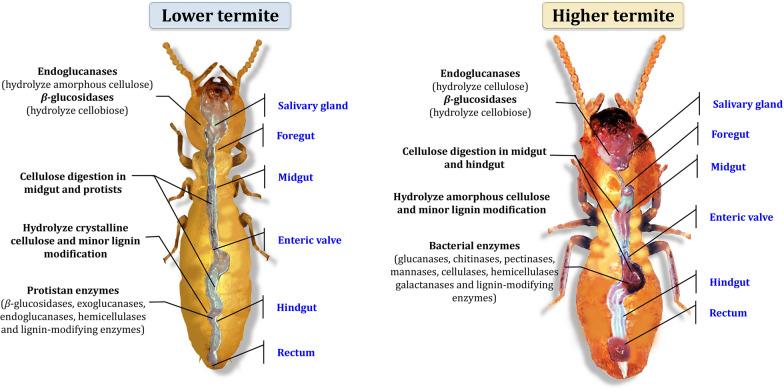
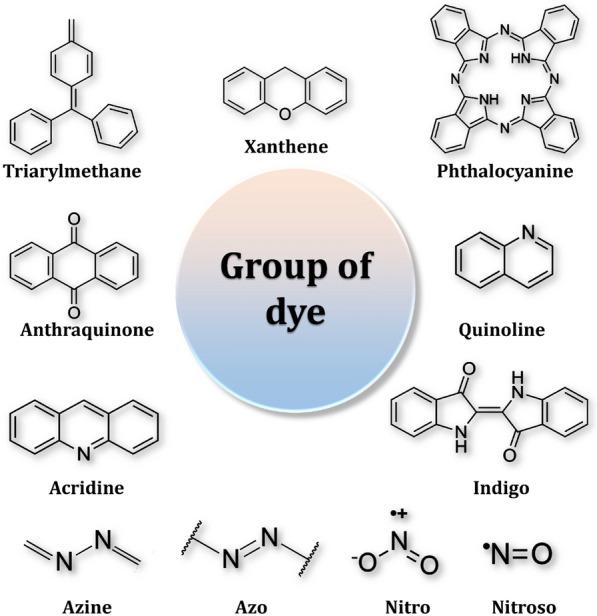
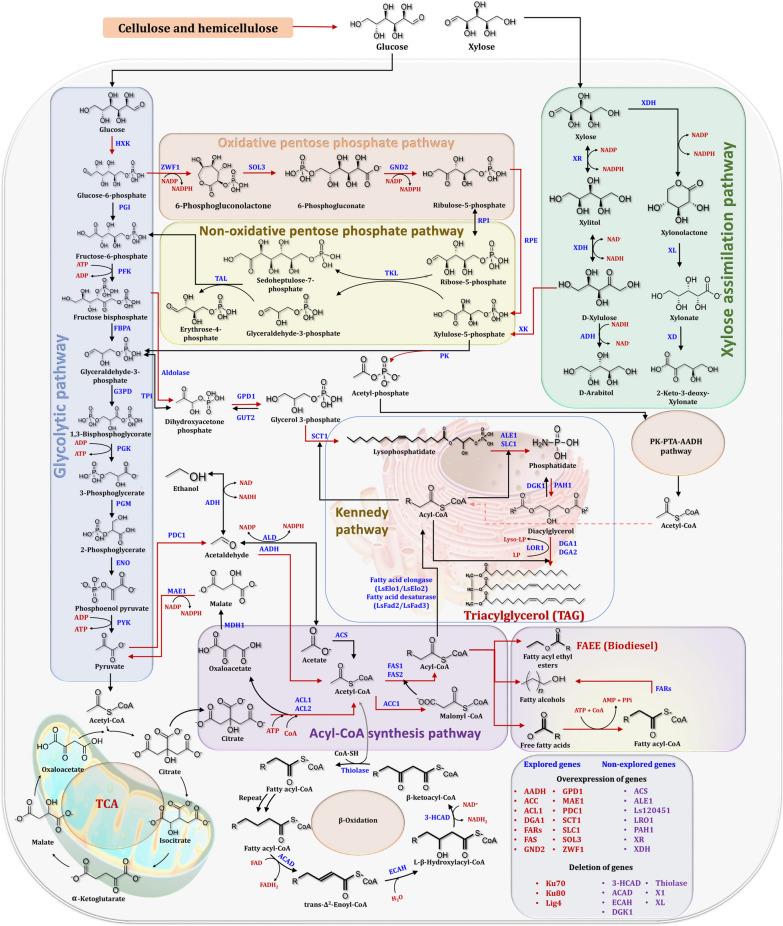
Biodiesel is a renewable fuel that can be produced from a range of organic and renewable feedstock including fresh or vegetable oils, animal fats, and oilseed plants. In recent years, the lignin-based aromatic wastes, such as various aromatic waste polymers from agriculture, or organic dye wastewater from textile industry, have attracted much attention in academia, which can be uniquely selected as a potential renewable feedstock for biodiesel product converted by yeast cell factory technology. This current investigation indicated that the highest percentage of lipid accumulation can be achieved as high as 47.25% by an oleaginous yeast strain, Meyerozyma caribbica SSA1654, isolated from a wood-feeding termite gut system, where its synthetic oil conversion ability can reach up to 0.08 (g/l/h) and the fatty acid composition in yeast cells represents over 95% of total fatty acids that are similar to that of vegetable oils. Clearly, the use of oleaginous yeasts, isolated from wood-feeding termites, for synthesizing lipids from aromatics is a clean, efficient, and competitive path to achieve "a sustainable development" towards biodiesel production. However, the lacking of potent oleaginous yeasts to transform lipids from various aromatics, and an unknown metabolic regulation mechanism presented in the natural oleaginous yeast cells are the fundamental challenge we have to face for a potential cell factory development. Under this scope, this review has proposed a novel concept and approach strategy in utilization of oleaginous yeasts as the cell factory to convert aromatic wastes to lipids as the substrate for biodiesel transformation. Therefore, screening robust oleaginous yeast strain(s) from wood-feeding termite gut system with a set of the desirable specific tolerance characteristics is essential. In addition, to reconstruct a desirable metabolic pathway/network to maximize the lipid transformation and accumulation rate from the aromatic wastes with the applications of various "omics" technologies or a synthetic biology approach, where the work agenda will also include to analyze the genome characteristics, to develop a new base mutation gene editing technology, as well as to clarify the influence of the insertion position of aromatic compounds and other biosynthetic pathways in the industrial chassis genome on the expressional level and genome stability. With these unique designs running with a set of the advanced biotech approaches, a novel metabolic pathway using robust oleaginous yeast developed as a cell factory concept can be potentially constructed, integrated and optimized, suggesting that the hypothesis we proposed in utilizing aromatic wastes as a feedstock towards biodiesel product is technically promising and potentially applicable in the near future.
生物柴油是一种可再生燃料,可由一系列有机和可再生原料生产,包括新鲜植物油、动物脂肪和油籽植物。近年来,基于木质素的芳香族废物,如农业中的各种芳香族废聚合物,或纺织工业中的有机染料废水,在学术界引起了广泛关注,它们可被独特地选作通过酵母细胞工厂技术转化为生物柴油产品的潜在可再生原料。目前的这项研究表明,从以木材为食的白蚁肠道系统中分离出的产油酵母菌株加勒比梅奇酵母SSA1654,脂质积累的最高百分比可达47.25%,其合成油转化能力可达0.08(克/升/小时),酵母细胞中的脂肪酸组成占总脂肪酸的95%以上,与植物油相似。显然,利用从以木材为食的白蚁中分离出的产油酵母,从芳烃中合成脂质,是实现生物柴油生产“可持续发展”的一条清洁、高效且具有竞争力的途径。然而,缺乏能从各种芳烃中转化脂质的高效产油酵母,以及天然产油酵母细胞中未知的代谢调控机制,是我们在开发潜在细胞工厂时必须面对的根本挑战。在此范围内,本综述提出了一个新颖的概念和方法策略,即利用产油酵母作为细胞工厂,将芳香族废物转化为脂质,作为生物柴油转化的底物。因此,从以木材为食的白蚁肠道系统中筛选出具有一系列理想的特定耐受特性的强大产油酵母菌株至关重要。此外,应用各种“组学”技术或合成生物学方法重建理想的代谢途径/网络,以最大限度地提高从芳香族废物中转化和积累脂质的速率,工作议程还将包括分析基因组特征、开发新的碱基突变基因编辑技术,以及阐明芳香族化合物和其他生物合成途径在工业底盘基因组中的插入位置对表达水平和基因组稳定性的影响。通过这些独特的设计与一系列先进生物技术方法的结合,有望构建、整合和优化一种以强大的产油酵母开发的作为细胞工厂概念的新型代谢途径,这表明我们提出的利用芳香族废物作为生物柴油产品原料的假设在技术上是有前景的,并且在不久的将来可能适用。




 Zotero 插件