
性激素、性染色体和性腺对组织基因调控性别差异的相对贡献。
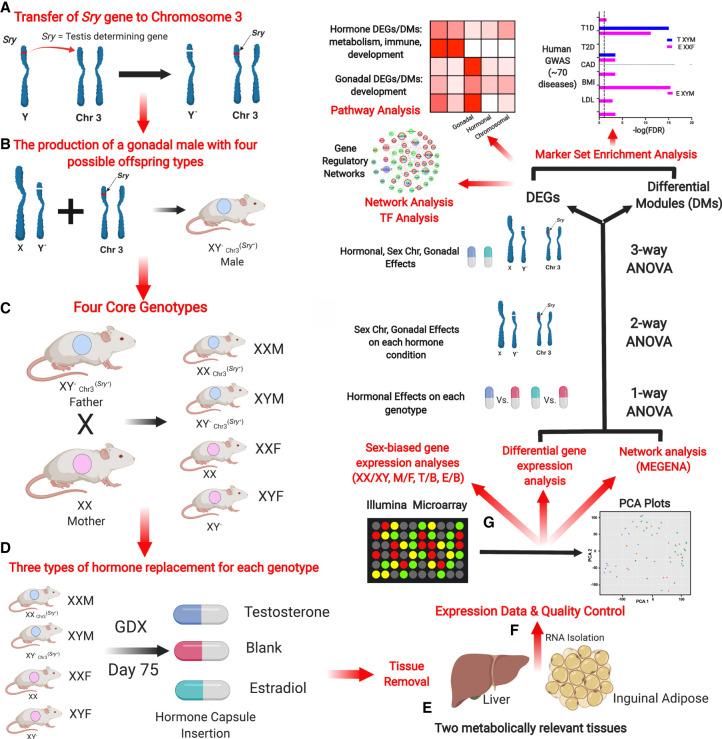
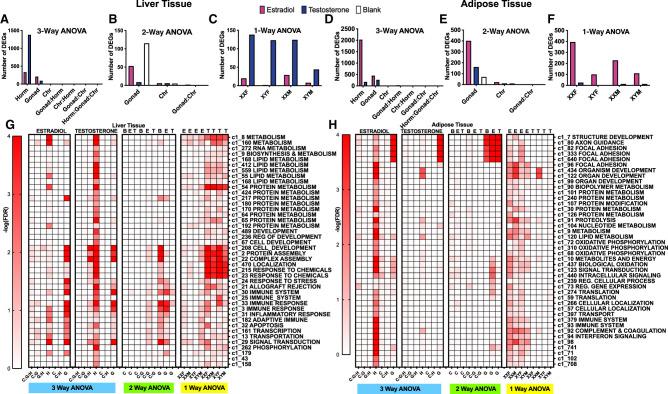
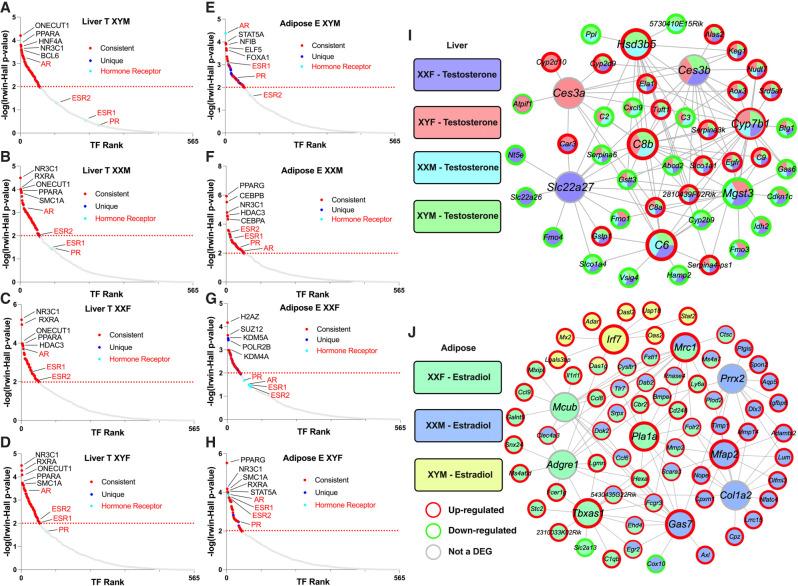
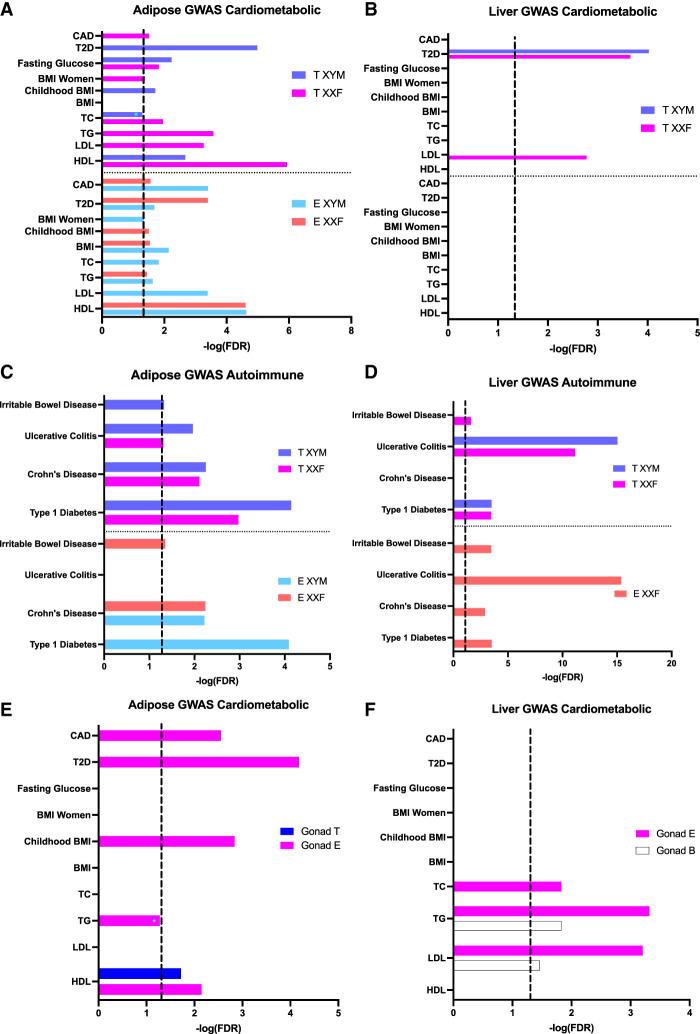
Relative contributions of sex hormones, sex chromosomes, and gonads to sex differences in tissue gene regulation.
机构信息
Department of Integrative Biology and Physiology, University of California, Los Angeles, California 90095, USA.
Interdepartmental Program of Molecular, Cellular and Integrative Physiology, University of California, Los Angeles, California 90095, USA.
出版信息
Genome Res. 2022 May;32(5):807-824. doi: 10.1101/gr.275965.121. Epub 2022 Apr 8.
Sex differences in physiology and disease in mammals result from the effects of three classes of factors that are inherently unequal in males and females: reversible (activational) effects of gonadal hormones, permanent (organizational) effects of gonadal hormones, and cell-autonomous effects of sex chromosomes, as well as genes driven by these classes of factors. Often, these factors act together to cause sex differences in specific phenotypes, but the relative contribution of each and the interactions among them remain unclear. Here, we used the four core genotypes (FCG) mouse model with or without hormone replacement to distinguish the effects of each class of sex-biasing factors on transcriptome regulation in liver and adipose tissues. We found that the activational hormone levels have the strongest influence on gene expression, followed by the organizational gonadal sex effect, and last, sex chromosomal effect, along with interactions among the three factors. Tissue specificity was prominent, with a major impact of estradiol on adipose tissue gene regulation and of testosterone on the liver transcriptome. The networks affected by the three sex-biasing factors include development, immunity and metabolism, and tissue-specific regulators were identified for these networks. Furthermore, the genes affected by individual sex-biasing factors and interactions among factors are associated with human disease traits such as coronary artery disease, diabetes, and inflammatory bowel disease. Our study offers a tissue-specific account of the individual and interactive contributions of major sex-biasing factors to gene regulation that have broad impact on systemic metabolic, endocrine, and immune functions.
哺乳动物的生理学和疾病中的性别差异源自三类固有地存在于男性和女性之间的因素的影响
性腺激素的可逆(激活)效应、性腺激素的永久(组织)效应以及性染色体的细胞自主效应,以及这些类别的因素驱动的基因。通常,这些因素共同作用导致特定表型的性别差异,但每个因素的相对贡献和它们之间的相互作用仍然不清楚。在这里,我们使用具有或不具有激素替代的四个核心基因型(FCG)小鼠模型来区分每类性别偏向因素对肝脏和脂肪组织转录组调节的影响。我们发现激活激素水平对基因表达的影响最强,其次是组织性腺性别效应,最后是性染色体效应,以及这三个因素之间的相互作用。组织特异性很突出,雌二醇对脂肪组织基因调控有重大影响,而睾丸激素对肝脏转录组有重大影响。受三个性别偏向因素影响的网络包括发育、免疫和代谢,并且确定了这些网络的组织特异性调节剂。此外,受单个性别偏向因素和因素之间相互作用影响的基因与人类疾病特征(如冠状动脉疾病、糖尿病和炎症性肠病)相关。我们的研究提供了一个组织特异性的解释,即主要性别偏向因素对基因调节的个体和交互贡献,这些因素对系统代谢、内分泌和免疫功能有广泛影响。


 Zotero 插件