
单独或联合 ASCT 使用 CAR T 细胞鸡尾酒治疗伴有 TP53 改变的侵袭性 B 细胞淋巴瘤的结果。
Outcome of aggressive B-cell lymphoma with TP53 alterations administered with CAR T-cell cocktail alone or in combination with ASCT.
机构信息
Department of Hematology, Tongji Hospital, Tongji Medical College, Huazhong University of Science and Technology, Wuhan, Hubei, 430030, China.
Immunotherapy Research Center for Hematologic Diseases of Hubei Province, Wuhan, Hubei, 430030, China.
出版信息
Signal Transduct Target Ther. 2022 Apr 11;7(1):101. doi: 10.1038/s41392-022-00924-0.
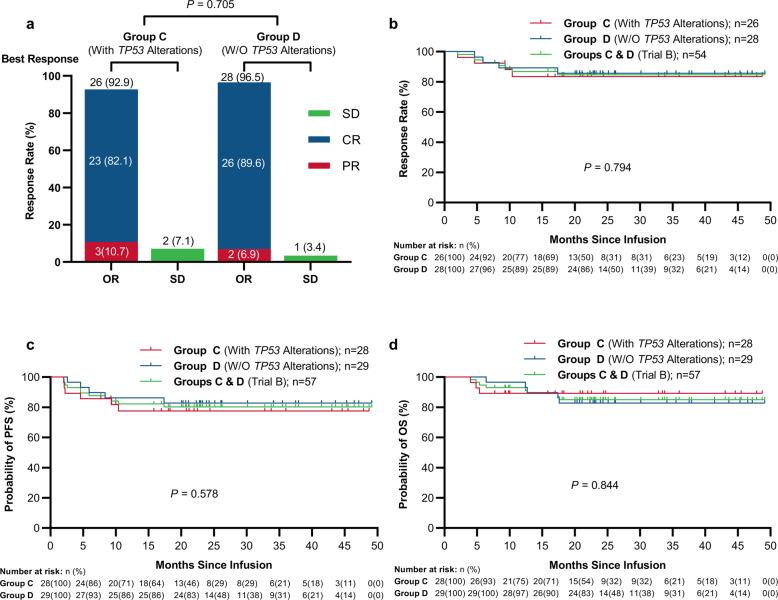
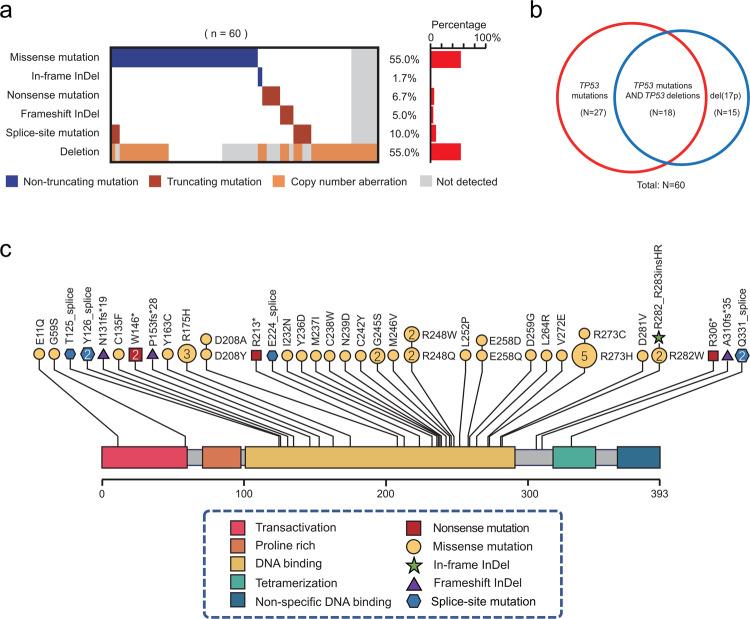
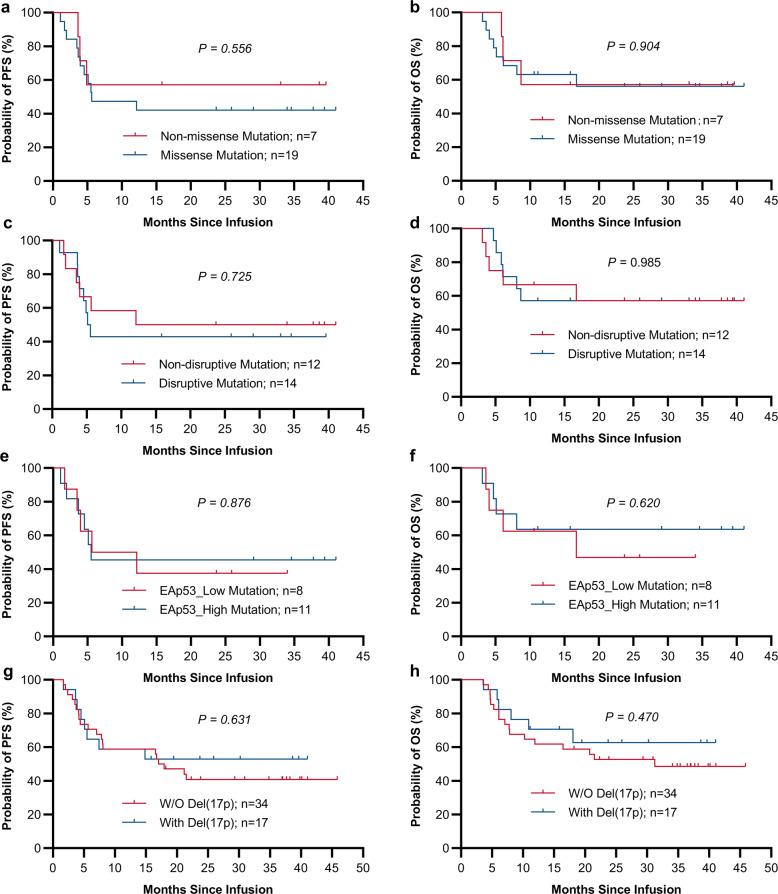
TP53 gene alteration confers inferior prognosis in refractory/relapse aggressive B-cell non-Hodgkin lymphoma (r/r B-NHL). From September 2016 to September 2020, 257 r/r B-NHL patients were assessed for eligibility for two trials in our center, assessing anti-CD19 and anti-CD22 chimeric antigen receptor (CAR19/22) T-cell cocktail treatment alone or in combination with autologous stem cell transplantation (ASCT). TP53 alterations were screened in 123 enrolled patients and confirmed in 60. CAR19/22 T-cell administration resulted in best objective (ORR) and complete (CRR) response rate of 87.1% and 45.2% in patients with TP53 alterations, respectively. Following a median follow-up of 16.7 months, median progression-free survival (PFS) was 14.8 months, and 24-month overall survival (OS) was estimated at 56.3%. Comparable ORR, PFS, and OS were determined in individuals with or without TP53 alterations, and in individuals at different risk levels based on functional stratification of TP53 alterations. CAR19/22 T-cell treatment in combination with ASCT resulted in higher ORR, CRR, PFS, and OS, but reduced occurrence of severe CRS in this patient population, even in individuals showing stable or progressive disease before transplantation. The best ORR and CRR in patients with TP53 alterations were 92.9% and 82.1%, respectively. Following a median follow-up of 21.2 months, 24-month PFS and OS rates in patients with TP53 alterations were estimated at 77.5% and 89.3%, respectively. In multivariable analysis, this combination strategy predicted improved OS. In conclusion, CAR19/22 T-cell therapy is efficacious in r/r aggressive B-NHL with TP53 alterations. Combining CAR-T cell administration with ASCT further improves long-term outcome of these patients.
TP53 基因突变与难治/复发侵袭性 B 细胞非霍奇金淋巴瘤(r/r B-NHL)患者的不良预后相关。2016 年 9 月至 2020 年 9 月,我们中心评估了 257 例 r/r B-NHL 患者参加两项临床试验的资格,评估抗 CD19 和抗 CD22 嵌合抗原受体(CAR19/22)T 细胞鸡尾酒治疗单独或联合自体干细胞移植(ASCT)的效果。在纳入的 123 例患者中筛选 TP53 改变,并在 60 例患者中得到确认。CAR19/22 T 细胞治疗后,TP53 改变患者的最佳客观缓解率(ORR)和完全缓解率(CRR)分别为 87.1%和 45.2%。中位随访 16.7 个月后,中位无进展生存期(PFS)为 14.8 个月,24 个月总生存率(OS)估计为 56.3%。在有或没有 TP53 改变的个体以及根据 TP53 改变的功能分层的不同风险水平的个体中,确定了可比的 ORR、PFS 和 OS。在该患者人群中,CAR19/22 T 细胞治疗联合 ASCT 可提高 ORR、CRR、PFS 和 OS,但降低了严重细胞因子释放综合征(CRS)的发生,即使在移植前表现为稳定或进展性疾病的患者中也是如此。TP53 改变患者的最佳 ORR 和 CRR 分别为 92.9%和 82.1%。中位随访 21.2 个月后,TP53 改变患者的 24 个月 PFS 和 OS 率分别估计为 77.5%和 89.3%。多变量分析表明,这种联合策略预测了 OS 的改善。总之,CAR19/22 T 细胞治疗对伴有 TP53 改变的 r/r 侵袭性 B-NHL 有效。CAR-T 细胞给药联合 ASCT 进一步改善了这些患者的长期预后。


 Zotero 插件