
肿瘤相关巨噬细胞异质性导致对临床治疗的抵抗。
Tumour-associated macrophages heterogeneity drives resistance to clinical therapy.
机构信息
Guangzhou Medical University/The First Affiliated Hospital of Guangzhou Medical University, Guangzhou, 510120, China.
出版信息
Expert Rev Mol Med. 2022 Apr 11;24:e17. doi: 10.1017/erm.2022.8.
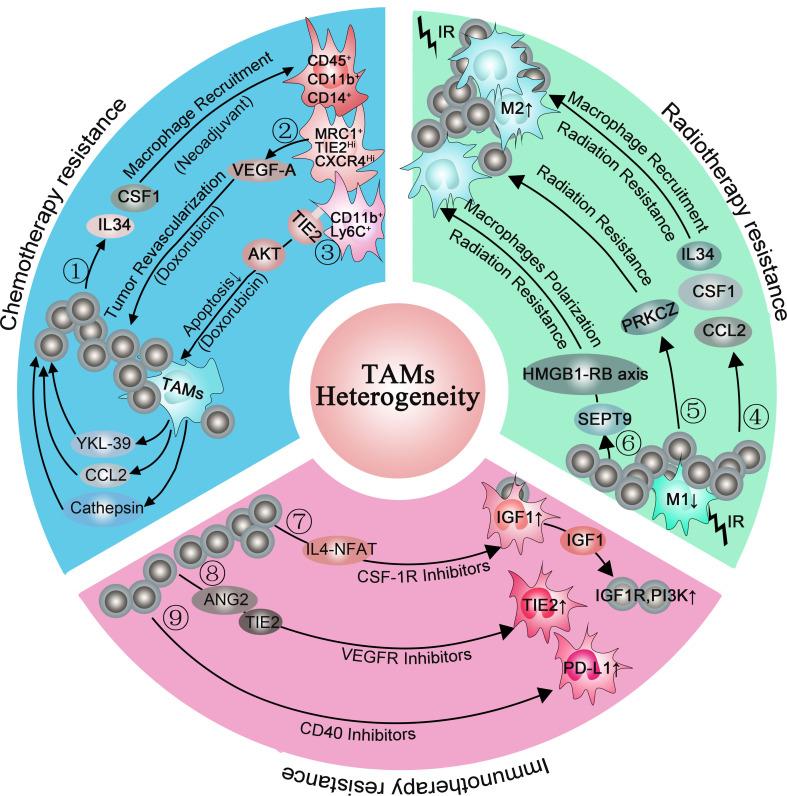
Tumour-associated macrophages (TAMs) constitute a plastic and heterogeneous cell population of the tumour microenvironment (TME) that can account for up to 50% of solid tumours. TAMs heterogeneous are associated with different cancer types and stages, different stimulation of bioactive molecules and different TME, which are crucial drivers of tumour progression, metastasis and resistance to therapy. In this context, understanding the sources and regulatory mechanisms of TAM heterogeneity and searching for novel therapies targeting TAM subpopulations are essential for future studies. In this review, we discuss emerging evidence highlighting the redefinition of TAM heterogeneity from three different directions: origins, phenotypes and functions. We notably focus on the causes and consequences of TAM heterogeneity which have implications for the evolution of therapeutic strategies that targeted the subpopulations of TAMs.
肿瘤相关巨噬细胞(TAMs)构成肿瘤微环境(TME)中一种具有可塑性和异质性的细胞群体,在实体瘤中可达 50%。TAMs 的异质性与不同的癌症类型和阶段、不同的生物活性分子刺激以及不同的 TME 相关,是肿瘤进展、转移和对治疗耐药的关键驱动因素。在这种情况下,了解 TAM 异质性的来源和调节机制,并寻找针对 TAM 亚群的新型治疗方法,是未来研究的关键。在这篇综述中,我们讨论了新出现的证据,这些证据从三个不同的方向强调了 TAM 异质性的重新定义:起源、表型和功能。我们特别关注 TAM 异质性的原因和后果,这对靶向 TAM 亚群的治疗策略的演变具有重要意义。

 Zotero 插件