
高通量筛选鉴定 Importin α 抑制剂。
High-Throughput Screening to Identify Inhibitors of Importin α.
机构信息
Nuclear Signaling Laboratory, Department of Biochemistry and Molecular Biology, Monash Biomedicine Discovery Institute, Monash University, Clayton, VIC 3800, Australia.
Molecular Parasitology Laboratory, Department of Biosciences and Bioengineering, IIT Bombay, Powai, Mumbai 400076, India.
出版信息
Cells. 2022 Apr 2;11(7):1201. doi: 10.3390/cells11071201.
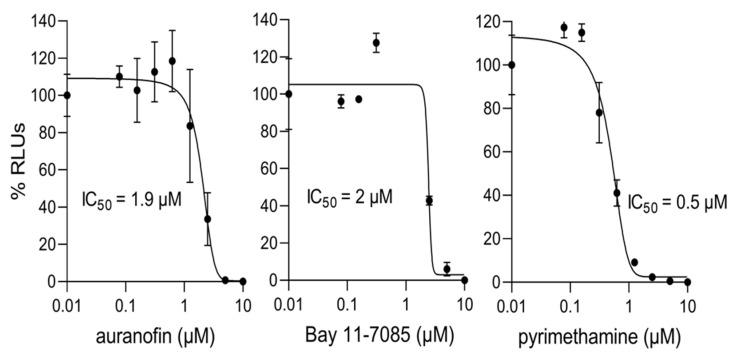
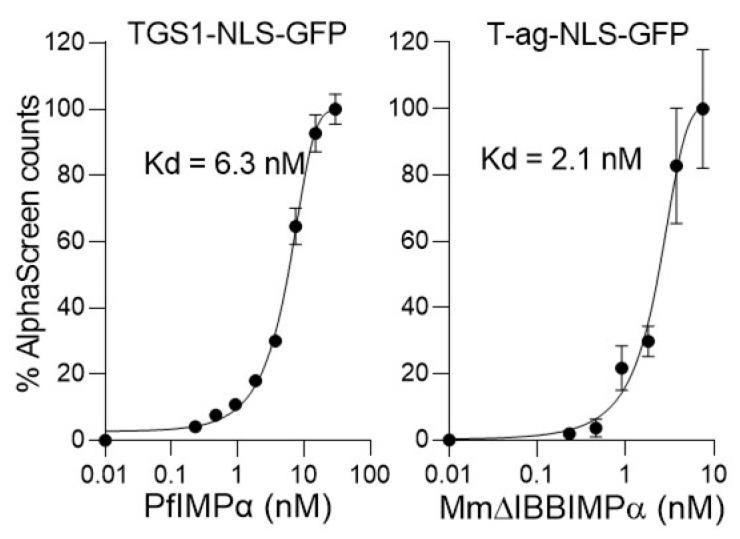
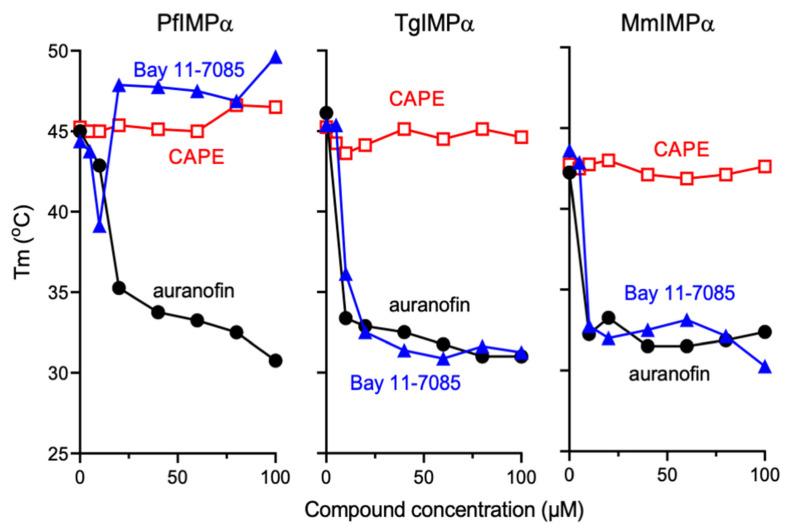
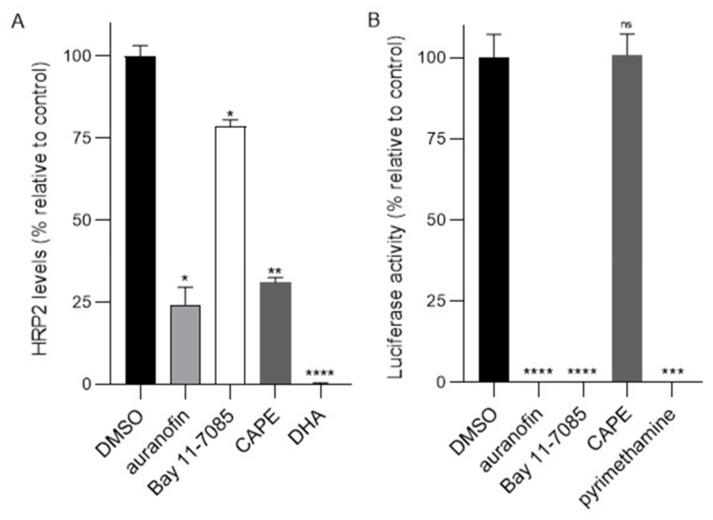
The global burden of malaria and toxoplasmosis has been limited by the use of efficacious anti-parasitic agents, however, emerging resistance in species and threatens disease control worldwide, implying that new agents/therapeutic targets are urgently needed. Nuclear localization signal (NLS)-dependent transport into the nucleus, mediated by members of the importin (IMP) superfamily of nuclear transporters, has shown potential as a target for intervention to limit viral infection. Here, we show for the first time that IMPα from and have promise as targets for small molecule inhibitors. We use high-throughput screening to identify agents able to inhibit IMPα binding to a NLS, identifying a number of compounds that inhibit binding in the µM-nM range, through direct binding to IMPα, as shown in thermostability assays. Of these, BAY 11-7085 is shown to be a specific inhibitor of IMPα-NLS recognition. Importantly, a number of the inhibitors limited growth by both and . The results strengthen the hypothesis that apicomplexan IMPα proteins have potential as therapeutic targets to aid in identifying novel agents for two important, yet neglected, parasitic diseases.
疟疾和弓形体病的全球负担一直受到有效抗寄生虫药物的限制,然而,种和种的寄生虫出现抗药性,这威胁着全世界的疾病控制,这意味着迫切需要新的药物/治疗靶点。核定位信号(NLS)依赖性核内运输,由核转运体的进口素(IMP)超家族成员介导,已显示出作为干预靶点以限制病毒感染的潜力。在这里,我们首次表明,来自和的 IMPα 有希望成为小分子抑制剂的靶点。我们使用高通量筛选来鉴定能够抑制 IMPα 与 NLS 结合的试剂,通过直接与 IMPα 结合,在µM-nM 范围内鉴定出许多抑制结合的化合物,如热稳定性测定所示。其中,BAY 11-7085 被证明是 IMPα-NLS 识别的特异性抑制剂。重要的是,一些抑制剂限制了和的生长。这些结果强化了这样一种假说,即疟原虫 IMPα 蛋白具有作为治疗靶点的潜力,有助于为两种重要但被忽视的寄生虫病寻找新的药物。


 Zotero 插件