
在 EAE 自发发展导致 Abzyme 产生过程中,2D2 小鼠骨髓和其他器官中的细胞分化和增殖。
Cell Differentiation and Proliferation in the Bone Marrow and Other Organs of 2D2 Mice during Spontaneous Development of EAE Leading to the Production of Abzymes.
机构信息
Institute of Chemical Biology and Fundamental Medicine, Siberian Branch of the Russian Academy of Sciences, 630090 Novosibirsk, Russia.
Institute of Clinical Immunology, Siberian Branch of the Russian Academy of Sciences, 630090 Novosibirsk, Russia.
出版信息
Molecules. 2022 Mar 28;27(7):2195. doi: 10.3390/molecules27072195.
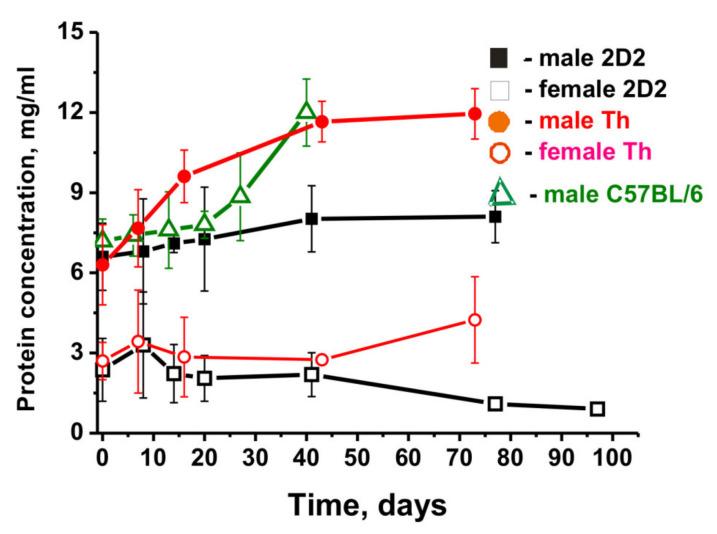
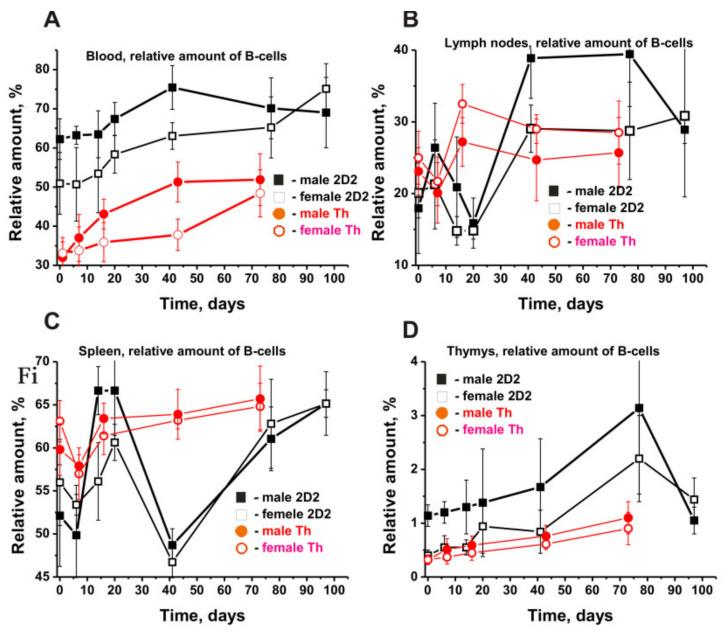
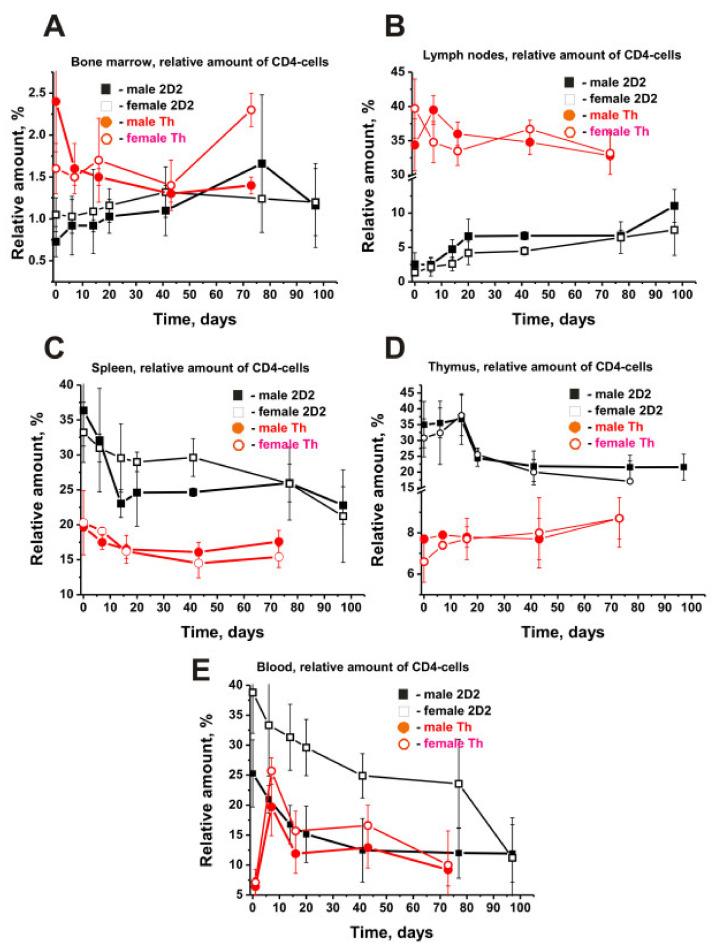
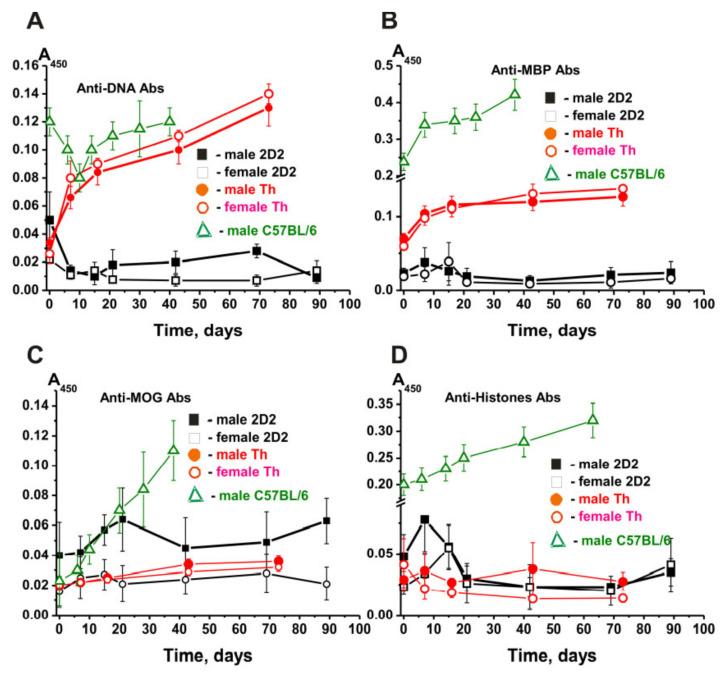
The exact cellular and molecular mechanisms of multiple sclerosis and other autoimmune diseases have not been established. Autoimmune pathologies are known to be associated with faults in the immune system and changes in the differentiation profiles of bone marrow stem cells. This study analyzed various characteristics of experimental autoimmune encephalomyelitis (EAE) in 2D2 mice. Differentiation profiles of six hematopoietic stem cells of bone marrow were found to significantly differ in 2D2 male and female mice during the spontaneous development of EAE. In addition, we found various properties of B and T cells, CD4+ and CD8+ lymphocytes in blood and several organs (bone marrow, spleen, thymus, and lymph nodes) of 2D2 male and female mice to be considerably different. These changes in hematopoietic stem cells differentiation profiles and level of lymphocyte proliferation in various organs of 2D2 mice were found to induce the production of IgGs against DNA, myelin basic protein, and myelin oligodendrocyte glycoprotein, increasing the number of autoantibodies hydrolyzing these substrates. We compared the changes of these immunological and biochemical parameters in 2D2 mice with those of mice of two other lines (Th and C57BL/6), also prone to spontaneous development of EAE. Some noticeable and even extreme variations were found in the time-related development of parameters between male and female mice of 2D2, Th, and C57BL/6 lines. Despite some differences, mice of all three lines demonstrated the changes in hematopoietic stem cells profiles, lymphocyte content, and production of catalytic autoantibodies. Given that these changes are harmful to mice, we believe them to cause the development of experimental autoimmune encephalomyelitis.
多发性硬化症和其他自身免疫性疾病的确切细胞和分子机制尚未确定。众所周知,自身免疫病理学与免疫系统的故障和骨髓干细胞分化谱的变化有关。本研究分析了 2D2 小鼠实验性自身免疫性脑脊髓炎(EAE)的各种特征。在 EAE 的自发发展过程中,我们发现 2D2 雌雄小鼠的骨髓中六种造血干细胞的分化谱有显著差异。此外,我们还发现 2D2 雌雄小鼠血液和几个器官(骨髓、脾脏、胸腺和淋巴结)中的 B 和 T 细胞、CD4+和 CD8+淋巴细胞的各种特性存在显著差异。我们发现 2D2 小鼠造血干细胞分化谱的这些变化和各种器官中淋巴细胞的增殖水平诱导了针对 DNA、髓鞘碱性蛋白和髓鞘少突胶质细胞糖蛋白的 IgG 的产生,增加了水解这些底物的自身抗体的数量。我们将 2D2 小鼠这些免疫学和生化参数的变化与另外两条线(Th 和 C57BL/6)的小鼠进行了比较,这两条线也容易自发发展 EAE。在 2D2、Th 和 C57BL/6 三条线的雌雄小鼠之间,参数的时间相关发展存在一些明显的甚至极端的差异。尽管存在一些差异,但这三条线的小鼠都表现出造血干细胞谱、淋巴细胞含量和催化自身抗体产生的变化。鉴于这些变化对小鼠有害,我们认为它们导致了实验性自身免疫性脑脊髓炎的发展。






 Zotero 插件