
用小分子化合物靶向三阴性乳腺癌中的调控细胞死亡(RCD):从分子机制到靶向治疗的再思考视角。
Targeting regulated cell death (RCD) with small-molecule compounds in triple-negative breast cancer: a revisited perspective from molecular mechanisms to targeted therapies.
机构信息
State Key Laboratory of Biotherapy and Cancer Center, West China Hospital, and West China School of Pharmacy, Sichuan University, Chengdu, 610041, China.
State Key Laboratory of Southwestern Chinese Medicine Resources, Hospital of Chengdu University of Traditional Chinese Medicine, School of Pharmacy, Chengdu University of Traditional Chinese Medicine, Chengdu, 611137, China.
出版信息
J Hematol Oncol. 2022 Apr 12;15(1):44. doi: 10.1186/s13045-022-01260-0.
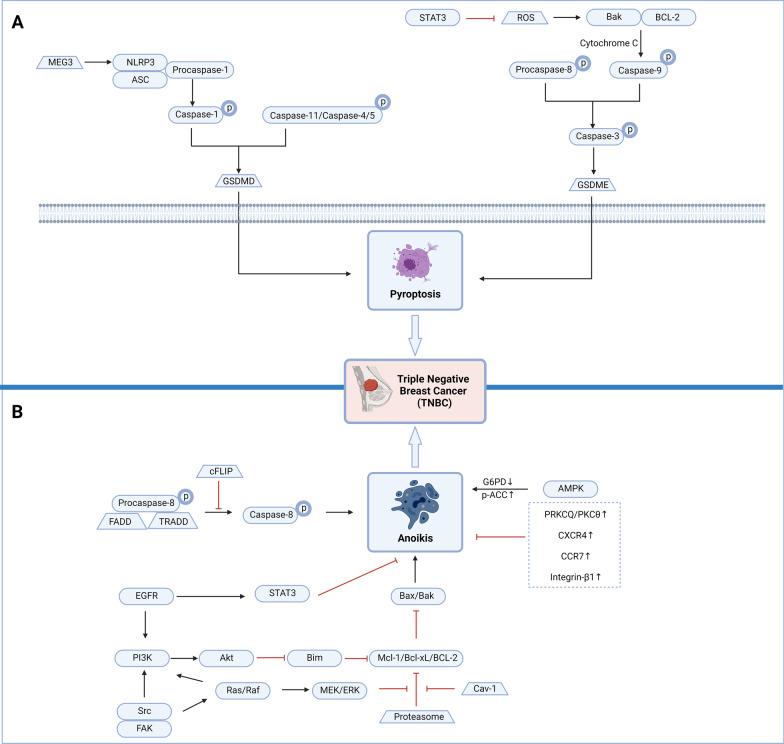
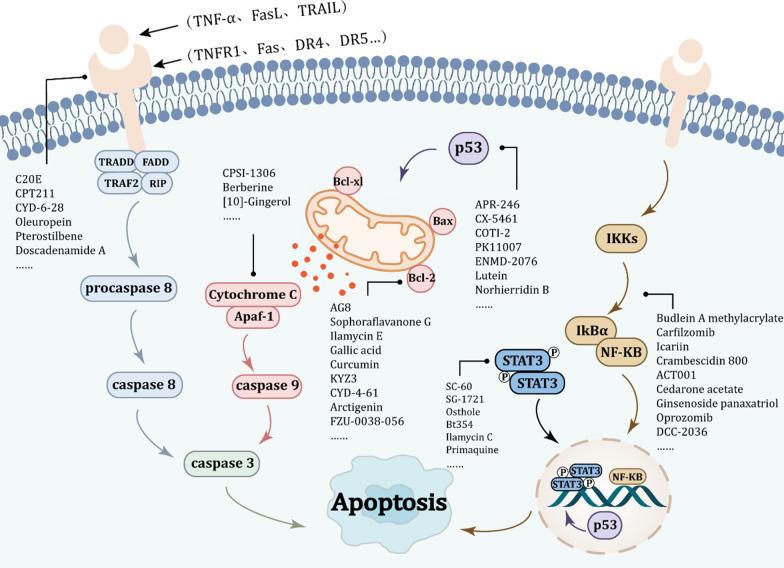
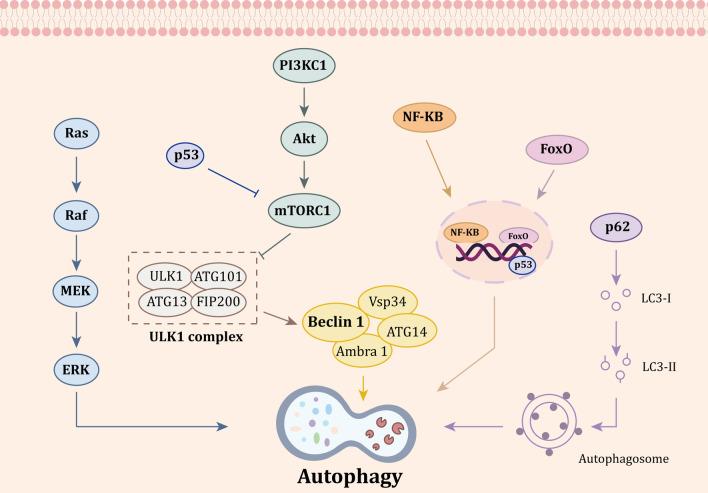
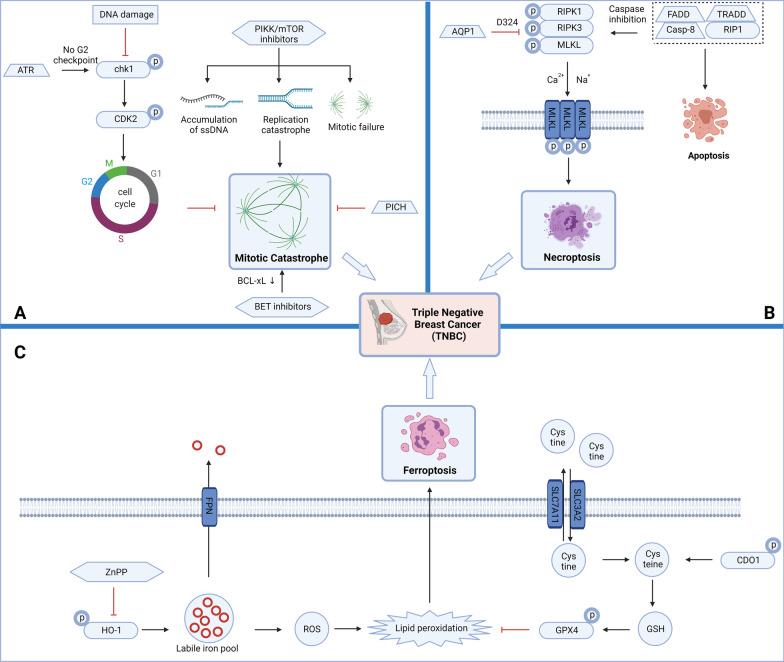
Triple-negative breast cancer (TNBC) is a subtype of human breast cancer with one of the worst prognoses, with no targeted therapeutic strategies currently available. Regulated cell death (RCD), also known as programmed cell death (PCD), has been widely reported to have numerous links to the progression and therapy of many types of human cancer. Of note, RCD can be divided into numerous different subroutines, including autophagy-dependent cell death, apoptosis, mitotic catastrophe, necroptosis, ferroptosis, pyroptosis and anoikis. More recently, targeting the subroutines of RCD with small-molecule compounds has been emerging as a promising therapeutic strategy, which has rapidly progressed in the treatment of TNBC. Therefore, in this review, we focus on summarizing the molecular mechanisms of the above-mentioned seven major RCD subroutines related to TNBC and the latest progress of small-molecule compounds targeting different RCD subroutines. Moreover, we further discuss the combined strategies of one drug (e.g., narciclasine) or more drugs (e.g., torin-1 combined with chloroquine) to achieve the therapeutic potential on TNBC by regulating RCD subroutines. More importantly, we demonstrate several small-molecule compounds (e.g., ONC201 and NCT03733119) by targeting the subroutines of RCD in TNBC clinical trials. Taken together, these findings will provide a clue on illuminating more actionable low-hanging-fruit druggable targets and candidate small-molecule drugs for potential RCD-related TNBC therapies.
三阴性乳腺癌(TNBC)是人类乳腺癌的一种亚型,预后最差,目前尚无靶向治疗策略。程序性细胞死亡(PCD)又称细胞程序性死亡(RCD),已广泛报道与多种人类癌症的进展和治疗有许多联系。值得注意的是,RCD 可以分为许多不同的子程序,包括自噬依赖性细胞死亡、细胞凋亡、有丝分裂灾难、坏死性凋亡、铁死亡、细胞焦亡和 anoikis。最近,用小分子化合物靶向 RCD 的子程序已成为一种很有前途的治疗策略,在治疗 TNBC 方面取得了迅速进展。因此,在这篇综述中,我们重点总结了与 TNBC 相关的上述七种主要 RCD 子程序的分子机制以及针对不同 RCD 子程序的小分子化合物的最新进展。此外,我们进一步讨论了通过调节 RCD 子程序,一种药物(如 narciclasine)或更多药物(如 torin-1 联合氯喹)联合治疗的策略,以实现对 TNBC 的治疗潜力。更重要的是,我们通过针对 TNBC 临床试验中的 RCD 子程序,展示了几种小分子化合物(如 ONC201 和 NCT03733119)。综上所述,这些发现将为阐明更多可操作的低挂果药物靶点和候选小分子药物提供线索,以用于潜在的与 RCD 相关的 TNBC 治疗。
 Zotero 插件